




Stud & Joist Drills

 --%3E %3Csvg version='1.1' id='No-RB' xmlns='http://www.w3.org/2000/svg' xmlns:xlink='http://www.w3.org/1999/xlink' x='0px' y='0px' viewBox='0 0 100 100' enable-background='new 0 0 100 100' xml:space='preserve'%3E %3Cpath fill='%23CECECE' d='M79.44,0.95H20.56C9.78,0.95,0.95,9.78,0.95,20.56v58.87c0,10.79,8.82,19.61,19.61,19.61h58.87 c10.79,0,19.61-8.83,19.61-19.61V20.56C99.05,9.78,90.22,0.95,79.44,0.95z M65.38,58.24l9.38,29.58L49.69,69.78L24.5,87.82 l9.34-29.6L8.8,39.6l30.73-0.17c0,0,6.98-19.61,10-28.93c0.54,1.36,9.88,29.1,9.88,29.1H91.2L65.38,58.24z'/%3E %3C/svg%3E)

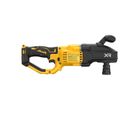
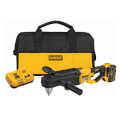
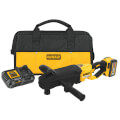

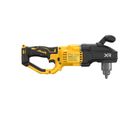
Stud & Joist Drills are heavy-duty boring tools built for cutting large-diameter holes through dimensional lumber, engineered wood, and framing members during rough-in work. Electricians and plumbers rely on these drills to route wire, conduit, and pipe through studs, joists, and rafters without splitting the wood or stalling mid-cut. The Milwaukee Hole-Hawg, for example, runs between 300 and 1,200 RPM, giving it enough torque range to swing large-diameter bits without stalling in dense lumber. A right-angle or D-handle body keeps the drill compact enough to work in tight joist bays and stud cavities where a standard drill would not fit. Reversing motors help back a bit out of a stuck cut without damaging the flutes, and many bits ship with a rust-inhibiting coating that extends service life across repeated jobs. Picking the right drill and bit combination shortens rough-in day and reduces the callbacks that come from oversized or ragged holes in framing members.
Subcategories
- Right-Angle Drills: Right-angle drills place the motor and chuck in line with a compact head, which lets the tool fit between studs and joists spaced only a few inches apart. Electricians and low-voltage installers favor this style for repetitive hole-boring in tight framing cavities. Milwaukee's Hole-Hawg model runs between 300 and 1,200 RPM, giving installers a wide speed range for different bit sizes and wood densities. The compact profile trades some raw torque for maneuverability in cramped mechanical rooms and attics.
- D-Handle Drills: D-handle drills use a pistol-style grip that gives installers more control when boring through dense lumber or engineered beams. Plumbers and HVAC technicians reach for this style when drilling larger holes for drain lines or duct runs. Milwaukee's D-handle right angle drill runs a 7-amp motor at 0 to 500 RPM and accepts self-feed bits up to 4-5/8 inches in diameter. The added handle length improves leverage during long boring sessions and reduces wrist fatigue compared to a right-angle body.
- Self-Feed Bits: Self-feed bits use a threaded tip that pulls the bit through wood at a controlled rate instead of relying on downward pressure alone. Milwaukee's self-feed lineup spans 1 inch, 1-1/4 inch, 1-3/4 inch, and 3 inch diameters, covering most residential and light commercial rough-in needs. A rust-inhibiting coating on the flutes helps the bits resist corrosion in damp crawlspaces and basements. Resharpenable cutting edges let contractors extend the life of a bit instead of replacing it after every job.
- Ship Auger Bits: Ship auger bits use a single spiral flute to clear wood chips continuously as the bit advances, which keeps cutting speed consistent through thick joists and doubled-up framing. Framers and remodelers reach for these bits when a self-feed bit is too short or too wide for the job at hand. Milwaukee offers ship auger bits in 6 inch and 18 inch lengths, with diameters ranging from 3/8 inch to 1-3/8 inch. A design built to cut through embedded nails without frequent resharpening keeps the bit working through demolition and remodel framing alike.
Buying Guide
Start with the framing member itself. Standard 2x lumber calls for a drill that can swing a 1 inch to 1-3/4 inch bit without stalling, while doubled joists, LVL beams, or thick timber need a machine with more torque and a longer bit reach. Match the RPM range to the bit diameter; larger self-feed bits generate more resistance and work better at lower speeds, while smaller bits can run faster without burning the wood.
Body style matters as much as motor power. A right-angle design fits into narrow stud bays and joist pockets where headroom is limited, while a D-handle body gives better control and leverage for larger holes or repeated use over a full workday. Contractors who split time between electrical, plumbing, and HVAC rough-in often keep both styles on hand.
Bit selection should match the drilling task, not just the hole size. Self-feed bits pull themselves through clean lumber quickly and are the better choice for new construction, while ship auger bits with a single flute handle nail-embedded framing during remodel and demolition work without dulling as fast. When shopping for Stud & Joist Drills, factor in bit compatibility, since not every drill accepts every bit style or shank size. A reversing motor is worth prioritizing, since it lets a stuck bit back out cleanly instead of forcing a technician to fight it loose by hand.
Frequently Asked Questions
What size hole saw or bit works best for running standard NM cable through studs?
Most 12/2 and 14/2 NM cable runs fit through a 3/4 inch to 1 inch bore, which falls within the range of Milwaukee's 1 inch self-feed bit. A larger 1-1/4 inch bit gives extra clearance when multiple cables share the same hole. Matching bit size to cable bundle keeps the hole small enough to maintain the structural integrity of the stud.
Can a stud and joist drill handle engineered lumber like LVL or I-joists?
Engineered lumber is denser and more consistent than standard dimensional lumber, so it typically requires a drill with steady torque and a sharp bit rather than higher speed. Ship auger bits with a single flute clear chips efficiently through LVL material. Contractors should also check the manufacturer's span tables for that specific engineered joist, since hole placement and size limits vary by product.
What is the difference between a self-feed bit and a ship auger bit?
Self-feed bits use a threaded tip that pulls the bit through the wood automatically, making them fast for clean, new-construction lumber. Ship auger bits rely on a single spiral flute and a screw-tip lead, which works well in framing that may contain embedded nails or debris. Remodel and demolition jobs typically favor auger bits because they hold up better against hidden metal.
Why does a right-angle drill work better than a standard drill for this job?
Right-angle drills place the chuck in line with a narrow head, letting the tool fit into stud bays and joist pockets spaced only a few inches apart. A standard drill body is often too long to fit in that same space without hitting adjacent framing. Models like the Milwaukee Hole-Hawg pair that compact head with enough torque to swing large-diameter bits.
How often should self-feed or auger bits be replaced?
Many self-feed and auger bits are resharpenable, so a dull bit does not always mean a full replacement. Rust-inhibiting coatings on bits like Milwaukee's self-feed line help extend usable life in damp job site conditions such as crawlspaces and basements. A bit should be swapped out or resharpened once it starts burning wood or requiring excess downward pressure to cut.
