




ER Series

 --%3E %3Csvg version='1.1' id='No-RB' xmlns='http://www.w3.org/2000/svg' xmlns:xlink='http://www.w3.org/1999/xlink' x='0px' y='0px' viewBox='0 0 100 100' enable-background='new 0 0 100 100' xml:space='preserve'%3E %3Cpath fill='%23CECECE' d='M79.44,0.95H20.56C9.78,0.95,0.95,9.78,0.95,20.56v58.87c0,10.79,8.82,19.61,19.61,19.61h58.87 c10.79,0,19.61-8.83,19.61-19.61V20.56C99.05,9.78,90.22,0.95,79.44,0.95z M65.38,58.24l9.38,29.58L49.69,69.78L24.5,87.82 l9.34-29.6L8.8,39.6l30.73-0.17c0,0,6.98-19.61,10-28.93c0.54,1.36,9.88,29.1,9.88,29.1H91.2L65.38,58.24z'/%3E %3C/svg%3E)
 --%3E %3Csvg version='1.1' id='Fill' xmlns='http://www.w3.org/2000/svg' xmlns:xlink='http://www.w3.org/1999/xlink' x='0px' y='0px' viewBox='0 0 100 100' enable-background='new 0 0 100 100' xml:space='preserve'%3E %3Cpath fill='%23F15C02' d='M79.44,0.95H20.56C9.78,0.95,0.95,9.78,0.95,20.56v58.87c0,10.79,8.82,19.61,19.61,19.61h58.87 c10.79,0,19.61-8.83,19.61-19.61V20.56C99.05,9.78,90.22,0.95,79.44,0.95z M65.38,58.24l9.38,29.58L49.69,69.78L24.5,87.82 l9.34-29.6L8.8,39.6l30.73-0.17c0,0,6.98-19.61,10-28.93c0.54,1.36,9.88,29.1,9.88,29.1H91.2L65.38,58.24z'/%3E %3C/svg%3E)

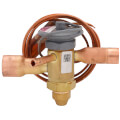
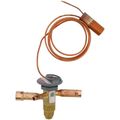
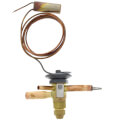
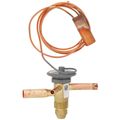
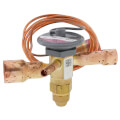
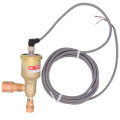
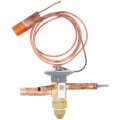
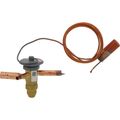


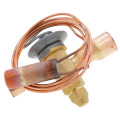
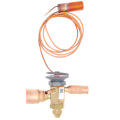
ER Series thermal expansion valves regulate the flow of refrigerant into the evaporator of a refrigeration or air conditioning system, maintaining the correct superheat as cooling load changes. These valves respond to temperature and pressure at the evaporator outlet, opening and closing to match refrigerant flow to the system's actual demand rather than delivering a fixed rate regardless of load. Selecting the correct valve depends on matching its capacity rating to the system's tonnage as well as confirming the refrigerant type and equalizer style needed for the application. An oversized or undersized valve can cause poor temperature control, compressor flooding, or reduced cooling capacity even when every other component in the system is functioning properly. Technicians replacing a failed expansion valve typically confirm the original valve's capacity and equalizer type before ordering a replacement rather than assuming a direct swap based on physical size alone.
Subcategories
- External Equalizer Valves: External equalizer valves sense evaporator outlet pressure through a separate external line rather than through the valve body itself, which improves accuracy on systems with a pressure drop across the evaporator, such as those using a distributor. This design is common on larger commercial refrigeration and air conditioning systems where evaporator pressure drop would otherwise cause the valve to overfeed or underfeed refrigerant. Installing the external equalizer line correctly, downstream of the evaporator, matters as much as selecting the right valve capacity. A misrouted equalizer line is a common cause of poor valve performance even when the valve itself is not defective.
- Internal Equalizer Valves: Internal equalizer valves sense pressure directly through an internal passage in the valve body, which works well on smaller systems with minimal pressure drop across the evaporator. These valves are generally simpler to install since they do not require a separate equalizer line to be run and connected. Choosing an internal equalizer valve on a system with significant evaporator pressure drop can lead to inaccurate superheat control. Confirming the evaporator design before selecting between internal and external equalizer styles helps avoid a performance issue after installation.
- Replacement Power Assemblies: Replacement power assemblies, sometimes called power elements or bulbs, replace the temperature-sensing component of an expansion valve without requiring the entire valve body to be replaced. This repair option is typically less expensive than a full valve replacement when only the sensing element has failed. Matching the power assembly's charge type to the valve body is necessary for correct operation, since different charge types respond differently to temperature changes at the evaporator outlet. Technicians should confirm compatibility between the replacement element and the existing valve body before installation.
- Repair Kits & Seat Assemblies: Repair kits and seat assemblies address internal wear on an expansion valve without replacing the entire unit, covering components such as the valve seat, pin, and associated seals. These kits are most useful when a valve is otherwise in good condition but has developed a leak or erratic operation from a worn seat. Rebuilding a valve with a repair kit is generally faster and less expensive than sourcing a full replacement valve, particularly on older or less common models. Confirming parts compatibility with the specific valve model number is necessary before ordering a repair kit.
Buying Guide
Choosing the correct valve from the ER Series starts with matching its capacity rating to the system's tonnage, since an undersized valve restricts cooling capacity while an oversized valve can overfeed refrigerant and lead to compressor flooding. Refrigerant type compatibility is equally important, as a valve rated for one refrigerant will not meter the correct flow with a different refrigerant even if the physical connections match. External equalizer valves suit systems with meaningful pressure drop across the evaporator, such as those feeding a distributor, while internal equalizer valves are typically adequate on smaller systems with minimal pressure drop, and choosing incorrectly between the two can cause inaccurate superheat control even with an otherwise correctly sized valve. When only the sensing element has failed, a replacement power assembly is usually a faster and less expensive repair than swapping the entire valve body, provided the charge type matches what the valve body requires. Valves with worn seats or minor internal leaks are often good candidates for a repair kit rather than full replacement, particularly on older equipment where a complete replacement valve may be harder to source. Technicians should confirm the original valve's model number, capacity, refrigerant type, and equalizer style before ordering any replacement part, since these specifications determine compatibility more reliably than physical size alone.
Frequently Asked Questions
What is the difference between an external and internal equalizer expansion valve?
An external equalizer valve senses pressure through a separate line routed downstream of the evaporator, which improves accuracy on systems with pressure drop, while an internal equalizer valve senses pressure through the valve body itself and suits systems with minimal pressure drop.
Can a failed expansion valve be repaired instead of replaced?
When only the sensing element has failed, a replacement power assembly can restore proper operation without replacing the entire valve body, provided the charge type matches the existing valve.
What happens if an expansion valve is oversized for the system?
An oversized valve can overfeed refrigerant into the evaporator, which risks compressor flooding and poor temperature control even when other system components are working correctly.
Does refrigerant type affect which expansion valve to select?
Yes, a valve rated for one refrigerant will not meter flow correctly with a different refrigerant, so refrigerant compatibility should be confirmed alongside capacity and equalizer type.
When does a repair kit make more sense than a full valve replacement?
A repair kit is generally a better fit when the valve body is otherwise in good condition but has developed a leak or erratic operation from a worn seat, particularly on older or less common valve models.
