



Filters
SORT
Product Availability –
Size –
Connection Type –
Voltage –
Position –
Action –
Body Pattern –
Actuator Type –
Wiring –
Flow Capacity (Cv) –
Review Score –
 --%3E %3Csvg version='1.1' id='Fill' xmlns='http://www.w3.org/2000/svg' xmlns:xlink='http://www.w3.org/1999/xlink' x='0px' y='0px' viewBox='0 0 100 100' enable-background='new 0 0 100 100' xml:space='preserve'%3E %3Cpath fill='%23F15C02' d='M79.44,0.95H20.56C9.78,0.95,0.95,9.78,0.95,20.56v58.87c0,10.79,8.82,19.61,19.61,19.61h58.87 c10.79,0,19.61-8.83,19.61-19.61V20.56C99.05,9.78,90.22,0.95,79.44,0.95z M65.38,58.24l9.38,29.58L49.69,69.78L24.5,87.82 l9.34-29.6L8.8,39.6l30.73-0.17c0,0,6.98-19.61,10-28.93c0.54,1.36,9.88,29.1,9.88,29.1H91.2L65.38,58.24z'/%3E %3C/svg%3E)
 --%3E %3Csvg version='1.1' id='With-RB' xmlns='http://www.w3.org/2000/svg' xmlns:xlink='http://www.w3.org/1999/xlink' x='0px' y='0px' viewBox='0 0 100 100' enable-background='new 0 0 100 100' xml:space='preserve'%3E %3Cpath fill='%23FBC8B4' d='M79.44,0.95H20.56C9.78,0.95,0.95,9.78,0.95,20.56v58.87c0,10.79,8.82,19.61,19.61,19.61h58.87 c10.79,0,19.61-8.83,19.61-19.61V20.56C99.05,9.78,90.22,0.95,79.44,0.95z M65.38,58.24l9.38,29.58L49.69,69.78L24.5,87.82 l9.34-29.6L8.8,39.6l30.73-0.17c0,0,6.98-19.61,10-28.93c0.54,1.36,9.88,29.1,9.88,29.1H91.2L65.38,58.24z'/%3E %3C/svg%3E)
Price Range –
Erie Zone Valves


 --%3E %3Csvg version='1.1' id='No-RB' xmlns='http://www.w3.org/2000/svg' xmlns:xlink='http://www.w3.org/1999/xlink' x='0px' y='0px' viewBox='0 0 100 100' enable-background='new 0 0 100 100' xml:space='preserve'%3E %3Cpath fill='%23CECECE' d='M79.44,0.95H20.56C9.78,0.95,0.95,9.78,0.95,20.56v58.87c0,10.79,8.82,19.61,19.61,19.61h58.87 c10.79,0,19.61-8.83,19.61-19.61V20.56C99.05,9.78,90.22,0.95,79.44,0.95z M65.38,58.24l9.38,29.58L49.69,69.78L24.5,87.82 l9.34-29.6L8.8,39.6l30.73-0.17c0,0,6.98-19.61,10-28.93c0.54,1.36,9.88,29.1,9.88,29.1H91.2L65.38,58.24z'/%3E %3C/svg%3E)
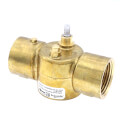


Erie Zone Valves
Erie zone valves control water flow through a hydronic zone. When the thermostat calls, the actuator opens the valve and sends hot water through the loop, then closes when the call ends. Erie PopTop style valves are built around a replaceable actuator, so a failed motor or power head swap can bring a zone back without repiping the valve body.
Erie options in this category cover complete zone valves, zone valve bodies, and actuators. Common configurations span 2-way and 3-way body patterns, plus a wide range of connection styles like sweat, threaded, and inverted flare. Many models are offered with normally closed and normally open actuators, and end switch versions are available when a boiler or circulator needs a confirm signal before firing.
How to narrow the right Erie valve fast
Start with the valve body pattern
2-way fits on and off zone control. 3-way fits diverting or mixing style layouts where flow needs to change direction instead of stopping.
Match the connection type to the existing piping
Sweat, threaded, and inverted flare are common connection types in this line. Connection type narrows the field faster than anything else because it drives the whole repipe plan.
Use Cv to keep flow realistic
Cv is a quick check that keeps valve sizing aligned with the zone load. Cv options on this page range from low Cv bodies used on smaller loops up through higher Cv bodies used when flow restriction needs to stay low.
Pick the actuator position and wiring style
Normally closed actuators are common for fail-safe zoning. Normally open is used when the design calls for flow on power loss. Wiring options vary too, with lead length and terminal block styles, including versions with an end switch.
Lock voltage early
24V is common in hydronic zoning, and 120V also appears. Higher voltages are available in the lineup too. Voltage mismatch is an expensive way to learn patience.
Related categories that pair naturally with Erie zone valves
Zone valve control panels clean up wiring and make multi-zone layouts easier to manage.
https://www.supplyhouse.com/Zone-Valve-Controls-22610000
Thermostats drive the call that opens the valve.
https://www.supplyhouse.com/Thermostats-327000
Many hydronic systems pair zoning with a circulator pump strategy that matches the loop layout.
https://www.supplyhouse.com/Pumps-Flanges-288000
A broader view of zone valves across brands and styles is here.
https://www.supplyhouse.com/Zone-Valves-21340000
FAQs
What is an Erie PopTop zone valve?
An Erie PopTop zone valve is a motorized hydronic zone valve designed around a replaceable actuator. Actuator replacement is a common fix when the valve body is still in good shape.
What is the difference between a zone valve and an actuator?
A zone valve body is the plumbing component that controls flow. An actuator is the powered head that opens and closes the valve based on the control call.
When does an end switch matter?
An end switch is used when equipment needs proof that the valve opened before enabling a boiler or circulator. End switch models simplify that wiring logic.
Normally closed vs normally open, which is the common pick?
Normally closed is a common default for zoning because the valve closes when power is removed. Normally open is used when the design calls for flow during a power loss condition.
2-way vs 3-way, what is the functional difference?
A 2-way valve stops or allows flow through a zone. A 3-way valve redirects flow, which is useful for diverting or mixing applications.
Which connection types show up most often?
Connection types on this page include sweat, threaded, and inverted flare, along with other flare style variants. Connection type should match the piping plan before comparing anything else.
What is Cv, and why does it matter on a zone valve?
Cv is a flow capacity rating used as a quick check for how restrictive a valve is. Cv helps keep the valve from becoming the bottleneck on a higher-flow zone.
What is the safest way to avoid ordering the wrong replacement?
Matching the existing valve body pattern, connection type, voltage, actuator position, and end switch requirement prevents the most common ordering mistakes.
