




Filters
SORT
Product Availability –
Programmability –
Measures –
Mount –
Features –
Options –
Review Score –
 --%3E %3Csvg version='1.1' id='Fill' xmlns='http://www.w3.org/2000/svg' xmlns:xlink='http://www.w3.org/1999/xlink' x='0px' y='0px' viewBox='0 0 100 100' enable-background='new 0 0 100 100' xml:space='preserve'%3E %3Cpath fill='%23F15C02' d='M79.44,0.95H20.56C9.78,0.95,0.95,9.78,0.95,20.56v58.87c0,10.79,8.82,19.61,19.61,19.61h58.87 c10.79,0,19.61-8.83,19.61-19.61V20.56C99.05,9.78,90.22,0.95,79.44,0.95z M65.38,58.24l9.38,29.58L49.69,69.78L24.5,87.82 l9.34-29.6L8.8,39.6l30.73-0.17c0,0,6.98-19.61,10-28.93c0.54,1.36,9.88,29.1,9.88,29.1H91.2L65.38,58.24z'/%3E %3C/svg%3E)
Price Range –
Explorer Commercial Series

 --%3E %3Csvg version='1.1' id='No-RB' xmlns='http://www.w3.org/2000/svg' xmlns:xlink='http://www.w3.org/1999/xlink' x='0px' y='0px' viewBox='0 0 100 100' enable-background='new 0 0 100 100' xml:space='preserve'%3E %3Cpath fill='%23CECECE' d='M79.44,0.95H20.56C9.78,0.95,0.95,9.78,0.95,20.56v58.87c0,10.79,8.82,19.61,19.61,19.61h58.87 c10.79,0,19.61-8.83,19.61-19.61V20.56C99.05,9.78,90.22,0.95,79.44,0.95z M65.38,58.24l9.38,29.58L49.69,69.78L24.5,87.82 l9.34-29.6L8.8,39.6l30.73-0.17c0,0,6.98-19.61,10-28.93c0.54,1.36,9.88,29.1,9.88,29.1H91.2L65.38,58.24z'/%3E %3C/svg%3E)



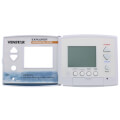

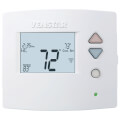
Explorer Commercial Series thermostats are Venstar's commercial-grade digital controls built for light commercial HVAC systems that need multi-stage heating and cooling management beyond typical residential models. The lineup includes the T4800, a programmable model supporting 4 heat and 2 cool stages, and the T4900, which adds light-activated, self-powered operation while retaining the same 4-heat, 2-cool staging. A WiFi-enabled option, the T2050 Explorer Mini, brings remote access and programmable scheduling to smaller commercial spaces without the bulk of a full-size commercial thermostat. Each model targets properties such as offices, retail spaces, and multi-zone commercial buildings where staging flexibility and durability matter more than residential-style aesthetics. For contractors replacing an aging commercial thermostat, matching the number of heating and cooling stages on the existing system to the Explorer model's rated capacity is the first step toward a correct replacement.
Subcategories
- T4800 Programmable Commercial Thermostat: The T4800 supports 4 heat and 2 cool stages, giving it the staging range needed for multi-stage rooftop units and heat pump systems common in light commercial buildings. Programmable scheduling lets a facility set different temperature targets for occupied and unoccupied hours. Contractors servicing office buildings and retail spaces often select this model when the existing system already uses multiple heating or cooling stages. Standard wired installation keeps setup consistent with other commercial thermostat replacements.
- T4900 Light-Activated Commercial Thermostat: The T4900 shares the same 4-heat, 2-cool staging as the T4800 but adds light-activated, self-powered operation that reduces reliance on batteries or a dedicated power wire. Facilities with inconsistent access to a C-wire benefit from this self-powered design during replacement. Light-activated charging keeps the unit running as long as the space receives regular lighting. Staging capacity remains the deciding factor for system compatibility, same as the T4800.
- T2050 Explorer Mini WiFi Commercial Thermostat: The T2050 brings WiFi connectivity and programmable scheduling to a smaller commercial footprint than the full-size T4800 or T4900. Remote access through a connected app lets a facility manager adjust settings without a site visit for minor changes. Smaller commercial spaces, such as individual retail units or small offices, suit this model's compact Explorer Mini housing. Programmable scheduling functions similarly to the larger Explorer Commercial models despite the smaller form factor.
Buying Guide
Matching an Explorer Commercial Series thermostat to a light commercial HVAC system starts with confirming the number of heating and cooling stages the existing equipment uses, since both the T4800 and T4900 are built around 4-heat, 2-cool staging. A system with fewer stages still works with either model, but one needing more staging capacity than 4 heat and 2 cool falls outside this lineup's range. Power source at the installation point narrows the choice further: the T4900's light-activated, self-powered design suits locations without a reliable C-wire, while the T4800 follows a more standard wired installation. For smaller commercial spaces, such as a single retail unit or small office suite, the T2050 Explorer Mini offers WiFi connectivity and remote scheduling in a more compact housing than the full-size models. Facility managers who want to adjust schedules or check status without a site visit should prioritize the WiFi-enabled T2050 over the wired T4800 or self-powered T4900. Programmable scheduling is common across the Explorer Commercial Series, so the main differentiators come down to staging capacity, power source, and connectivity rather than core scheduling features. Contractors replacing an existing commercial thermostat should pull the staging configuration directly off the old unit or the rooftop unit's control board before ordering, since a mismatch in heating or cooling stages prevents full use of the equipment's capacity. Confirming these three factors upfront keeps the replacement straightforward.
Frequently Asked Questions
How many heating and cooling stages do Explorer Commercial Series thermostats support?
The T4800 and T4900 both support 4 heat and 2 cool stages, covering most light commercial rooftop and heat pump configurations. Staging capacity is the main spec to confirm against the existing HVAC equipment before ordering. A system requiring more stages than 4 heat and 2 cool falls outside this particular lineup.
What makes the T4900 different from the T4800?
Both models share the same 4-heat, 2-cool staging, but the T4900 adds light-activated, self-powered operation instead of relying on standard wiring alone. Self-powered operation suits locations without a dependable C-wire for continuous power. The T4800 follows a more conventional wired installation.
Does the Explorer Commercial Series include a WiFi option?
Yes, the T2050 Explorer Mini offers WiFi connectivity along with programmable scheduling in a smaller housing than the T4800 or T4900. Remote access through a connected app allows schedule adjustments without a site visit. Smaller commercial spaces are the typical setting for this model.
What type of building suits the Explorer Commercial Series?
Light commercial buildings such as offices, retail spaces, and multi-zone properties suit this thermostat lineup, particularly where multi-stage heating or cooling equipment is already installed. Staging capacity and durability needs separate these thermostats from residential-grade models. Smaller commercial spaces fit the compact T2050 Explorer Mini specifically.
What should be confirmed before replacing an existing commercial thermostat with an Explorer model?
Checking the existing system's heating and cooling stage count against the Explorer model's rated capacity comes first, since a mismatch limits how much of the equipment's capacity gets used. Power source availability, particularly whether a C-wire is present, narrows the choice between the wired T4800 and the self-powered T4900. Connectivity needs, such as remote access, point toward the WiFi-enabled T2050 for smaller spaces.
