



Extra Heavy Black Fittings (300 lb)



 --%3E %3Csvg version='1.1' id='Fill' xmlns='http://www.w3.org/2000/svg' xmlns:xlink='http://www.w3.org/1999/xlink' x='0px' y='0px' viewBox='0 0 100 100' enable-background='new 0 0 100 100' xml:space='preserve'%3E %3Cpath fill='%23F15C02' d='M79.44,0.95H20.56C9.78,0.95,0.95,9.78,0.95,20.56v58.87c0,10.79,8.82,19.61,19.61,19.61h58.87 c10.79,0,19.61-8.83,19.61-19.61V20.56C99.05,9.78,90.22,0.95,79.44,0.95z M65.38,58.24l9.38,29.58L49.69,69.78L24.5,87.82 l9.34-29.6L8.8,39.6l30.73-0.17c0,0,6.98-19.61,10-28.93c0.54,1.36,9.88,29.1,9.88,29.1H91.2L65.38,58.24z'/%3E %3C/svg%3E)

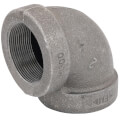
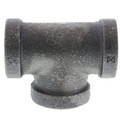
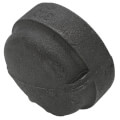
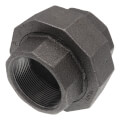
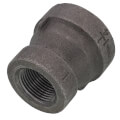

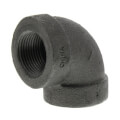
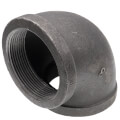
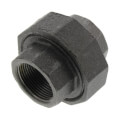

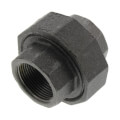
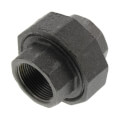

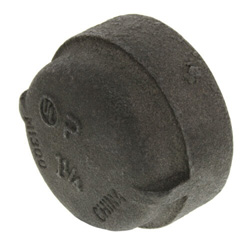
Extra Heavy Black Fittings (300 lb) connect black malleable iron pipe in gas, steam, and compressed air systems where a standard 150-pound fitting doesn't have enough pressure margin for the application. These fittings share the same NPT threading and general shape as standard-weight black fittings but use thicker wall sections to handle higher working pressures. Because they're malleable iron rather than cast iron, they hold up to the vibration and thread stress common in industrial and commercial gas piping without the brittleness that leads to cracked cast fittings.
Contractors specify extra heavy fittings on jobs where a system's design pressure exceeds what a standard-weight fitting is rated for, or where a spec explicitly calls out 300-pound fittings regardless of the actual operating pressure.
Subcategories
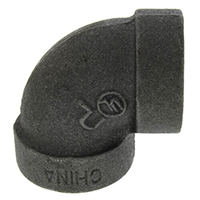
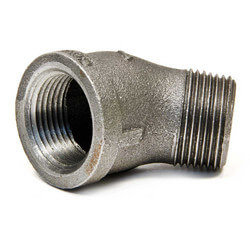
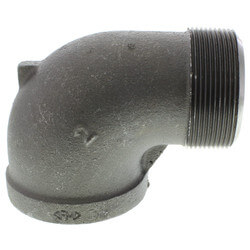
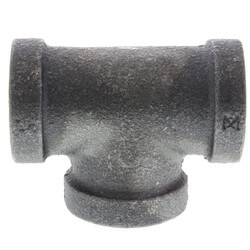
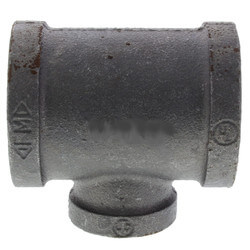
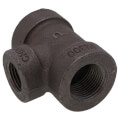
- Extra Heavy Elbows and Tees: Elbows and tees make up the bulk of a typical extra heavy fitting order, since they handle the direction changes and branch connections that come up throughout a gas or steam distribution run. Pipefitters use 90-degree and 45-degree elbows to route piping around obstructions and tees to branch off a main line to individual appliances or zones. Extra heavy versions of these fittings are specified whenever the branch or turn falls on a section of pipe rated above standard 150-pound service.
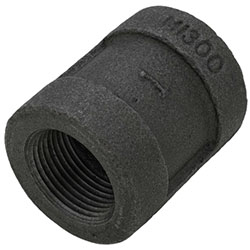
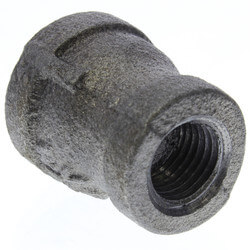
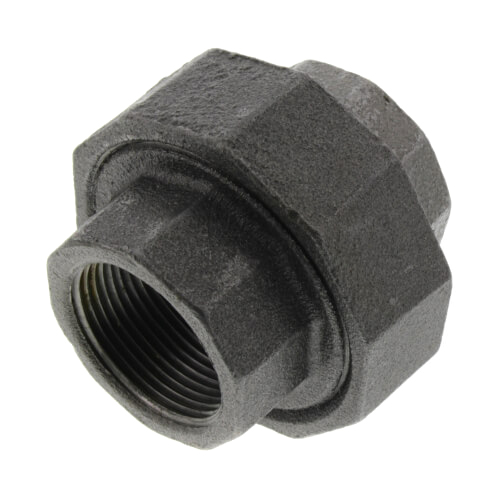
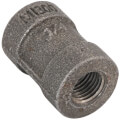
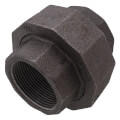
- Extra Heavy Couplings and Unions: Couplings join two lengths of pipe in a straight run, while unions add a disconnect point that lets a section of piping be removed for service without cutting the pipe. Both are common on gas meter sets and steam headers where a system may need periodic maintenance or appliance replacement. Extra heavy couplings and unions are chosen specifically because they see the same higher working pressure as the rest of an extra heavy system.
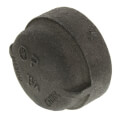
- Extra Heavy Caps, Plugs, and Bushings: Caps and plugs seal off the end of a pipe run or an unused outlet, while bushings step a fitting down to a smaller thread size at a branch or appliance connection. These smaller fittings round out an extra heavy fitting order on jobs that call for a full 300-pound system rather than mixing fitting classes at different points. Gas and steam contractors keep an assortment of extra heavy caps and bushings on hand for exactly this reason.
Buying Guide
The first question on any fitting order is whether the system's design pressure actually requires extra heavy fittings or whether a job spec is simply calling for 300-pound fittings as a standard regardless of operating pressure. Gas utility specs and many commercial steam systems default to extra heavy fittings even when the measured working pressure would technically allow a lighter fitting, since it builds in a wider safety margin. Once the pressure class is settled, match every fitting in the run to that class. Mixing standard-weight and Extra Heavy Black Fittings on the same system creates a weak point at whichever joint uses the lighter-rated fitting, defeating the purpose of upgrading the rest of the run.
Thread engagement matters as much as fitting class. Extra heavy fittings use the same NPT thread pattern as standard-weight fittings, so proper thread depth and pipe dope or tape still determine whether a joint holds at higher pressure, not just the fitting's wall thickness. Finally, plan the full fitting list before ordering rather than fitting-by-fitting as the job progresses, since a complete list of elbows, tees, couplings, and caps up front avoids scrambling mid-job to source an odd size or thread combination.
Frequently Asked Questions
What does the 300 lb rating on extra heavy fittings actually mean?
The 300 lb designation refers to the fitting class, not a single exact pressure rating that applies identically to every fitting size and fluid type. It indicates the fitting was built with thicker wall sections than a standard 150 lb fitting, giving it a higher pressure rating for gas, steam, and similar services. Always check the specific pressure and temperature rating for the fitting size and application rather than assuming 300 lb covers every scenario.
Can extra heavy and standard weight fittings be mixed on the same system?
Mixing fitting classes creates a weak point at whichever joint uses the lighter-rated fitting, so a system designed for extra heavy service should use extra heavy fittings throughout. Even one standard-weight fitting installed by mistake can undermine the pressure rating of the whole run. Checking every fitting against the job spec before installation prevents this kind of mismatch.
Are extra heavy fittings threaded the same way as standard black fittings?
Yes, extra heavy fittings use the same NPT thread pattern as standard-weight black fittings, so thread engagement and sealant practices don't change based on fitting class. The difference is in wall thickness, which is what gives the extra heavy fitting its higher pressure rating. Proper thread depth still matters just as much as it does with standard-weight fittings.
When does a job spec require extra heavy fittings instead of standard weight?
Gas utility specifications and many commercial steam system designs call for extra heavy fittings as a baseline requirement, sometimes regardless of the system's actual measured operating pressure. Local code and the engineer of record's drawings are the final word on which fitting class a specific job requires. When a spec isn't explicit, checking with the design engineer before substituting standard weight avoids a failed inspection.
Are extra heavy fittings made from the same material as standard black fittings?
Both are typically malleable iron rather than cast iron, which gives them resistance to the vibration and thread stress common in gas and steam piping. Malleable iron's ductility means it's less prone to the sudden cracking that a brittle cast iron fitting can experience under stress. The extra heavy classification changes wall thickness and pressure rating, not the base material.
