


'/%3E%3C/svg%3E)
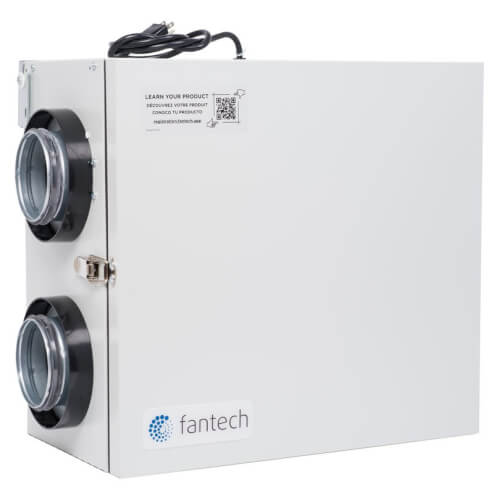
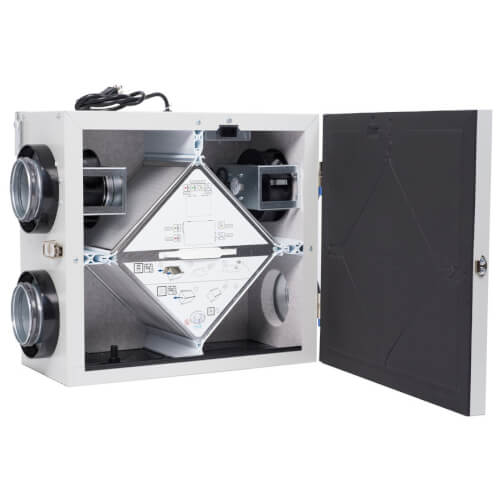
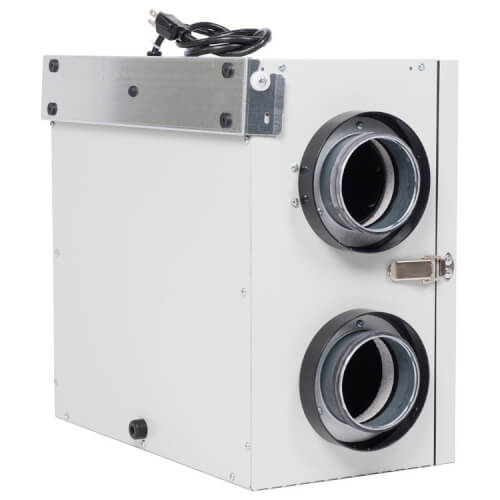
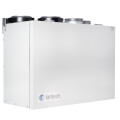
SH Series Heat Recovery Ventilator w/ Fan Shutdown Defrost, 4" Side Ports (up to 1,400 Sq. Ft.)
 --%3E %3Csvg version='1.1' id='Fill' xmlns='http://www.w3.org/2000/svg' xmlns:xlink='http://www.w3.org/1999/xlink' x='0px' y='0px' viewBox='0 0 100 100' enable-background='new 0 0 100 100' xml:space='preserve'%3E %3Cpath fill='%23F15C02' d='M79.44,0.95H20.56C9.78,0.95,0.95,9.78,0.95,20.56v58.87c0,10.79,8.82,19.61,19.61,19.61h58.87 c10.79,0,19.61-8.83,19.61-19.61V20.56C99.05,9.78,90.22,0.95,79.44,0.95z M65.38,58.24l9.38,29.58L49.69,69.78L24.5,87.82 l9.34-29.6L8.8,39.6l30.73-0.17c0,0,6.98-19.61,10-28.93c0.54,1.36,9.88,29.1,9.88,29.1H91.2L65.38,58.24z'/%3E %3C/svg%3E)
 --%3E %3Csvg version='1.1' id='Half' xmlns='http://www.w3.org/2000/svg' xmlns:xlink='http://www.w3.org/1999/xlink' x='0px' y='0px' viewBox='0 0 100 100' enable-background='new 0 0 100 100' xml:space='preserve'%3E %3Cg%3E %3Cpath fill='%23F15C02' d='M30.05,70.23l3.79-12.01L8.8,39.6l30.73-0.17c0,0,6.98-19.61,10-28.93c0.54,1.36,9.88,29.1,9.88,29.1h1.58 L93.71,7.18c-3.58-3.82-8.66-6.23-14.28-6.23H20.56C9.78,0.95,0.95,9.78,0.95,20.56v58.87c0,5.41,2.22,10.32,5.79,13.88 L30.05,70.23z'/%3E %3C/g%3E %3Cpath fill='%23FBC8B4' d='M93.71,7.18L60.98,39.6H91.2L65.38,58.24l9.38,29.58L49.69,69.78L24.5,87.82l5.55-17.59L6.75,93.32 c3.55,3.54,8.44,5.73,13.82,5.73h58.87c10.79,0,19.61-8.83,19.61-19.61V20.56C99.05,15.4,97.01,10.69,93.71,7.18z'/%3E %3C/svg%3E)
' fill='%23F15C02' d='M49 0C21.938 0 0 21.938 0 49s21.938 49 49 49 49-21.938 49-49S76.062 0 49 0m0 82.709a7.54 7.54 0 1 1 0-15.08 7.54 7.54 0 0 1 0 15.08m7.54-28.412a7.541 7.541 0 0 1-15.08 0V22.831a7.54 7.54 0 0 1 15.08 0v31.466z'/%3E%3C/svg%3E)
MANUALS (3)
'/%3E%3C/svg%3E)

Product Highlights


Description
A Heat Recovery Ventilator is a complete whole house ventilation system that incorporates a supply motor and an exhaust motor in one unit. It is designed to bring a continuous supply of fresh air into the home while exhausting an equal amount of contaminated air. HRVs use what is known as a "sensible" heat recovery core. The special aluminum core transfers heat from the exhaust air stream to the incoming air stream. Fresh incoming air is tempered by the heat that is transferred from the outgoing air so you save on energy costs. HRVs are designed for colder areas of the country that have longer heating seasons as well as drier desert areas of the South.
Features:
- Powder coated 24-gauge galvanized steel cabinets
- Fully insulated with 1" aluminum foil-face high density foam
- (2) German manufactured motors with backward incline impellers
- Aluminum heat recovery core
- Small compact size
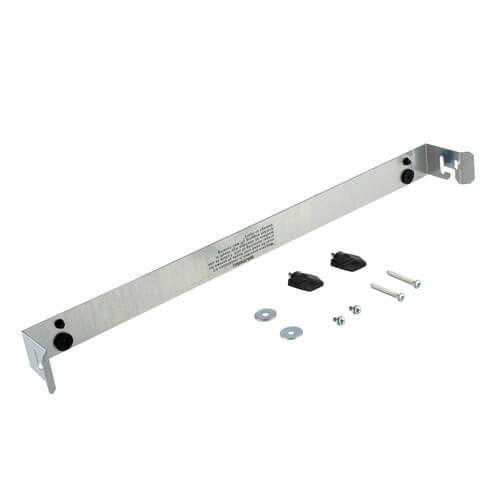
- Includes easy-mount wall bracket
- Single speed ventilation
- No controls needed
- No balancing required
- Automatic exhaust defrost allows units to always stay in ventilation mode
- 3' plug-in power cord
- (2) Electrostatic filters (washable)
- 64-67 CFM (31-32 L/s) at 0.3" wg or 55-56 CFM (26 L/s) at 0.4" wg
- 4" side port duct connections
Specs
| Duct Size: | 4" |
|---|---|
| Max Airflow (CFM): | 104 |
| Voltage: | 115V |
| Hertz: | 60 |
| Amperage: | 0.36 |
| Wattage: | 40 |
| Length (Inches): | 18-7/16" |
| Width (Inches): | 10-1/8" |
| Height (Inches): | 17.25" |
| Air Flow Capacity (CFM): | 67 |
| Min Airflow (CFM): | 42 |
| Speeds: | 1 |
| Weight (lbs): | 26 lbs. |
| Warranty: | 5 Year (Parts) Limited Lifetime (Aluminum Core) 7 Year (Motor) |

Questions?
You May Also Need
14 Replacement Parts

Need help finding a replacement part?
Product Reviews
Most Liked Positive Review
 --%3E %3Csvg version='1.1' id='With-RB' xmlns='http://www.w3.org/2000/svg' xmlns:xlink='http://www.w3.org/1999/xlink' x='0px' y='0px' viewBox='0 0 100 100' enable-background='new 0 0 100 100' xml:space='preserve'%3E %3Cpath fill='%23FBC8B4' d='M79.44,0.95H20.56C9.78,0.95,0.95,9.78,0.95,20.56v58.87c0,10.79,8.82,19.61,19.61,19.61h58.87 c10.79,0,19.61-8.83,19.61-19.61V20.56C99.05,9.78,90.22,0.95,79.44,0.95z M65.38,58.24l9.38,29.58L49.69,69.78L24.5,87.82 l9.34-29.6L8.8,39.6l30.73-0.17c0,0,6.98-19.61,10-28.93c0.54,1.36,9.88,29.1,9.88,29.1H91.2L65.38,58.24z'/%3E %3C/svg%3E)
Fresh and Stable
Most Liked Negative Review
Moves alot of air, however, no control!!
Takes care of Radon and ventilates

took care of my high radon levels!
Came in previously opened and not repacked to well
FanTech SH704 HRV.
Nice
High quality for low cost.
Great solutions
I would by this product again
I would buy this product again
Good product-good company
Product Q&A
3 QuestionsQ: I am interested in this unit for a small cigar lounge within the 1,400sqft dimensions. In addition to a Air Purifier and ionizer, we are looking at this as a way to move smoke from the lounge while reintroducing fresh air. It sounds and looks like this will work. You opinion(s), please advise, thank you! -DB
Asked by Hank "The Duke" Dubb 8 years ago
Add your answer
Verified Reply- It is designed to bring a continuous supply of fresh air into the home while exhausting an equal amount of contaminated air. Fresh incoming air is tempered by the heat that is transferred from the outgoing air so you save on energy costs.
Q: The manual for the SH704 shows the outside air inlet and exhaust as being on the left side of the unit and the inside air inlet and exhaust as being on the right side of the unit, which is unfortunately backward for what would work best in my case. Is it possible to swap the sides, i.e. outside air to/from the right side and inside air to/from the left side, or is there some reason that would not work? Thanks for your help.
Asked by Steve 12 years ago
Add your answer
I had this same question on my unit when I went to install it. After looking at the setup and all that would require changing to have it operate the opposite way, I decided to mount my unit on the other side of the wall so I could connect everything the way it was from the factory and just build in the soffit enclosures to cover the ductwork. I was originally going to mount the unit above the kitchen cabinets and enclose the ductwork in the soffit above the cabinets. Instead I mounted it in the bathroom above the toilet and designed the soffit to include built-in LED recesses lighting over the sink area. From what I could tell, here are the items to consider for changing the connections: * The supply and exhaust motors would have to be rewired or swapped to change the airflow directions. This would require dismantling the internals of the unit and opening the control boxes to access the wiring. * The drain port for condensation collection would have to be moved to other side of unit and a collection well would have to be installed in bottom of unit for this drain to work right. * I don't think both fans (supply & exhaust) are rated the same amperage and cfm flow, but I'm not positive. As I remember, the supply line maximum duct length was less than the exhaust line maximum duct length. So there might be issues with just rewiring the fans in place to rotate backward from what the factory direction is. The cfm flows for the unit being balanced are based on the duct maximum lengths and the head loss restrictions through the heat exchanger. * You might want to check with the manufacture to see if this is possible and what other considerations are needed. In my case, relocating the unit to an opposite wall actually worked to save me time and distance for ducting runs for the supply air to individual rooms. Hope this can be of some use in your particular case. Michael E. McDonald Plant 2 Foreman ML&P Generation Division 8670 Glenn Highway Anchorage, Alaska 99504 ****@***.***<blocked::mailto:****@***.***> ***.****Desk)
Q: I have a single room use in mind. Can I mount this unit with the outside output and intake going through the exterior wall and the inside output and input going into the room with no ducting? Is there another unit designed specifically for this type of use?
Asked by Mike 12 years ago
Add your answer
Thru the wall is fine so long as its to the outside of the building. Exhaust input should come from 2-3 inches off floor. Sent from my iPhone
Yes, imagine classroom with bunch of kids, office with lots of cubicles or a gym, you need to bring fresh air in, especially if there is no operating windows, everyone will go to sleep from high levels of CO2, make sure you maintain distances between ins and outs otherwise you will be recirculating same air Hope this helps, Darek. " To the world you may be one person, but to one person, you may be the world." www.uczkowski.com