




Filters
SORT
Product Availability –
Review Score –
 --%3E %3Csvg version='1.1' id='Fill' xmlns='http://www.w3.org/2000/svg' xmlns:xlink='http://www.w3.org/1999/xlink' x='0px' y='0px' viewBox='0 0 100 100' enable-background='new 0 0 100 100' xml:space='preserve'%3E %3Cpath fill='%23F15C02' d='M79.44,0.95H20.56C9.78,0.95,0.95,9.78,0.95,20.56v58.87c0,10.79,8.82,19.61,19.61,19.61h58.87 c10.79,0,19.61-8.83,19.61-19.61V20.56C99.05,9.78,90.22,0.95,79.44,0.95z M65.38,58.24l9.38,29.58L49.69,69.78L24.5,87.82 l9.34-29.6L8.8,39.6l30.73-0.17c0,0,6.98-19.61,10-28.93c0.54,1.36,9.88,29.1,9.88,29.1H91.2L65.38,58.24z'/%3E %3C/svg%3E)
 --%3E %3Csvg version='1.1' id='With-RB' xmlns='http://www.w3.org/2000/svg' xmlns:xlink='http://www.w3.org/1999/xlink' x='0px' y='0px' viewBox='0 0 100 100' enable-background='new 0 0 100 100' xml:space='preserve'%3E %3Cpath fill='%23FBC8B4' d='M79.44,0.95H20.56C9.78,0.95,0.95,9.78,0.95,20.56v58.87c0,10.79,8.82,19.61,19.61,19.61h58.87 c10.79,0,19.61-8.83,19.61-19.61V20.56C99.05,9.78,90.22,0.95,79.44,0.95z M65.38,58.24l9.38,29.58L49.69,69.78L24.5,87.82 l9.34-29.6L8.8,39.6l30.73-0.17c0,0,6.98-19.61,10-28.93c0.54,1.36,9.88,29.1,9.88,29.1H91.2L65.38,58.24z'/%3E %3C/svg%3E)
Price Range –
Pocket Tools


 --%3E %3Csvg version='1.1' id='Half' xmlns='http://www.w3.org/2000/svg' xmlns:xlink='http://www.w3.org/1999/xlink' x='0px' y='0px' viewBox='0 0 100 100' enable-background='new 0 0 100 100' xml:space='preserve'%3E %3Cg%3E %3Cpath fill='%23F15C02' d='M30.05,70.23l3.79-12.01L8.8,39.6l30.73-0.17c0,0,6.98-19.61,10-28.93c0.54,1.36,9.88,29.1,9.88,29.1h1.58 L93.71,7.18c-3.58-3.82-8.66-6.23-14.28-6.23H20.56C9.78,0.95,0.95,9.78,0.95,20.56v58.87c0,5.41,2.22,10.32,5.79,13.88 L30.05,70.23z'/%3E %3C/g%3E %3Cpath fill='%23FBC8B4' d='M93.71,7.18L60.98,39.6H91.2L65.38,58.24l9.38,29.58L49.69,69.78L24.5,87.82l5.55-17.59L6.75,93.32 c3.55,3.54,8.44,5.73,13.82,5.73h58.87c10.79,0,19.61-8.83,19.61-19.61V20.56C99.05,15.4,97.01,10.69,93.71,7.18z'/%3E %3C/svg%3E)


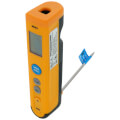

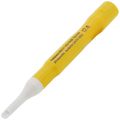

Pocket Tools are Fieldpiece's lineup of compact, single purpose testers built to fit in a technician's shirt pocket or tool pouch for quick checks on an HVAC service call. The line covers temperature, airflow, and infrared measurement in separate small devices rather than one multi function meter, so a tech can carry only what a given call needs. The SPK1 folds into a knife style thermometer for a fast probe reading, while the SIG1 handles non contact surface scanning as a gun style infrared thermometer. Between those two ends of the lineup sit combination tools like the SPK3, which pairs a probe with an infrared sensor in one body, and the STA2 in-duct hot wire anemometer for checking duct air velocity. Because each tool targets one job, technicians can grab exactly the reading they need without digging through a bulky combination meter, which speeds up routine diagnostic and startup checks in the field.
Subcategories
- Pocket Thermometers: Pocket thermometers cover the SPK1 knife style folding thermometer and the SPK2 folding pocket in-duct thermometer, both built for a fast single point temperature check. Technicians use these on service calls where a quick supply or return air reading is all that's needed, without pulling out a larger meter. The folding probe design protects the sensor tip when the tool rides in a pocket or pouch between jobs. Both models focus on speed over the multiple simultaneous readings a dual meter provides.
- Rod and Combination Thermometers: Rod and combination thermometers include the SPK3, which pairs a rod probe with an infrared sensor in one pocket sized tool, and the ST4 dual temperature meter for two simultaneous readings. Technicians reach for the SPK3 when a job calls for both a contact probe reading and a quick non contact surface scan without swapping tools. The ST4 suits side by side comparisons, such as checking supply and return temperatures at the same time. Both tools stay compact enough for a shirt pocket despite covering two measurement types.
- In-Duct Anemometers: In-duct anemometers center on the STA2, a hot wire anemometer built to read air velocity directly inside a duct. Technicians use this tool during startup and airflow troubleshooting calls to confirm a system is moving the air it's designed for. The hot wire sensor responds quickly to velocity changes, which helps when comparing readings across multiple duct runs on the same call. Its compact body fits through a standard duct test port without extra adapters.
- Infrared Thermometers: Infrared thermometers in the pocket tool lineup are represented by the SIG1, a gun style IR thermometer for non contact surface temperature readings. Technicians point and read surface temperatures on equipment, refrigerant lines, or ductwork without touching a hot or cold surface directly. The gun style form factor makes one handed use straightforward during a walk around inspection. Non contact scanning speeds up spot checks across multiple pieces of equipment on the same call.
Buying Guide
Start by identifying the single measurement a service call actually needs before picking a tool. A quick supply or return air temperature check calls for a folding pocket thermometer like the SPK1 or SPK2, while a job that needs both a probe reading and a surface scan points toward the combination SPK3 instead.
Consider how many readings need to happen at once. Pocket Tools built for a single measurement, such as the SIG1 infrared thermometer, work well for spot checks across several pieces of equipment in a row. A job comparing two points at the same time, like supply and return temperature on an evaporator coil, fits the dual reading ST4 better than carrying two separate single point tools.
Airflow verification calls for a different category entirely. The STA2 in-duct hot wire anemometer measures air velocity directly inside the duct, which a surface or probe thermometer cannot do. Startup checks and airflow troubleshooting calls are where this tool earns its place in the pouch.
Finally, weigh contact versus non contact measurement. Probe style tools touch the surface or airstream directly, giving a direct reading, while infrared tools scan from a short distance without contact, which matters when a surface is hard to reach or too hot to touch safely. Carrying one of each type covers most routine field measurement needs without adding the bulk of a full multi function meter.
Frequently Asked Questions
What's the difference between the SPK1 and SPK2 pocket thermometers?
The SPK1 is a knife style folding thermometer built around a single probe for a fast point reading. The SPK2 is a folding pocket in-duct thermometer, sized to slide into a duct test port for an airstream reading. Both stay compact enough for a shirt pocket, and the choice mostly comes down to whether the reading is a surface probe check or an in-duct temperature check.
Can the SPK3 take more than one type of reading?
SPK3 combines a rod probe with an infrared sensor in a single pocket sized body, so it takes both a contact temperature reading and a non contact surface scan without swapping tools. Technicians reach for it on calls that need both measurement types back to back. Carrying one combination tool instead of two single purpose tools saves pouch space on a service call.
What does the STA2 measure?
STA2 is an in-duct hot wire anemometer built to read air velocity directly inside a duct run. Technicians use it during startup checks and airflow troubleshooting to confirm a system is delivering the airflow it was designed for. The hot wire sensor reacts quickly to velocity changes, which helps when comparing several duct runs on the same call.
When should a tech use the ST4 instead of a single point thermometer?
ST4 is a dual temperature meter that takes two simultaneous readings, which suits jobs comparing supply and return temperature at the same time. A single point pocket thermometer works fine when only one reading matters, but the ST4 saves a step when two points need checking together. Pocket Tools like the ST4 fill that specific two point comparison role in the lineup.
What is the SIG1 used for?
SIG1 is a gun style infrared thermometer built for non contact surface temperature readings. Technicians point the tool at equipment, refrigerant lines, or ductwork to get a surface temperature without touching a hot or cold surface directly. Its one handed form factor makes it fast for spot checking multiple pieces of equipment during a single visit.
