




Filters
SORT
Product Availability –
Product Type –
Refrigerant Type –
Mount –
Number Of Zones –
Cooling Capacity (BTU) –
Heating Capacity (BTU) –
Energy Star Rated –
Review Score –
 --%3E %3Csvg version='1.1' id='Fill' xmlns='http://www.w3.org/2000/svg' xmlns:xlink='http://www.w3.org/1999/xlink' x='0px' y='0px' viewBox='0 0 100 100' enable-background='new 0 0 100 100' xml:space='preserve'%3E %3Cpath fill='%23F15C02' d='M79.44,0.95H20.56C9.78,0.95,0.95,9.78,0.95,20.56v58.87c0,10.79,8.82,19.61,19.61,19.61h58.87 c10.79,0,19.61-8.83,19.61-19.61V20.56C99.05,9.78,90.22,0.95,79.44,0.95z M65.38,58.24l9.38,29.58L49.69,69.78L24.5,87.82 l9.34-29.6L8.8,39.6l30.73-0.17c0,0,6.98-19.61,10-28.93c0.54,1.36,9.88,29.1,9.88,29.1H91.2L65.38,58.24z'/%3E %3C/svg%3E)
 --%3E %3Csvg version='1.1' id='With-RB' xmlns='http://www.w3.org/2000/svg' xmlns:xlink='http://www.w3.org/1999/xlink' x='0px' y='0px' viewBox='0 0 100 100' enable-background='new 0 0 100 100' xml:space='preserve'%3E %3Cpath fill='%23FBC8B4' d='M79.44,0.95H20.56C9.78,0.95,0.95,9.78,0.95,20.56v58.87c0,10.79,8.82,19.61,19.61,19.61h58.87 c10.79,0,19.61-8.83,19.61-19.61V20.56C99.05,9.78,90.22,0.95,79.44,0.95z M65.38,58.24l9.38,29.58L49.69,69.78L24.5,87.82 l9.34-29.6L8.8,39.6l30.73-0.17c0,0,6.98-19.61,10-28.93c0.54,1.36,9.88,29.1,9.88,29.1H91.2L65.38,58.24z'/%3E %3C/svg%3E)
Price Range –
LG Multi-Zone Ductless Air Conditioners

 --%3E %3Csvg version='1.1' id='No-RB' xmlns='http://www.w3.org/2000/svg' xmlns:xlink='http://www.w3.org/1999/xlink' x='0px' y='0px' viewBox='0 0 100 100' enable-background='new 0 0 100 100' xml:space='preserve'%3E %3Cpath fill='%23CECECE' d='M79.44,0.95H20.56C9.78,0.95,0.95,9.78,0.95,20.56v58.87c0,10.79,8.82,19.61,19.61,19.61h58.87 c10.79,0,19.61-8.83,19.61-19.61V20.56C99.05,9.78,90.22,0.95,79.44,0.95z M65.38,58.24l9.38,29.58L49.69,69.78L24.5,87.82 l9.34-29.6L8.8,39.6l30.73-0.17c0,0,6.98-19.61,10-28.93c0.54,1.36,9.88,29.1,9.88,29.1H91.2L65.38,58.24z'/%3E %3C/svg%3E)
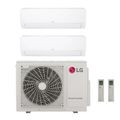
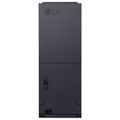
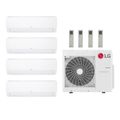

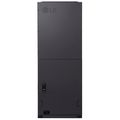
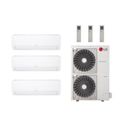
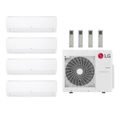
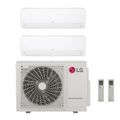
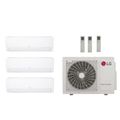
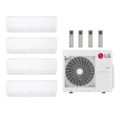
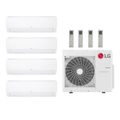
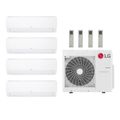
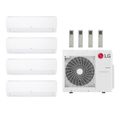
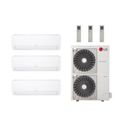
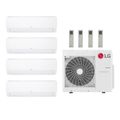
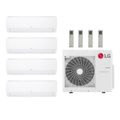
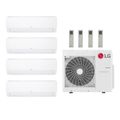


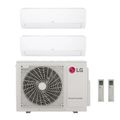
Flex multi-split ductless air conditioners are systems that connect one outdoor condensing unit to two or more indoor wall, ceiling, or floor units, letting a contractor cool several rooms without running new ductwork. A single outdoor unit variable-speed compressor adjusts output across all connected zones, so each indoor head can run at a different setting while sharing one refrigerant circuit. Installers turn to multi-split systems for additions, finished basements, or older homes where extending a forced-air duct system isn't practical or would cost more than the equipment itself. Because one outdoor unit serves multiple rooms, the layout has to account for total combined capacity across every connected indoor head rather than sizing each zone in isolation. Multi-split systems give a homeowner room-by-room temperature control while keeping the mechanical footprint outside the building down to a single condenser.
Subcategories
- Outdoor Condensing Units: The outdoor unit houses the compressor and connects to every indoor head in the system through a shared refrigerant line set. Contractors size the outdoor unit to the combined cooling load of all planned indoor zones rather than any single room. Placement needs enough clearance for airflow and service access, and most units are rated for a set maximum number of connected indoor heads. Matching the outdoor unit's zone limit to the project plan before ordering indoor heads avoids a mismatched system.
- Wall-Mounted Indoor Units: Wall-mounted indoor heads are the most common zone type in a multi-split layout and mount high on an interior wall near the ceiling. Each head runs its own fan speed and setpoint independently of the other zones on the same outdoor unit. Installers favor wall units for bedrooms, living rooms, and home offices where a compact, low-profile indoor unit fits the room's layout. Refrigerant line length between the indoor head and outdoor unit affects performance, so installers check the manufacturer's maximum run distance during layout.
- Ceiling and Floor-Mounted Indoor Units: Ceiling cassette and floor-mounted indoor units serve spaces where a wall unit isn't practical, such as a finished basement with limited wall clearance or a room where ceiling-recessed airflow looks cleaner. A ceiling cassette distributes air in multiple directions from a recessed housing, while a floor unit works like a low sightline radiator. Both types connect to the same outdoor condenser as wall units within the zone limit. Contractors mix indoor unit types on a single outdoor unit as long as the combined capacity stays within the system's rated range.
- Line Sets and Installation Accessories: Line sets carry refrigerant between the outdoor condenser and each indoor head, and multi-split projects typically need a separate line set run for every connected zone. Branch boxes or distribution joints split the refrigerant circuit from the outdoor unit out to each indoor head's individual line. Installers also stock wall sleeves, condensate drain accessories, and mounting brackets sized to the specific indoor unit models chosen for the project. Planning line set routing before installation day keeps refrigerant runs within the outdoor unit's rated total length.
Buying Guide
Sizing a multi-split system starts with the combined cooling load of every room the system will serve, not the load of any single zone. Flex multi-split ductless air conditioners are rated for a maximum number of connected indoor heads and a maximum combined capacity, so a contractor has to confirm both numbers line up with the project plan before selecting an outdoor unit. Oversizing the outdoor unit for the rooms it serves can lead to short cycling and poor humidity control, while undersizing leaves the system unable to keep up on the hottest days.
Indoor unit type matters as much as capacity. Wall-mounted heads suit most bedrooms and living spaces, while ceiling cassettes or floor units fit rooms where wall space is limited or a lower-profile appearance is preferred. Refrigerant line length between each indoor head and the outdoor condenser affects both performance and installation cost, so a project with rooms spread across a large footprint may need a different outdoor unit than one with rooms clustered close together. Contractors also confirm electrical requirements early, since a multi-split outdoor unit typically calls for a dedicated circuit sized to the combined system load. Reviewing zone count, combined capacity, and line set distance together, rather than one at a time, keeps a multi-split installation from running into a mismatched-component problem partway through the job.
Frequently Asked Questions
How many indoor units can connect to one outdoor unit?
The maximum number of indoor heads depends on the specific outdoor unit model, and each model lists its own zone limit. Exceeding that limit isn't possible since the outdoor unit's refrigerant circuit and controls are only built to manage a set number of connections. Confirming the zone count needed for a project before selecting the outdoor unit avoids having to size up mid-project.
Can different types of indoor units mix on the same multi-split system?
Wall-mounted, ceiling cassette, and floor-mounted indoor units can typically run on the same outdoor condenser as long as the combined capacity of all connected units stays within the outdoor unit's rated range. Mixing unit types lets a contractor match each room's layout instead of using the same style throughout. Checking the specific outdoor unit's compatibility list confirms which indoor unit types it supports.
Does each indoor unit run independently of the others?
Each indoor head has its own thermostat and fan control, so one room can run cooler than another on the same system. The shared outdoor unit adjusts total compressor output based on the combined demand from every connected zone. This independence is one of the main reasons contractors recommend multi-split systems over a single central system for additions.
How far can an indoor unit be from the outdoor condenser?
Maximum refrigerant line length varies by outdoor unit model and is listed in the manufacturer's installation manual. Longer runs can reduce system efficiency and may require a larger line set diameter. Planning line set routing during the estimate stage prevents a design that exceeds the rated maximum distance.
What electrical setup does a multi-split system need?
The outdoor condensing unit typically needs a dedicated circuit sized to the combined electrical load of the whole system, separate from the household's general circuits. Indoor units usually draw low-voltage control power routed from the outdoor unit rather than needing their own dedicated circuits. Confirming electrical panel capacity before installation day avoids a delay once the crew is on site.
