




Fuse Pullers


 --%3E %3Csvg version='1.1' id='No-RB' xmlns='http://www.w3.org/2000/svg' xmlns:xlink='http://www.w3.org/1999/xlink' x='0px' y='0px' viewBox='0 0 100 100' enable-background='new 0 0 100 100' xml:space='preserve'%3E %3Cpath fill='%23CECECE' d='M79.44,0.95H20.56C9.78,0.95,0.95,9.78,0.95,20.56v58.87c0,10.79,8.82,19.61,19.61,19.61h58.87 c10.79,0,19.61-8.83,19.61-19.61V20.56C99.05,9.78,90.22,0.95,79.44,0.95z M65.38,58.24l9.38,29.58L49.69,69.78L24.5,87.82 l9.34-29.6L8.8,39.6l30.73-0.17c0,0,6.98-19.61,10-28.93c0.54,1.36,9.88,29.1,9.88,29.1H91.2L65.38,58.24z'/%3E %3C/svg%3E)

 --%3E %3Csvg version='1.1' id='Fill' xmlns='http://www.w3.org/2000/svg' xmlns:xlink='http://www.w3.org/1999/xlink' x='0px' y='0px' viewBox='0 0 100 100' enable-background='new 0 0 100 100' xml:space='preserve'%3E %3Cpath fill='%23F15C02' d='M79.44,0.95H20.56C9.78,0.95,0.95,9.78,0.95,20.56v58.87c0,10.79,8.82,19.61,19.61,19.61h58.87 c10.79,0,19.61-8.83,19.61-19.61V20.56C99.05,9.78,90.22,0.95,79.44,0.95z M65.38,58.24l9.38,29.58L49.69,69.78L24.5,87.82 l9.34-29.6L8.8,39.6l30.73-0.17c0,0,6.98-19.61,10-28.93c0.54,1.36,9.88,29.1,9.88,29.1H91.2L65.38,58.24z'/%3E %3C/svg%3E)
 --%3E %3Csvg version='1.1' id='With-RB' xmlns='http://www.w3.org/2000/svg' xmlns:xlink='http://www.w3.org/1999/xlink' x='0px' y='0px' viewBox='0 0 100 100' enable-background='new 0 0 100 100' xml:space='preserve'%3E %3Cpath fill='%23FBC8B4' d='M79.44,0.95H20.56C9.78,0.95,0.95,9.78,0.95,20.56v58.87c0,10.79,8.82,19.61,19.61,19.61h58.87 c10.79,0,19.61-8.83,19.61-19.61V20.56C99.05,9.78,90.22,0.95,79.44,0.95z M65.38,58.24l9.38,29.58L49.69,69.78L24.5,87.82 l9.34-29.6L8.8,39.6l30.73-0.17c0,0,6.98-19.61,10-28.93c0.54,1.36,9.88,29.1,9.88,29.1H91.2L65.38,58.24z'/%3E %3C/svg%3E)
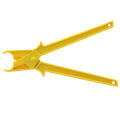

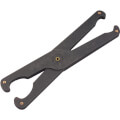

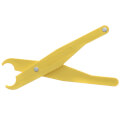
Fuse Pullers are insulated hand tools electricians use to remove and install cartridge fuses without touching the fuse body or risking contact with an energized fuse clip. Ideal Industries builds its Safe-T-Grip line from glass filled polypropylene, a material chosen for its high dielectric strength, and offers pullers sized for different fuse diameters rather than a single universal size. A medium puller handles fuses from 1/2 inch to 1 inch in diameter, while a large puller extends that range up to 2-1/2 inches for heavier cartridge fuses found in service equipment. Electricians keep both sizes on hand since panel and switchgear fuses vary widely in physical size even within the same voltage class. Reaching for the correctly sized puller instead of pliers or a screwdriver keeps hands clear of the fuse clips during removal.
Subcategories
- Medium Fuse Pullers: Medium fuse pullers handle fuses from 1/2 inch to 1 inch in diameter, covering the smaller cartridge fuses common in residential and light commercial panels. Ideal Industries builds its medium Safe-T-Grip puller to an overall length of 7-1/2 inches, rated for 0 to 100 amps at 250 and 600 volts. Electricians use this size for routine fuse changes in smaller disconnects and control panels. The compact length makes it easy to carry alongside other hand tools in a service bag.
- Large Fuse Pullers: Large fuse pullers extend the diameter range up to 2-1/2 inches, sized for the heavier cartridge fuses found in service entrance equipment and larger disconnects. Ideal Industries rates its large Safe-T-Grip puller for 31 to 600 amps at 250 volts and 31 to 400 amps at 600 volts, with an overall length of 11-3/4 inches. The longer handle keeps hands farther from the fuse clips when working in larger equipment. Electricians working on commercial and industrial services reach for this size when medium pullers can't grip the larger fuse body.
- Insulated Polypropylene Construction: Both medium and large fuse pullers use a glass filled polypropylene body, chosen for its high dielectric strength compared to uninsulated metal tools. The material resists cracking under normal use while keeping the tool nonconductive if it contacts an energized part accidentally. Notched grips molded into the handle give a secure hold on the fuse without the puller slipping off during removal. Electricians rely on this insulated construction as a layer of protection beyond de-energizing the circuit before servicing fuses.
- Marked Amperage Ranges: Each fuse puller carries its rated amperage and voltage range molded or printed directly onto the handle, so an electrician can confirm the tool matches the fuse being serviced without checking a separate reference. Ideal Industries marks its medium and large Safe-T-Grip pullers with their respective ranges, from 0 to 100 amps on the medium size up to 600 amps on the large size. Clear marking matters most when a service truck carries both sizes, since grabbing the wrong puller could mean a tool that doesn't properly grip a larger fuse. Checking the marked range against the fuse rating before pulling a fuse takes only a few seconds.
Buying Guide
Match the fuse puller to the physical diameter of the cartridge fuse being serviced rather than guessing based on the panel's amperage rating alone, since fuse body size doesn't scale in a straight line with amperage across every manufacturer. A medium fuse puller covers fuses from 1/2 inch to 1 inch in diameter, which fits most fuses found in residential and light commercial equipment. A large fuse puller extends that range to 2-1/2 inches, covering the larger fuses used in service entrance equipment and heavier commercial and industrial disconnects. Checking the amperage and voltage marked on the puller against the fuse being pulled confirms the tool is rated for the job before the fuse comes out. Fuse Pullers built with a glass filled polypropylene body provide insulation that a metal tool or improvised tool like pliers can't match, which matters even after a circuit has been de-energized, since verifying zero energy state isn't always perfectly reliable. Electricians who regularly service equipment spanning a wide amperage range typically carry both a medium and large puller rather than trying to make one size work for every fuse in the building. Keeping the correct size on hand also speeds up routine fuse replacement, since a puller that doesn't grip the fuse properly risks dropping it or damaging the fuse body during removal. Replacing a worn or cracked puller before the insulation is compromised keeps that layer of protection intact on every call.
Frequently Asked Questions
What size fuse puller do I need for a typical panel?
Most residential and light commercial cartridge fuses fall between 1/2 inch and 1 inch in diameter, which is the range a medium fuse puller covers. Larger service equipment and heavier commercial panels often use fuses up to 2-1/2 inches in diameter, which requires a large fuse puller instead. Checking the physical fuse size rather than assuming based on panel amperage prevents grabbing the wrong tool. Ideal Industries marks the diameter range directly on both its medium and large Safe-T-Grip pullers.
Why use a dedicated fuse puller instead of pliers?
A dedicated fuse puller is molded from glass filled polypropylene, a material with high dielectric strength that keeps the tool nonconductive if it contacts an energized part. Pliers are typically bare metal at the jaws, which removes that layer of protection entirely. Fuse Pullers also shape their jaws specifically to grip a cartridge fuse's ferrule without slipping, reducing the chance of dropping the fuse or damaging it during removal. The insulated design adds a safety margin that a general purpose tool doesn't provide.
What do the amperage and voltage numbers printed on a fuse puller mean?
The marked amperage and voltage range indicates the electrical rating the tool is designed and tested to handle safely, not necessarily the physical size limit of the fuse. Ideal Industries rates its medium Safe-T-Grip puller for 0 to 100 amps at 250 and 600 volts, and its large puller for 31 to 600 amps at 250 volts and 31 to 400 amps at 600 volts. Matching this rating to the circuit being serviced confirms the tool is appropriate for the job. Checking both the amperage rating and the physical fuse diameter before pulling a fuse covers both aspects of a safe match.
Do fuse pullers work on both glass and cartridge fuses?
Ideal Industries' Safe-T-Grip fuse pullers are built for cartridge-style fuses, which use a cylindrical body with metal ferrules or blade ends rather than the glass tube design found in some older or smaller fuses. Cartridge fuses are common in panels, disconnects, and service equipment covered by the medium and large Safe-T-Grip sizes. Confirming the fuse type before selecting a puller prevents a mismatch between the tool's jaw design and the fuse body. Fuse Pullers sized for cartridge fuses won't grip a glass tube fuse the same way a tool designed specifically for that shape would.
How long should a fuse puller last before it needs to be replaced?
A fuse puller should get replaced once the polypropylene body shows cracking, chips, or visible wear, since that damage compromises the insulation the tool is designed to provide. Regular inspection before each use catches this kind of damage before it becomes a safety issue. Ideal Industries builds its Safe-T-Grip line for repeated use in professional settings, but no insulated tool lasts indefinitely under daily field conditions. Replacing a damaged fuse puller is a small step compared to the risk of using a compromised tool near an energized fuse clip.
