




Filters
SORT
Product Availability –
Review Score –
 --%3E %3Csvg version='1.1' id='Fill' xmlns='http://www.w3.org/2000/svg' xmlns:xlink='http://www.w3.org/1999/xlink' x='0px' y='0px' viewBox='0 0 100 100' enable-background='new 0 0 100 100' xml:space='preserve'%3E %3Cpath fill='%23F15C02' d='M79.44,0.95H20.56C9.78,0.95,0.95,9.78,0.95,20.56v58.87c0,10.79,8.82,19.61,19.61,19.61h58.87 c10.79,0,19.61-8.83,19.61-19.61V20.56C99.05,9.78,90.22,0.95,79.44,0.95z M65.38,58.24l9.38,29.58L49.69,69.78L24.5,87.82 l9.34-29.6L8.8,39.6l30.73-0.17c0,0,6.98-19.61,10-28.93c0.54,1.36,9.88,29.1,9.88,29.1H91.2L65.38,58.24z'/%3E %3C/svg%3E)
 --%3E %3Csvg version='1.1' id='With-RB' xmlns='http://www.w3.org/2000/svg' xmlns:xlink='http://www.w3.org/1999/xlink' x='0px' y='0px' viewBox='0 0 100 100' enable-background='new 0 0 100 100' xml:space='preserve'%3E %3Cpath fill='%23FBC8B4' d='M79.44,0.95H20.56C9.78,0.95,0.95,9.78,0.95,20.56v58.87c0,10.79,8.82,19.61,19.61,19.61h58.87 c10.79,0,19.61-8.83,19.61-19.61V20.56C99.05,9.78,90.22,0.95,79.44,0.95z M65.38,58.24l9.38,29.58L49.69,69.78L24.5,87.82 l9.34-29.6L8.8,39.6l30.73-0.17c0,0,6.98-19.61,10-28.93c0.54,1.36,9.88,29.1,9.88,29.1H91.2L65.38,58.24z'/%3E %3C/svg%3E)
Price Range –
Goodman Amana Control Boards


 --%3E %3Csvg version='1.1' id='No-RB' xmlns='http://www.w3.org/2000/svg' xmlns:xlink='http://www.w3.org/1999/xlink' x='0px' y='0px' viewBox='0 0 100 100' enable-background='new 0 0 100 100' xml:space='preserve'%3E %3Cpath fill='%23CECECE' d='M79.44,0.95H20.56C9.78,0.95,0.95,9.78,0.95,20.56v58.87c0,10.79,8.82,19.61,19.61,19.61h58.87 c10.79,0,19.61-8.83,19.61-19.61V20.56C99.05,9.78,90.22,0.95,79.44,0.95z M65.38,58.24l9.38,29.58L49.69,69.78L24.5,87.82 l9.34-29.6L8.8,39.6l30.73-0.17c0,0,6.98-19.61,10-28.93c0.54,1.36,9.88,29.1,9.88,29.1H91.2L65.38,58.24z'/%3E %3C/svg%3E)
 --%3E %3Csvg version='1.1' id='Half' xmlns='http://www.w3.org/2000/svg' xmlns:xlink='http://www.w3.org/1999/xlink' x='0px' y='0px' viewBox='0 0 100 100' enable-background='new 0 0 100 100' xml:space='preserve'%3E %3Cg%3E %3Cpath fill='%23F15C02' d='M30.05,70.23l3.79-12.01L8.8,39.6l30.73-0.17c0,0,6.98-19.61,10-28.93c0.54,1.36,9.88,29.1,9.88,29.1h1.58 L93.71,7.18c-3.58-3.82-8.66-6.23-14.28-6.23H20.56C9.78,0.95,0.95,9.78,0.95,20.56v58.87c0,5.41,2.22,10.32,5.79,13.88 L30.05,70.23z'/%3E %3C/g%3E %3Cpath fill='%23FBC8B4' d='M93.71,7.18L60.98,39.6H91.2L65.38,58.24l9.38,29.58L49.69,69.78L24.5,87.82l5.55-17.59L6.75,93.32 c3.55,3.54,8.44,5.73,13.82,5.73h58.87c10.79,0,19.61-8.83,19.61-19.61V20.56C99.05,15.4,97.01,10.69,93.71,7.18z'/%3E %3C/svg%3E)
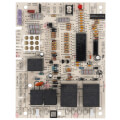
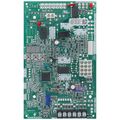
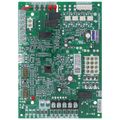
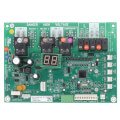
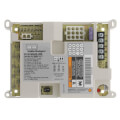

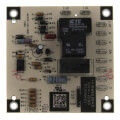
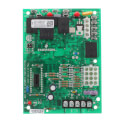
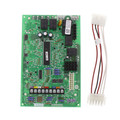

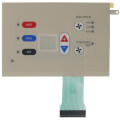
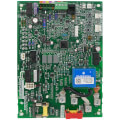
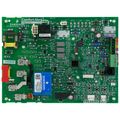
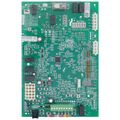
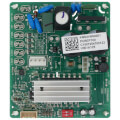
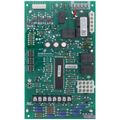
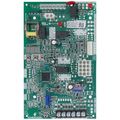
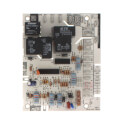
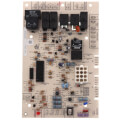
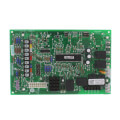
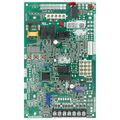
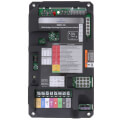
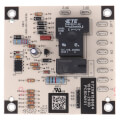
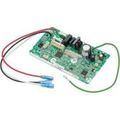
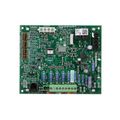
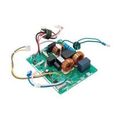
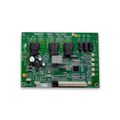
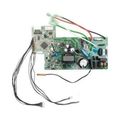

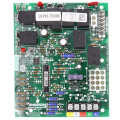
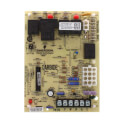
Goodman Amana Control Boards cover the furnace and air handler circuit boards that manage ignition sequencing, blower speed, and safety lockouts across Goodman and Amana branded heating equipment, both manufactured under Daikin Comfort Technologies North America. A self-diagnostic control board is standard across current Amana gas furnace lineups, flashing a fault code through an LED when a pressure switch, flame sensor, or limit switch trips instead of leaving a technician to guess at the failure. Color-coded low-voltage terminals on these boards speed up wiring during a board swap, since matching wire color to terminal label avoids a miswired thermostat connection. Boards vary by furnace stage type, meaning single-stage, two-stage, and variable-speed ECM furnaces each use a control board matched to that ignition and blower sequence. Confirming the furnace model number before ordering a replacement board is the single most common way to avoid an incompatible part.
Subcategories
- Single-Stage Furnace Control Boards: Single-stage furnace control boards manage a straightforward on/off burner cycle along with ignition sequencing and blower operation for entry-level Goodman and Amana gas furnaces. These boards handle a fixed heat output rather than modulating between stages, which keeps the board's wiring and jumper configuration simpler than two-stage or variable-speed versions. A self-diagnostic control board is standard on current Amana single-stage models, flashing an LED fault code when a safety switch trips. Confirming the exact furnace model before ordering keeps a single-stage board from being installed on equipment that expects a two-stage control sequence.
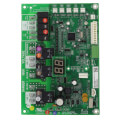
- Two-Stage and Variable-Speed Control Boards: Two-stage and variable-speed control boards manage a low and high heat output along with a matching ECM blower ramp, giving these furnaces smoother temperature control than a single-stage system. The board coordinates stage switching with blower speed, so a mismatched board can cause short cycling or a blower that runs at the wrong speed for the active heat stage. Amana's two-stage and variable-speed furnace lineups carry the same self-diagnostic feature as single-stage models, reporting faults through an LED code. Because staging logic differs across furnace series, a two-stage board from one model does not necessarily work in another without confirming compatibility first.
- Furnace Ignition Control Modules: Furnace ignition control modules handle the hot surface or intermittent pilot ignition sequence separately from the main circuit board on some Goodman and Amana furnace models, timing the igniter, gas valve, and flame sensor check during startup. A failed ignition module typically shows up as a furnace that runs through its pre-purge cycle but never lights, or one that lights and then shuts down on a failed flame sense. Matching the ignition module to the furnace's ignition type, hot surface versus intermittent pilot, is necessary since the two systems are not interchangeable. Technicians typically diagnose an ignition module issue by checking for spark or glow at the igniter before assuming the board itself has failed.
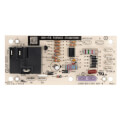
- Air Handler Control Boards: Air handler control boards manage blower operation, electric heat strip staging, and low-voltage thermostat signals on Goodman and Amana air handlers used with heat pump and straight cool systems. These boards read the thermostat call for heat, cool, or fan and translate it into blower speed and heat strip stage, so a board fault often shows up as a blower running at the wrong speed or heat strips that will not energize. Multi-position air handlers use a board that accounts for the unit's mounting orientation, which matters when a replacement board needs to match the original wiring configuration. Confirming both the air handler model number and heat strip kit size before ordering keeps the replacement board's heat stage wiring compatible with the installed heater kit.
Buying Guide
Ordering the right board starts with the furnace or air handler's model and serial number from the equipment's data plate rather than matching by visual appearance, since boards for similar-looking equipment often carry different firmware, jumper settings, or terminal layouts. Single-stage, two-stage, and variable-speed furnaces each need a board built for that specific staging and blower logic, and installing a mismatched board can cause short cycling, blower speed errors, or a furnace that will not complete its startup sequence. Shopping Goodman Amana Control Boards by furnace series first narrows the search before worrying about specific board revisions, since a series change usually means a different control platform altogether. Ignition control modules should be matched to the furnace's ignition type, hot surface or intermittent pilot, since these two systems use different timing and voltage requirements and are not interchangeable. Air handler boards add another variable, heat strip kit size, which needs to match the board's heat stage wiring to avoid an electric heat strip that will not energize or that overloads the circuit. Self-diagnostic LED fault codes on current Amana boards are a fast way to confirm a suspected board failure before ordering a replacement, since a code pointing to a pressure switch or flame sensor issue means the board itself may not be the problem. Keeping the old board on hand during a swap also helps confirm wiring position, especially on older equipment where a replacement board's terminal layout has changed slightly from the original.
Frequently Asked Questions
How can a technician tell if a Goodman or Amana furnace control board has failed?
Current Amana furnace boards include a self-diagnostic feature that flashes an LED fault code when a safety switch, such as a pressure switch or flame sensor, trips. Reading that code first narrows down whether the board itself has failed or whether it is correctly reporting a problem elsewhere in the furnace.
Are two-stage furnace control boards interchangeable with single-stage boards?
No. Two-stage boards manage a low and high heat output paired with matching blower speeds, while single-stage boards only handle one fixed output. Installing a single-stage board on two-stage equipment, or the reverse, typically causes short cycling or incorrect blower operation.
What's the difference between a furnace control board and an ignition control module?
The main control board manages overall furnace operation, including blower staging and safety monitoring, while the ignition control module handles the startup sequence for the igniter, gas valve, and flame sensor. Some furnace models combine both functions on a single board, while others use them separately.
Do air handler control boards need to match the installed heat strip kit?
Yes. The board's heat stage wiring needs to correspond to the heat strip kit size installed in the air handler, since a mismatch can leave the heat strips unable to energize or create an overload risk on the circuit.
What information is needed before ordering a replacement control board?
The furnace or air handler's full model and serial number from the equipment's data plate is the starting point, since visually similar equipment can use different boards. For furnaces, confirming the staging type, single-stage, two-stage, or variable-speed, also narrows down the correct board.
