




Filters
SORT
Product Availability –
Size –
Review Score –
 --%3E %3Csvg version='1.1' id='Fill' xmlns='http://www.w3.org/2000/svg' xmlns:xlink='http://www.w3.org/1999/xlink' x='0px' y='0px' viewBox='0 0 100 100' enable-background='new 0 0 100 100' xml:space='preserve'%3E %3Cpath fill='%23F15C02' d='M79.44,0.95H20.56C9.78,0.95,0.95,9.78,0.95,20.56v58.87c0,10.79,8.82,19.61,19.61,19.61h58.87 c10.79,0,19.61-8.83,19.61-19.61V20.56C99.05,9.78,90.22,0.95,79.44,0.95z M65.38,58.24l9.38,29.58L49.69,69.78L24.5,87.82 l9.34-29.6L8.8,39.6l30.73-0.17c0,0,6.98-19.61,10-28.93c0.54,1.36,9.88,29.1,9.88,29.1H91.2L65.38,58.24z'/%3E %3C/svg%3E)
Price Range –
HandTite Test Devices

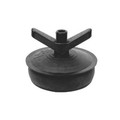

HandTite Test Devices are tool-free pipe plugs plumbers use to seal a pipe's bell or spigot end for pressure testing without wrenches, hoses, or gauges. The line spans eight nominal diameters, 4, 5, 6, 8, 10, 12, 15, and 18 inches, covering plastic, iron, and clay pipe on a single reusable device. Representative testing shows the plugs hold in excess of 10 psi on A/C pipe, 8 psi on vitrified clay, and 5 psi on PVC, which covers the pressure range most drain, waste, and vent inspections require. Built from HDPE and Nylon 6 plastic with rubber components rated for durometer 40 plus or minus 5, the plugs contain no corrosive metal parts on the smaller sizes. Because they thread in and back out by hand, crews move through multiple test points on a job faster than pneumatic alternatives allow, without sacrificing the seal an inspector needs to see.
Subcategories
- Standard HandTite Pipe Plugs: Standard plugs cover the full 4 to 18 inch size range and install by hand with no tools required. They seal bell and spigot ends on plastic, iron, or clay pipe and are built to be reused across multiple test cycles. Construction uses HDPE and Nylon 6 plastic with rubber rated at Duro 40 plus or minus 5, avoiding corrosive metal parts on the smaller sizes. Plumbers use these as the default test plug for standard DWV pressure and low-pressure air testing.
- Bypass-Convertible Plugs (10 Inch and Larger): Sizes 10 inches and larger convert into low-pressure test or bypass plugs as a standard feature. That conversion lets crews keep partial flow moving through a line during extended testing or while work continues elsewhere on the system. It's a practical feature on larger commercial or municipal drain lines where shutting off flow completely isn't an option. The 15 and 18 inch sizes add stainless steel thumb screws and brass inserts to handle the larger plug body.
Buying Guide
Match the plug size to the pipe's actual bell or spigot diameter first; HandTite Test Devices are sold in 4, 5, 6, 8, 10, 12, 15, and 18 inch nominal sizes, and an undersized or oversized plug won't seat properly regardless of pressure rating. Confirm the pipe material next, since plastic, iron, and clay pipe all fall within the plugs' sealing range but carry different pressure tolerances.
Consider the pressure the test actually requires. Representative results show these plugs hold above 10 psi on A/C pipe, 8 psi on vitrified clay, and 5 psi on PVC, which covers most DWV inspection requirements without needing a pneumatic test plug. If the job needs to keep partial flow running during an extended test, look at the 10 inch and larger sizes, which convert into bypass plugs as a standard feature rather than requiring a separate device.
Check material composition if the installation will stay buried or in place long term. The plugs use HDPE and Nylon 6 plastic with Duro 40 plus or minus 5 rubber and avoid corrosive metal components on smaller sizes, though 15 and 18 inch plugs include stainless steel thumb screws and brass inserts. That construction lets a plug remain in a line indefinitely if needed, which matters on jobs where a test point gets covered or backfilled before final inspection.
Frequently Asked Questions
What pipe materials work with HandTite Test Devices?
The plugs seal bell and spigot ends on plastic, iron, or clay pipe. Pressure tolerance varies by material, with A/C pipe holding above 10 psi, vitrified clay above 8 psi, and PVC above 5 psi. Checking the pipe material against these tolerances confirms the plug suits the test being run.
Do HandTite Test Devices require any tools to install?
No tools are needed. The plugs are designed to thread in and tighten by hand, which speeds up testing across multiple points on a job compared to pneumatic plugs that need hoses and gauges. They're also reusable across multiple test cycles.
What sizes are available for HandTite Test Devices?
The line covers eight nominal sizes: 4, 5, 6, 8, 10, 12, 15, and 18 inches. Matching the plug to the pipe's actual bell or spigot diameter is necessary for a proper seal. Larger sizes add stainless steel thumb screws and brass inserts to the mostly plastic and rubber construction.
Can a HandTite plug stay in the pipe after testing?
The plugs contain no corrosive metal components on smaller sizes and can remain buried or in place indefinitely if needed. That makes them useful on jobs where a test point gets backfilled or covered before final inspection. Larger 15 and 18 inch plugs do include stainless steel and brass hardware.
What's the benefit of a bypass-convertible plug over a standard plug?
Sizes 10 inches and larger convert into low-pressure test or bypass plugs as a standard feature, letting partial flow continue through the line during an extended test. That's useful on larger commercial or municipal lines where a complete shutoff isn't practical. Standard sizes under 10 inches don't include this bypass conversion.
