




Hole Saws
Hole Saws are cylindrical cutting attachments used to bore round openings through wood, metal, or duct material. They are typically used to run pipe, conduit, or cable through a wall, joist, or duct wall. The category includes several cutting-edge types, each matched to a different material and duty cycle. It also includes the arbors and pilot bits that hold a hole saw in a drill or driver.
Choosing the right hole saw type affects both how clean the cut comes out and how long the blade lasts before it needs replacing. A saw built for wood will dull quickly against sheet metal, while a saw built for metal cutting is often unnecessary, and more expensive, for routine wood boring.



Subcategories
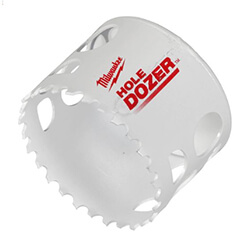
- Bi-Metal Hole Saws: Bi-Metal Hole Saws combine a flexible steel body with hardened teeth. This gives them enough durability to cut through wood, plastic, and thin metal without shattering like an all-hard-steel blade can. They're a general-purpose choice for mixed-material jobs where a contractor doesn't want to switch blades between cuts.
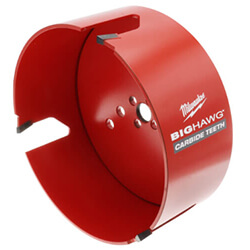
- Carbide Tipped Hole Saws: Carbide Tipped Hole Saws use carbide teeth brazed onto the cutting edge, extending blade life significantly when cutting abrasive materials such as cement board, tile, or fiberglass. Contractors reach for this type when a job involves repeated cuts through harder or more abrasive material than wood.
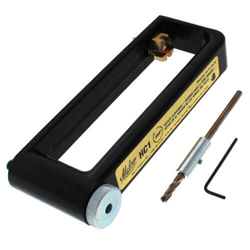
- Duct Hole Cutters: Duct Hole Cutters are sized and shaped specifically for cutting round openings into sheet metal ductwork, typically for installing a boot, damper, or branch takeoff. Their cutting geometry is built for thin sheet metal rather than the thicker material a standard hole saw is designed to handle.
- Hole Saw Arbors & Pilot Drill Bits: Hole Saw Arbors & Pilot Drill Bits are the components that mount a hole saw blade into a drill chuck and center the cut with a pilot bit. An arbor sized to the wrong hole saw diameter won't seat properly, so matching arbor and blade size is a basic step before starting a cut.
- TCT Annular Cutters: TCT Annular Cutters use tungsten carbide teeth in a ring-shaped cutting pattern. They are designed for drilling clean, precise holes through structural steel and other metal with a magnetic drill press rather than a handheld drill. They remove a solid slug of material rather than shavings, cutting faster through thick metal than a standard hole saw.
- TKO Carbide Tipped Hole Cutters: TKO Carbide Tipped Hole Cutters are a carbide-tipped option built for repeated use in demanding cutting conditions. They extend tool life compared to standard bi-metal blades on tough or abrasive materials.
Buying Guide
Matching the hole saw type to the material being cut is the first decision on any job. Bi-metal blades handle general wood and light-duty jobs. Carbide-tipped and TCT options are built for abrasive or hard materials like cement board, tile, or structural steel. Using the wrong type shortens blade life fast.
For sheet metal duct openings, a duct hole cutter's geometry is built for that thin material. It cuts a cleaner opening than a general-purpose hole saw would on the same cut.
Confirm arbor and pilot bit compatibility before starting a job. An arbor sized for the wrong hole saw diameter won't seat correctly and can wobble during the cut, producing an out-of-round hole.
For thick structural steel, an annular cutter used with a magnetic drill press cuts faster and produces a cleaner hole than a handheld hole saw. It removes a solid slug rather than grinding through the full cross-section as shavings.
Select blade diameter to match the pipe, conduit, or fitting passing through the hole. Add a small margin for fit and any required firestop or grommet material. This avoids cutting an oversized hole that then needs to be patched or sealed separately.
Frequently Asked Questions
What's the difference between a bi-metal and a carbide-tipped hole saw?
A bi-metal hole saw combines a flexible body with hardened teeth for general wood and light-duty cutting. A carbide-tipped hole saw holds an edge longer against abrasive materials like cement board or tile.
Can a standard hole saw cut through sheet metal ductwork?
A standard hole saw can sometimes manage a duct cut. However, a duct hole cutter's geometry is purpose-built for thin sheet metal and typically produces a cleaner opening with less binding.
What does the arbor do on a hole saw?
The arbor mounts the hole saw blade into a drill chuck and holds a pilot bit that centers the cut. Matching the arbor to the correct blade diameter keeps the saw from wobbling during the cut.
When does a job call for an annular cutter instead of a standard hole saw?
Annular cutters paired with a magnetic drill press are suited to thick structural steel. They cut faster and cleaner than a handheld hole saw by removing a solid slug of metal rather than grinding through shavings.
How is hole saw diameter chosen for running pipe or conduit through a wall?
Diameter should match the outer dimension of the pipe, conduit, or fitting passing through. Allow a small margin for fit and any firestop or grommet material required at that penetration.
Resources
Subcategories
- Bi-Metal Hole Saws: Bi-Metal Hole Saws combine a flexible steel body with hardened teeth. This gives them enough durability to cut through wood, plastic, and thin metal without shattering like an all-hard-steel blade can. They're a general-purpose choice for mixed-material jobs where a contractor doesn't want to switch blades between cuts.
- Carbide Tipped Hole Saws: Carbide Tipped Hole Saws use carbide teeth brazed onto the cutting edge, extending blade life significantly when cutting abrasive materials such as cement board, tile, or fiberglass. Contractors reach for this type when a job involves repeated cuts through harder or more abrasive material than wood.
- Duct Hole Cutters: Duct Hole Cutters are sized and shaped specifically for cutting round openings into sheet metal ductwork, typically for installing a boot, damper, or branch takeoff. Their cutting geometry is built for thin sheet metal rather than the thicker material a standard hole saw is designed to handle.
- Hole Saw Arbors & Pilot Drill Bits: Hole Saw Arbors & Pilot Drill Bits are the components that mount a hole saw blade into a drill chuck and center the cut with a pilot bit. An arbor sized to the wrong hole saw diameter won't seat properly, so matching arbor and blade size is a basic step before starting a cut.
- TCT Annular Cutters: TCT Annular Cutters use tungsten carbide teeth in a ring-shaped cutting pattern. They are designed for drilling clean, precise holes through structural steel and other metal with a magnetic drill press rather than a handheld drill. They remove a solid slug of material rather than shavings, cutting faster through thick metal than a standard hole saw.
- TKO Carbide Tipped Hole Cutters: TKO Carbide Tipped Hole Cutters are a carbide-tipped option built for repeated use in demanding cutting conditions. They extend tool life compared to standard bi-metal blades on tough or abrasive materials.
Buying Guide
Matching the hole saw type to the material being cut is the first decision on any job. Bi-metal blades handle general wood and light-duty jobs. Carbide-tipped and TCT options are built for abrasive or hard materials like cement board, tile, or structural steel. Using the wrong type shortens blade life fast.
For sheet metal duct openings, a duct hole cutter's geometry is built for that thin material. It cuts a cleaner opening than a general-purpose hole saw would on the same cut.
Confirm arbor and pilot bit compatibility before starting a job. An arbor sized for the wrong hole saw diameter won't seat correctly and can wobble during the cut, producing an out-of-round hole.
For thick structural steel, an annular cutter used with a magnetic drill press cuts faster and produces a cleaner hole than a handheld hole saw. It removes a solid slug rather than grinding through the full cross-section as shavings.
Select blade diameter to match the pipe, conduit, or fitting passing through the hole. Add a small margin for fit and any required firestop or grommet material. This avoids cutting an oversized hole that then needs to be patched or sealed separately.
Frequently Asked Questions
What's the difference between a bi-metal and a carbide-tipped hole saw?
A bi-metal hole saw combines a flexible body with hardened teeth for general wood and light-duty cutting. A carbide-tipped hole saw holds an edge longer against abrasive materials like cement board or tile.
Can a standard hole saw cut through sheet metal ductwork?
A standard hole saw can sometimes manage a duct cut. However, a duct hole cutter's geometry is purpose-built for thin sheet metal and typically produces a cleaner opening with less binding.
What does the arbor do on a hole saw?
The arbor mounts the hole saw blade into a drill chuck and holds a pilot bit that centers the cut. Matching the arbor to the correct blade diameter keeps the saw from wobbling during the cut.
When does a job call for an annular cutter instead of a standard hole saw?
Annular cutters paired with a magnetic drill press are suited to thick structural steel. They cut faster and cleaner than a handheld hole saw by removing a solid slug of metal rather than grinding through shavings.
How is hole saw diameter chosen for running pipe or conduit through a wall?
Diameter should match the outer dimension of the pipe, conduit, or fitting passing through. Allow a small margin for fit and any firestop or grommet material required at that penetration.