




Homeline Circuit Breakers

 --%3E %3Csvg version='1.1' id='Fill' xmlns='http://www.w3.org/2000/svg' xmlns:xlink='http://www.w3.org/1999/xlink' x='0px' y='0px' viewBox='0 0 100 100' enable-background='new 0 0 100 100' xml:space='preserve'%3E %3Cpath fill='%23F15C02' d='M79.44,0.95H20.56C9.78,0.95,0.95,9.78,0.95,20.56v58.87c0,10.79,8.82,19.61,19.61,19.61h58.87 c10.79,0,19.61-8.83,19.61-19.61V20.56C99.05,9.78,90.22,0.95,79.44,0.95z M65.38,58.24l9.38,29.58L49.69,69.78L24.5,87.82 l9.34-29.6L8.8,39.6l30.73-0.17c0,0,6.98-19.61,10-28.93c0.54,1.36,9.88,29.1,9.88,29.1H91.2L65.38,58.24z'/%3E %3C/svg%3E)
 --%3E %3Csvg version='1.1' id='With-RB' xmlns='http://www.w3.org/2000/svg' xmlns:xlink='http://www.w3.org/1999/xlink' x='0px' y='0px' viewBox='0 0 100 100' enable-background='new 0 0 100 100' xml:space='preserve'%3E %3Cpath fill='%23FBC8B4' d='M79.44,0.95H20.56C9.78,0.95,0.95,9.78,0.95,20.56v58.87c0,10.79,8.82,19.61,19.61,19.61h58.87 c10.79,0,19.61-8.83,19.61-19.61V20.56C99.05,9.78,90.22,0.95,79.44,0.95z M65.38,58.24l9.38,29.58L49.69,69.78L24.5,87.82 l9.34-29.6L8.8,39.6l30.73-0.17c0,0,6.98-19.61,10-28.93c0.54,1.36,9.88,29.1,9.88,29.1H91.2L65.38,58.24z'/%3E %3C/svg%3E)

 --%3E %3Csvg version='1.1' id='No-RB' xmlns='http://www.w3.org/2000/svg' xmlns:xlink='http://www.w3.org/1999/xlink' x='0px' y='0px' viewBox='0 0 100 100' enable-background='new 0 0 100 100' xml:space='preserve'%3E %3Cpath fill='%23CECECE' d='M79.44,0.95H20.56C9.78,0.95,0.95,9.78,0.95,20.56v58.87c0,10.79,8.82,19.61,19.61,19.61h58.87 c10.79,0,19.61-8.83,19.61-19.61V20.56C99.05,9.78,90.22,0.95,79.44,0.95z M65.38,58.24l9.38,29.58L49.69,69.78L24.5,87.82 l9.34-29.6L8.8,39.6l30.73-0.17c0,0,6.98-19.61,10-28.93c0.54,1.36,9.88,29.1,9.88,29.1H91.2L65.38,58.24z'/%3E %3C/svg%3E)
 --%3E %3Csvg version='1.1' id='Half' xmlns='http://www.w3.org/2000/svg' xmlns:xlink='http://www.w3.org/1999/xlink' x='0px' y='0px' viewBox='0 0 100 100' enable-background='new 0 0 100 100' xml:space='preserve'%3E %3Cg%3E %3Cpath fill='%23F15C02' d='M30.05,70.23l3.79-12.01L8.8,39.6l30.73-0.17c0,0,6.98-19.61,10-28.93c0.54,1.36,9.88,29.1,9.88,29.1h1.58 L93.71,7.18c-3.58-3.82-8.66-6.23-14.28-6.23H20.56C9.78,0.95,0.95,9.78,0.95,20.56v58.87c0,5.41,2.22,10.32,5.79,13.88 L30.05,70.23z'/%3E %3C/g%3E %3Cpath fill='%23FBC8B4' d='M93.71,7.18L60.98,39.6H91.2L65.38,58.24l9.38,29.58L49.69,69.78L24.5,87.82l5.55-17.59L6.75,93.32 c3.55,3.54,8.44,5.73,13.82,5.73h58.87c10.79,0,19.61-8.83,19.61-19.61V20.56C99.05,15.4,97.01,10.69,93.71,7.18z'/%3E %3C/svg%3E)
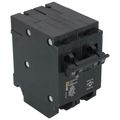
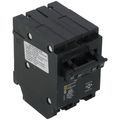
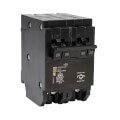
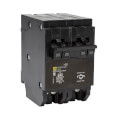
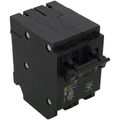
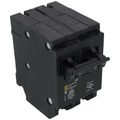
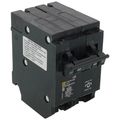
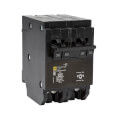
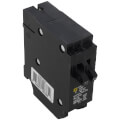
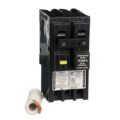
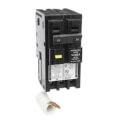
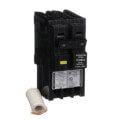
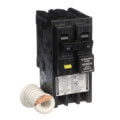
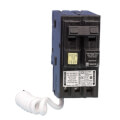

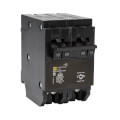
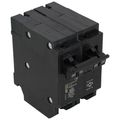
Homeline Series Circuit Breakers are plug-on breakers designed to fit Homeline-compatible load centers found in a wide range of residential and light commercial panels. Each breaker protects a branch circuit by tripping when it senses an overload or a short, cutting power before wiring or connected equipment can overheat. Electricians reach for this series when servicing an existing Homeline panel or building out a new one, since matching breaker and panel families keeps the installation within listing requirements. The lineup covers single-pole and multi-pole configurations along with specialty trip types for circuits that need extra protection, such as those feeding bathrooms, kitchens, or outdoor receptacles. Panels using this series are common in single-family homes, additions, and smaller commercial buildouts, which keeps demand for replacement and add-on breakers steady on service calls. Because the breakers snap directly onto the panel bus, swapping a tripped or damaged unit is usually a quick task once the panel is confirmed de-energized.
Subcategories
- Single-Pole Breakers: Single-pole breakers protect standard 120-volt branch circuits such as lighting and general receptacles. They are the most commonly replaced breaker type on a typical service call. Electricians keep a range of amperages on the truck to match whatever circuit they are working on.
- Double-Pole Breakers: Double-pole breakers serve 240-volt circuits feeding larger loads such as dryers, ranges, and water heaters. Both poles trip together, which keeps both legs of the circuit isolated during a fault. Panel space and load calculations should confirm the breaker fits the intended circuit.
- GFCI and AFCI Breakers: These specialty breakers add ground-fault or arc-fault protection at the panel rather than the receptacle. They are frequently required by code for bathrooms, kitchens, bedrooms, and outdoor circuits depending on the area and edition of code in force. Confirming the applicable code requirement before rough-in avoids a failed inspection.
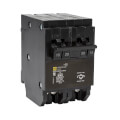
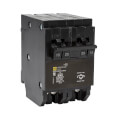
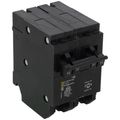
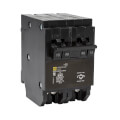
- Tandem Breakers: Tandem breakers fit two circuits into the space of one standard breaker slot, which helps when a panel is out of open spaces. Not every panel accepts tandem breakers in every slot, so checking the panel's listing is a necessary step before installing one.
Buying Guide
Matching a replacement or new breaker to the panel it will serve is the first and most important step. Breakers are listed for use in specific panel families, and installing one that is not listed for the panel can create a safety and code issue even if it physically fits. Checking the panel's label or manufacturer documentation before ordering avoids a return trip.
Amperage rating comes next. The breaker's rating should match the wire gauge and the load it protects, not just whatever was in the panel previously if that circuit has been altered. Reviewing the circuit's actual wiring and connected load keeps the installation both safe and code compliant.
Pole configuration depends on the voltage the circuit needs. Standard lighting and receptacle circuits use single-pole breakers, while larger appliances and equipment typically need double-pole units. Getting this wrong at the counter means an extra trip back to the supply house.
Where GFCI or AFCI protection is required by code, confirm whether that protection needs to originate at the panel or can be satisfied at the receptacle instead. Panel-mounted protection can simplify a job with multiple receptacles on one circuit, since it covers the whole circuit from one breaker.
Finally, keep a small stock of common Homeline Series Circuit Breakers amperages on hand for service work. Panels using this series show up often enough on residential calls that having single-pole 15, 20, and a couple of double-pole sizes ready to go can turn a diagnostic visit into a completed repair.
Frequently Asked Questions
Can any breaker be installed in a Homeline panel?
No, only breakers listed for use with that specific panel family should be installed, even if another brand's breaker appears to fit physically. Using an unlisted breaker can void the panel's listing and create a safety hazard.
What is the difference between single-pole and double-pole breakers?
Single-pole breakers protect standard 120-volt circuits, while double-pole breakers protect 240-volt circuits and trip both legs together during a fault. The circuit's voltage and connected load determine which type is needed.
When is a GFCI or AFCI breaker required instead of a standard one?
Requirements vary by area and the edition of code in force, but bathrooms, kitchens, bedrooms, and outdoor circuits commonly require this added protection. Checking the local code requirement before rough-in is the safest approach.
Are tandem breakers a good way to add circuits to a full panel?
Tandem breakers can add circuit capacity in a panel that is out of open slots, but not every panel or every slot is listed for tandem use. The panel's label or documentation will confirm whether tandem breakers are permitted.
How do I know if a breaker has failed versus a wiring problem?
A breaker that trips immediately upon reset often points to a fault in the wiring or connected equipment rather than the breaker itself. A licensed electrician can test the circuit to isolate the cause before any parts are replaced.
