





'/%3E%3C/svg%3E)
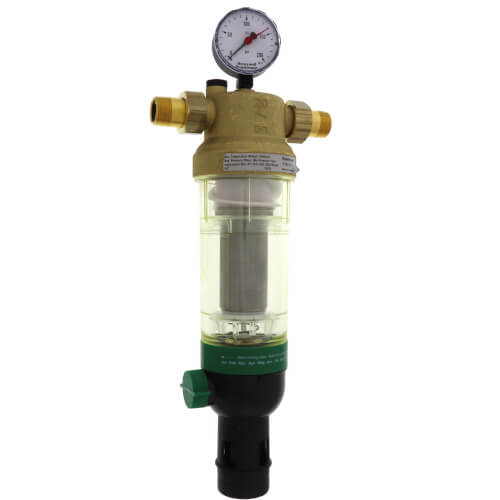
3/4" Sediment Removal Water Filter (Plastic)
 --%3E %3Csvg version='1.1' id='Fill' xmlns='http://www.w3.org/2000/svg' xmlns:xlink='http://www.w3.org/1999/xlink' x='0px' y='0px' viewBox='0 0 100 100' enable-background='new 0 0 100 100' xml:space='preserve'%3E %3Cpath fill='%23F15C02' d='M79.44,0.95H20.56C9.78,0.95,0.95,9.78,0.95,20.56v58.87c0,10.79,8.82,19.61,19.61,19.61h58.87 c10.79,0,19.61-8.83,19.61-19.61V20.56C99.05,9.78,90.22,0.95,79.44,0.95z M65.38,58.24l9.38,29.58L49.69,69.78L24.5,87.82 l9.34-29.6L8.8,39.6l30.73-0.17c0,0,6.98-19.61,10-28.93c0.54,1.36,9.88,29.1,9.88,29.1H91.2L65.38,58.24z'/%3E %3C/svg%3E)
 --%3E %3Csvg version='1.1' id='Half' xmlns='http://www.w3.org/2000/svg' xmlns:xlink='http://www.w3.org/1999/xlink' x='0px' y='0px' viewBox='0 0 100 100' enable-background='new 0 0 100 100' xml:space='preserve'%3E %3Cg%3E %3Cpath fill='%23F15C02' d='M30.05,70.23l3.79-12.01L8.8,39.6l30.73-0.17c0,0,6.98-19.61,10-28.93c0.54,1.36,9.88,29.1,9.88,29.1h1.58 L93.71,7.18c-3.58-3.82-8.66-6.23-14.28-6.23H20.56C9.78,0.95,0.95,9.78,0.95,20.56v58.87c0,5.41,2.22,10.32,5.79,13.88 L30.05,70.23z'/%3E %3C/g%3E %3Cpath fill='%23FBC8B4' d='M93.71,7.18L60.98,39.6H91.2L65.38,58.24l9.38,29.58L49.69,69.78L24.5,87.82l5.55-17.59L6.75,93.32 c3.55,3.54,8.44,5.73,13.82,5.73h58.87c10.79,0,19.61-8.83,19.61-19.61V20.56C99.05,15.4,97.01,10.69,93.71,7.18z'/%3E %3C/svg%3E)


MANUALS (3)
Product Highlights


Description
Specifications
- Description - 3/4 inch Water filter
- Pipe Size (inch)- 3/4 in.
- Pipe Size (DN)- DN15
- Connection Type - NPT External Threaded and Sweat
- Sump - Clear Plastic
- Capacity (Cv) - 11 Cv
- Capacity (Kv) - 9.4 Kv
- Pressure Ratings (psi) - 230 psi maximum
- Dimensions (in.) - 17 11/16 in. high x 7 in. wide x 3 13/16 in. deep
- Dimensions (mm) - 449 mm high x 178 mm wide x 97 mm deep
- Weight (lb) - 6.4 lb
- Weight (g) - 2.9 kg
- Screen Size - 100 micron screen
- Temperature Rating (F) - 104 F Maximum
- Materials (Body) - Brass
- Temperature Rating (C) - 40 C Maximum
- Includes - gauge and service wrench
Features
- Whole House Protection
- Ideally suited for sediment removal applications that would quickly plug and restrict the flow of normal filters.
- Used as a prefilter, the F76 protects elements of the water system, including specialized treatment devices or other common fixtures and appliances.
- The flow filtering capacity and ease of cleaning make the F76S ideal for the most demanding applications.
- Built-in secondary filter provides an uninterrupted supply of filtered water during backwashing.
Specs
| Product Type: | Filtration System |
|---|---|
| Type: | Whole House Sediment |
| Application: | Point of Entry Pre-Filter Commercial Plumbing |
| Micron Rating: | 100 |
| Flow Rate (GPM): | 3.2 |
| Max Water Temp (°F): | 104°F |
| Size: | 3/4" |
| Material: | Plastic Sump |
| Connection Type: | NPT Sweat |
| Height: | 17-11/16" |
| Diameter (Inches): | 3-13/16" |
| Reduction Claim: | Rust Sediment |
| Max Pressure (PSI): | 230 |
| Thread Type: | Male |
| Temperature Range (F): | 104°F Max |

Questions?
You May Also Need
Product Reviews
Most Liked Positive Review
Third of these we are using
Most Liked Negative Review
 --%3E %3Csvg version='1.1' id='With-RB' xmlns='http://www.w3.org/2000/svg' xmlns:xlink='http://www.w3.org/1999/xlink' x='0px' y='0px' viewBox='0 0 100 100' enable-background='new 0 0 100 100' xml:space='preserve'%3E %3Cpath fill='%23FBC8B4' d='M79.44,0.95H20.56C9.78,0.95,0.95,9.78,0.95,20.56v58.87c0,10.79,8.82,19.61,19.61,19.61h58.87 c10.79,0,19.61-8.83,19.61-19.61V20.56C99.05,9.78,90.22,0.95,79.44,0.95z M65.38,58.24l9.38,29.58L49.69,69.78L24.5,87.82 l9.34-29.6L8.8,39.6l30.73-0.17c0,0,6.98-19.61,10-28.93c0.54,1.36,9.88,29.1,9.88,29.1H91.2L65.38,58.24z'/%3E %3C/svg%3E)
customer service very indifferent
Gauge wouldn't seal, fittings crumbled and now junk
I will be buying more of these
QUALITY PRODUCT
Always great service.
Works as expected
GREAT DELIVERIES AND COMMINICATION
I would buy from SupplyHouse.com again
I will buy this product again, when needed
Very good quality
This filter is pretty good.
Product Q&A
16 QuestionsQ: What is the thread size for the hole that the pressure gauge screws into?
Asked by Bob 9 years ago
Add your answer
Verified Reply- Supplyhouse StaffThat pressure gauge would be 1/4"
Q: hello, looking for the tool that can remove the cartridge to get at the sediment filter
Asked by mike c 10 years ago
Add your answer
Verified Reply- Supplyhouse StaffWe do not offer a tool for the removal of the sump, for a 1.2 model its part # ZR10K-34.
Q: what micron filter comes with this filter needs something a little finer than what comes with unit to filter out the silt and what is the cost?
Asked by Little General 11 years ago
Add your answer
Verified Reply- Supplyhouse Staffincludes 100 micron screen, see attached for the other options: http://s3.supplyhouse.com/product_files/F76S1015-Submittal%20Sheet.pdf
Q: I have a similar model (F76A) with manual drain valve. The valve now leaks through the operating handle. Can this be repaired or repacked? Are repair parts available? Can I buy a replacement drain valve?
Asked by Toolsite Mike 11 years ago
Add your answer
Verified Reply- Supplyhouse StaffIf the drain is at the bottom then you can replace the entire sump. There are some parts available, but there is no replacement drain as that is part of the sump.
Q: I hate this filter!! How long are you supposed to back flush? Every other day for 1/2 an hour? I am thinking about having it taken out. It takes me all day to fill the washing machine now that I have the filter and taking a shower is impossible.....
Asked by mk 12 years ago
Add your answer
Verified Reply- Supplyhouse Staffwe do not have that info, you should contact Honeywell.
Q: Can this filter, with the plastic housing, be exposed to direct sunlight?
Asked by AD 12 years ago
Add your answer
Verified Reply- SupplyHouse StaffNo, The F76S Filter does not contain any UV protective materials, so exposure to the sun will change the mechanical properties. it’s not recommended to be installed outdoors use where it will be exposed to the sun.
Q: Under normal usage,i.e., one family house on well water of average quality in New Hampshire, when and why would the filter need replacing? My first objective is to remove particulates/sediment from entering the water conditioning system. Presently do not have a sediment filter. Because I'm replacing the aging well pressure tank (leaking)15 years old, my goal is to stop iron staining and reduce the load on my separate drinking water system. What is notable should include that I can drink my unfiltered, unconditioned well water. Repeating my question, what factors cause the need to replace the filter. My thanks to all who consider and reply. Sincerely, Gordon
Asked by Gordon 12 years ago
Add your answer
My usage is much more extreme than yours. The water comes out of my well brown and loaded with sediment. I have two of these in a row, one with a 100 micron and one with a 50 micron cartridge, and then I have a cloth disposable cartridge filter at the end. I have to flush these with the built in valve every couple days to maintain pressure, and every few months I dissasemble the filters and scrub the cartridges off with a brass brush in warm water to break any clogs up. I have been using these filters for over 4 years now, and the cartridges still seem fine when put back in. Twice I've had to replace the O-ring because it stretched over time and keeps the internal unit from sliding up and down smoothly, but other than that everything works like it did when I first installed them. With your use I can't imagine ever needing to actually replace the filter.
The filter might never need replacing...or it might need it every year. How often depends on your water ...specifically, whether your water is slightly acid or basic and what is dissolved in it, and how that material may or may not plate out on the stainless mesh filter. Our well water has a fair amount of sediment and is slightly acid with various dissolved metals - that's your typical "average water" for this Rocky Mountain region. We try to remember to back-flush the filter every 3 months or so using the built in flushing mechanism. If we go over 6 months between flushings it may be necessary to take the filter out - easy to do - and scrub it with a tooth brush. After 7 years we are still on our first filter and it shows no sign of wear. If our water was heavy in calcium or other carbonates it might be a different story.
Gordon, If you are having problems with sand particles getting into toilet fill valves causing them to stick and such then the sediment filter is the perfect solution for that kind of problem. It will only solve removing grit, sand etc. It will however do nothing to solve your rust issue which is most likely related to low PH water and would require some sort of acid neutralizer and there are several different options available. You should contact a local water treatment company for direction on the rust issue. They usually don't charge anything to get your water tested and giving you a quote. You would have nothing to lose. Just my 2 cents. Good Luck, Ken
Q: Does the Price include the plastic sump and the micron screen.
Asked by ahmad 14 years ago
Add your answer
Verified Reply- PexSupply StaffYes, it does. The 100-micron screen comes standard.
You get exactly what is pictured...the screen is part of the filter. It requires periodic backflushing out the bottom by turning the valve at bottom of the filter
Yes. The unit comes with the plastic sump and the 100 micron screen.
Yes, it's ready to go.
You will get everything in the shown in the picture.
Q: Is there a way to turn off the "bypass' feature on this unit so that when it plugs it does not send sediment thru the system?
Asked by kim 15 years ago
Add your answer
At least on the F76 (1 1/4") that I have there is no bypass feature. If the filter gets plugged the output pressure simply drops, eventually to near zero if you let it. During the backwash cycle dirty water is still sent through a secondary filter so there should never be a time that unfiltered water gets through.
Hi, When I had problems with mine plugging up,(after 5 years of use), I called Honeywell and they said there was nothing serviceable in the the filter, (of course you wonder why it comes with a wrench to take the plastic cylinder off if nothing is serviceable). I had bought a back-up filter which I had to install 2 months ago when my first filter failed and I had no water pressure. My best advice is to backflush often to avoid problems. Call Honeywell if you need more info...
The unit I am using right now doesnt have a bypass feature. It has a 2 section filter with a back wash capability. I do the back washing manually while the unit is in use but that can be done automatically with the optional electrical timer which I havent bought. The water pressure decreases when it started to get clogged (naturally) but I never have reached a situation where it starts pumping sediments in to the main line. Hope this helps. Thanks Lal
I do not know how to bypass the unit. I installed the automatic timer that flushes the unit by itself (it has variable time frequency setting), therefore I never have too much sediments collecting on the screen. I have a private well system, before the installation of the unit I did have a problem with the sediments plugging up the facets and clothes washer. So far so good, it works great for my needs. Hopefully that helps. Oscar
The filter will not bypass. When it clogs, the flow will drop to 0. I had this happen the other when a slug of sediment got sucked up by the well pump. At this point the filter will be so badly clogged that you will have to disassemble the filter and wash the screen out. This is a easy task to accomplish. Normal operation will allow you to turn the backflush knob and clear the filter without disassembling it.
Q: Will this filter remove iron from our well water?
Asked by 15 years ago
Add your answer
Verified Reply- PexSupply StaffNo, this unit will not remove iron.
It won't filter iron but will catch the stringy iron bacteria that comes with the iron. A finer screen would make the filter more effective at capturing the iron bacteria. A iron filter will still be required.