



ICM Controls
ICM Controls covers the control modules used across refrigeration, heat pump, and furnace applications, including defrost controls that manage refrigeration cycle timing and ignition controls that sequence furnace startup. Freeze and compressor protection modules add safety monitoring to refrigeration systems.
Selecting the correct control module depends on the exact application and equipment type it is replacing, since defrost timing and ignition sequences vary by system design. Technicians servicing a range of HVAC and refrigeration equipment often standardize on ICM controls for their broad application coverage.
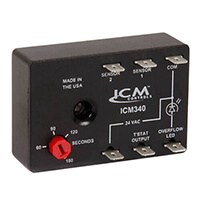
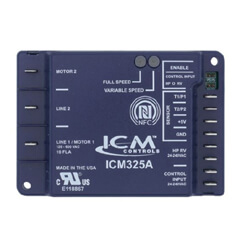
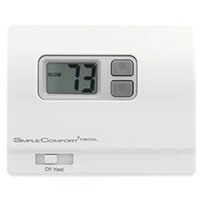
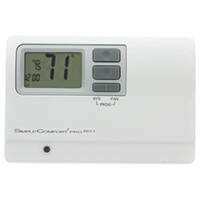

Subcategories
- Condensation Controls: Condensation controls monitor moisture buildup on evaporator coils, drain pans, and refrigerated cases, switching a fan, pump, or heater on or off to prevent water damage. HVAC and refrigeration technicians use these controls on walk in coolers, ice machines, and air handling equipment where condensate needs active management. Selecting the correct control means matching the sensing method and switching output to the original equipment wiring.
- Defrost Controls: Defrost controls manage the timing and termination of the defrost cycle on refrigeration coils and heat pump outdoor units, clearing ice buildup before it restricts airflow. Some models use a fixed time interval while others terminate defrost based on coil temperature, so contractors need to confirm which method the original board used. Replacement is common when a unit frosts over repeatedly or fails to return to normal cooling after a defrost cycle.
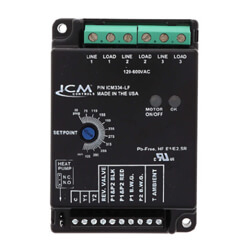
- Dryout/Single Set Point Thermostats: Dryout and single set point thermostats operate on one fixed temperature threshold instead of a heating and cooling range, making them suited to drying, curing, and dehumidification equipment. Technicians select these when a system only needs to maintain one target temperature rather than cycling between two setpoints. Wiring and temperature range should match the original equipment before installation.
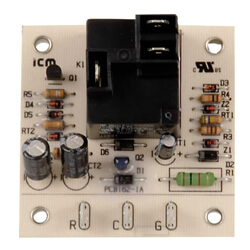
- Fan Blower Controls: Fan blower controls set the on and off timing for blower motors in furnaces and air handlers, delaying fan start until the heat exchanger warms up and delaying shutoff until residual heat clears. Replacing a failed blower control restores proper airflow timing without affecting the rest of the furnace control board. Contractors match these by voltage rating and timing range to the equipment being serviced.
- Freeze and Compressor Protection Modules: Freeze and compressor protection modules monitor suction pressure, discharge pressure, or coil temperature to shut down a compressor before ice formation or mechanical damage occurs. Contractors often add these modules to refrigeration and air conditioning systems with a history of short cycling or low charge conditions. Technicians typically wire them in series with the compressor contactor circuit.
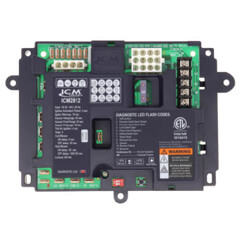
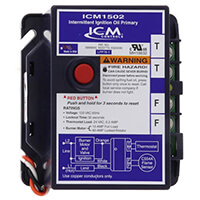
- Furnace & Gas Ignition Controls: Furnace and gas ignition controls manage the ignition sequence on gas furnaces, including igniter warm up, gas valve timing, and flame sensing. Replacement is common when a furnace fails to light, locks out repeatedly, or shows an ignition fault on its diagnostic lights. Contractors confirm ignition type, whether hot surface or spark, before ordering a replacement board.
Buying Guide
Identifying which system function needs a replacement control, such as defrost cycling, ignition sequencing, motor protection, or blower timing, is the first step, since each ICM Controls line serves a distinct role within HVAC and refrigeration equipment.
Electrical characteristics matter as much as function. Voltage rating, number of relay outputs or poles, and time delay range must match the equipment's original specifications, since a mismatched control can cause nuisance trips or fail to operate the load correctly.
Defrost and freeze protection controls add another layer of matching: sensor type and defrost termination method, whether temperature terminated or time terminated, need to align with how the original board was designed to operate.
Some ICM Controls boards are built as universal replacements that work across multiple equipment brands, while others are designed to match a specific OEM part number. Confirming the equipment make, model, and original board's wiring diagram before ordering prevents an incompatible replacement from being installed.
Contractors stocking thermostats, timers, and protection modules from this lineup benefit from cross referencing a failed part's function and wiring configuration rather than shopping by brand name alone, since two boards with similar names can serve different circuits within the same piece of equipment.
Frequently Asked Questions
What types of controls does ICM Controls manufacture?
ICM Controls produces electronic control boards for HVAC and refrigeration equipment, including defrost controls, ignition modules, thermostats, time delay relays, and motor protection devices. The lineup covers both OEM production parts and aftermarket replacement boards.
How do defrost controls differ from freeze and compressor protection modules?
Defrost controls manage the timing and termination of the defrost cycle on refrigeration and heat pump coils to clear frost buildup. Freeze and compressor protection modules instead monitor pressure and temperature conditions to shut down or protect the compressor before damage occurs.
Are ICM Controls boards compatible with multiple equipment brands?
Many ICM Controls boards are designed as universal replacements that work across several equipment brands, while others are built to match a specific OEM part number. Confirming the original board's wiring configuration and electrical rating before ordering helps identify the correct match.
What is the difference between a dryout thermostat and a standard single set point thermostat?
Dryout and single set point thermostats both operate on one fixed temperature threshold rather than a heating and cooling range. Dryout versions are commonly used in drying and dehumidification applications where a single temperature target controls the cycle.
Why would a furnace need a gas ignition control replacement?
Furnace and gas ignition controls manage the ignition sequence, including igniter timing and flame sensing, and typically get replaced when a furnace fails to light or repeatedly locks out. Replacing the control board restores the ignition sequence without needing to replace the entire furnace.
Resources
Subcategories
- Condensation Controls: Condensation controls monitor moisture buildup on evaporator coils, drain pans, and refrigerated cases, switching a fan, pump, or heater on or off to prevent water damage. HVAC and refrigeration technicians use these controls on walk in coolers, ice machines, and air handling equipment where condensate needs active management. Selecting the correct control means matching the sensing method and switching output to the original equipment wiring.
- Defrost Controls: Defrost controls manage the timing and termination of the defrost cycle on refrigeration coils and heat pump outdoor units, clearing ice buildup before it restricts airflow. Some models use a fixed time interval while others terminate defrost based on coil temperature, so contractors need to confirm which method the original board used. Replacement is common when a unit frosts over repeatedly or fails to return to normal cooling after a defrost cycle.
- Dryout/Single Set Point Thermostats: Dryout and single set point thermostats operate on one fixed temperature threshold instead of a heating and cooling range, making them suited to drying, curing, and dehumidification equipment. Technicians select these when a system only needs to maintain one target temperature rather than cycling between two setpoints. Wiring and temperature range should match the original equipment before installation.
- Fan Blower Controls: Fan blower controls set the on and off timing for blower motors in furnaces and air handlers, delaying fan start until the heat exchanger warms up and delaying shutoff until residual heat clears. Replacing a failed blower control restores proper airflow timing without affecting the rest of the furnace control board. Contractors match these by voltage rating and timing range to the equipment being serviced.
- Freeze and Compressor Protection Modules: Freeze and compressor protection modules monitor suction pressure, discharge pressure, or coil temperature to shut down a compressor before ice formation or mechanical damage occurs. Contractors often add these modules to refrigeration and air conditioning systems with a history of short cycling or low charge conditions. Technicians typically wire them in series with the compressor contactor circuit.
- Furnace & Gas Ignition Controls: Furnace and gas ignition controls manage the ignition sequence on gas furnaces, including igniter warm up, gas valve timing, and flame sensing. Replacement is common when a furnace fails to light, locks out repeatedly, or shows an ignition fault on its diagnostic lights. Contractors confirm ignition type, whether hot surface or spark, before ordering a replacement board.
Buying Guide
Identifying which system function needs a replacement control, such as defrost cycling, ignition sequencing, motor protection, or blower timing, is the first step, since each ICM Controls line serves a distinct role within HVAC and refrigeration equipment.
Electrical characteristics matter as much as function. Voltage rating, number of relay outputs or poles, and time delay range must match the equipment's original specifications, since a mismatched control can cause nuisance trips or fail to operate the load correctly.
Defrost and freeze protection controls add another layer of matching: sensor type and defrost termination method, whether temperature terminated or time terminated, need to align with how the original board was designed to operate.
Some ICM Controls boards are built as universal replacements that work across multiple equipment brands, while others are designed to match a specific OEM part number. Confirming the equipment make, model, and original board's wiring diagram before ordering prevents an incompatible replacement from being installed.
Contractors stocking thermostats, timers, and protection modules from this lineup benefit from cross referencing a failed part's function and wiring configuration rather than shopping by brand name alone, since two boards with similar names can serve different circuits within the same piece of equipment.
Frequently Asked Questions
What types of controls does ICM Controls manufacture?
ICM Controls produces electronic control boards for HVAC and refrigeration equipment, including defrost controls, ignition modules, thermostats, time delay relays, and motor protection devices. The lineup covers both OEM production parts and aftermarket replacement boards.
How do defrost controls differ from freeze and compressor protection modules?
Defrost controls manage the timing and termination of the defrost cycle on refrigeration and heat pump coils to clear frost buildup. Freeze and compressor protection modules instead monitor pressure and temperature conditions to shut down or protect the compressor before damage occurs.
Are ICM Controls boards compatible with multiple equipment brands?
Many ICM Controls boards are designed as universal replacements that work across several equipment brands, while others are built to match a specific OEM part number. Confirming the original board's wiring configuration and electrical rating before ordering helps identify the correct match.
What is the difference between a dryout thermostat and a standard single set point thermostat?
Dryout and single set point thermostats both operate on one fixed temperature threshold rather than a heating and cooling range. Dryout versions are commonly used in drying and dehumidification applications where a single temperature target controls the cycle.
Why would a furnace need a gas ignition control replacement?
Furnace and gas ignition controls manage the ignition sequence, including igniter timing and flame sensing, and typically get replaced when a furnace fails to light or repeatedly locks out. Replacing the control board restores the ignition sequence without needing to replace the entire furnace.