




Filters
SORT
Product Availability –
Product Type –
Voltage –
Review Score –
 --%3E %3Csvg version='1.1' id='Fill' xmlns='http://www.w3.org/2000/svg' xmlns:xlink='http://www.w3.org/1999/xlink' x='0px' y='0px' viewBox='0 0 100 100' enable-background='new 0 0 100 100' xml:space='preserve'%3E %3Cpath fill='%23F15C02' d='M79.44,0.95H20.56C9.78,0.95,0.95,9.78,0.95,20.56v58.87c0,10.79,8.82,19.61,19.61,19.61h58.87 c10.79,0,19.61-8.83,19.61-19.61V20.56C99.05,9.78,90.22,0.95,79.44,0.95z M65.38,58.24l9.38,29.58L49.69,69.78L24.5,87.82 l9.34-29.6L8.8,39.6l30.73-0.17c0,0,6.98-19.61,10-28.93c0.54,1.36,9.88,29.1,9.88,29.1H91.2L65.38,58.24z'/%3E %3C/svg%3E)
 --%3E %3Csvg version='1.1' id='With-RB' xmlns='http://www.w3.org/2000/svg' xmlns:xlink='http://www.w3.org/1999/xlink' x='0px' y='0px' viewBox='0 0 100 100' enable-background='new 0 0 100 100' xml:space='preserve'%3E %3Cpath fill='%23FBC8B4' d='M79.44,0.95H20.56C9.78,0.95,0.95,9.78,0.95,20.56v58.87c0,10.79,8.82,19.61,19.61,19.61h58.87 c10.79,0,19.61-8.83,19.61-19.61V20.56C99.05,9.78,90.22,0.95,79.44,0.95z M65.38,58.24l9.38,29.58L49.69,69.78L24.5,87.82 l9.34-29.6L8.8,39.6l30.73-0.17c0,0,6.98-19.61,10-28.93c0.54,1.36,9.88,29.1,9.88,29.1H91.2L65.38,58.24z'/%3E %3C/svg%3E)
Price Range –
Timers





 --%3E %3Csvg version='1.1' id='Half' xmlns='http://www.w3.org/2000/svg' xmlns:xlink='http://www.w3.org/1999/xlink' x='0px' y='0px' viewBox='0 0 100 100' enable-background='new 0 0 100 100' xml:space='preserve'%3E %3Cg%3E %3Cpath fill='%23F15C02' d='M30.05,70.23l3.79-12.01L8.8,39.6l30.73-0.17c0,0,6.98-19.61,10-28.93c0.54,1.36,9.88,29.1,9.88,29.1h1.58 L93.71,7.18c-3.58-3.82-8.66-6.23-14.28-6.23H20.56C9.78,0.95,0.95,9.78,0.95,20.56v58.87c0,5.41,2.22,10.32,5.79,13.88 L30.05,70.23z'/%3E %3C/g%3E %3Cpath fill='%23FBC8B4' d='M93.71,7.18L60.98,39.6H91.2L65.38,58.24l9.38,29.58L49.69,69.78L24.5,87.82l5.55-17.59L6.75,93.32 c3.55,3.54,8.44,5.73,13.82,5.73h58.87c10.79,0,19.61-8.83,19.61-19.61V20.56C99.05,15.4,97.01,10.69,93.71,7.18z'/%3E %3C/svg%3E)


 --%3E %3Csvg version='1.1' id='No-RB' xmlns='http://www.w3.org/2000/svg' xmlns:xlink='http://www.w3.org/1999/xlink' x='0px' y='0px' viewBox='0 0 100 100' enable-background='new 0 0 100 100' xml:space='preserve'%3E %3Cpath fill='%23CECECE' d='M79.44,0.95H20.56C9.78,0.95,0.95,9.78,0.95,20.56v58.87c0,10.79,8.82,19.61,19.61,19.61h58.87 c10.79,0,19.61-8.83,19.61-19.61V20.56C99.05,9.78,90.22,0.95,79.44,0.95z M65.38,58.24l9.38,29.58L49.69,69.78L24.5,87.82 l9.34-29.6L8.8,39.6l30.73-0.17c0,0,6.98-19.61,10-28.93c0.54,1.36,9.88,29.1,9.88,29.1H91.2L65.38,58.24z'/%3E %3C/svg%3E)



Timers are control devices that automate the on and off cycling of HVAC, plumbing, and electrical equipment on a fixed or adjustable schedule. Contractors install them to run exhaust fans after a set interval, cycle defrost heaters on refrigeration equipment, control irrigation and recirculation pumps, or shut off bath fans and heat lamps automatically. Most units fall into two broad categories: mechanical timers with a dial or spring-wound mechanism, and electronic or digital timers with programmable delay and repeat cycles. Many models mount directly in a standard wall box in place of a switch, while others are designed for panel or equipment mounting inside a piece of connected machinery. Choosing the right timer keeps equipment from running longer than needed, which cuts wasted energy and reduces wear on motors, fans, and heating elements over the life of the installation.
Subcategories
- In-Wall Timer Switches: In-wall timer switches replace a standard toggle or decora switch and let a homeowner or contractor set a fixed run time for exhaust fans, heat lamps, or lighting circuits. They install in a single-gang box using the existing line-voltage wiring, so no additional low-voltage control wiring is needed. Many models offer a dial with preset intervals rather than full digital programming, which keeps installation and setup simple for retrofit jobs.
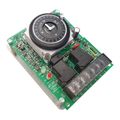
- Defrost Timers: Defrost timers control the defrost cycle on refrigeration equipment, switching the unit from cooling to defrost mode at scheduled intervals to clear frost buildup from the evaporator coil. They are typically wired into the equipment's control circuit rather than a wall box, and replacing a failed unit with the same cycle length keeps the appliance's factory defrost schedule intact. Technicians commonly stock these as a like-for-like replacement part for coolers and freezers.
- Sprinkler and Irrigation Timers: Sprinkler and irrigation timers schedule when zone valves open and close for lawn and landscape watering systems, and some models extend to controlling recirculation or transfer pumps on a set schedule. Multi-zone units let a contractor stagger watering times across several valves from a single controller. Battery-backed or plug-in models are both common, depending on whether the controller is mounted outdoors near the valves or indoors in a utility space.
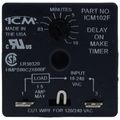
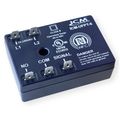
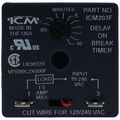
- Time Delay Relays: Time delay relays introduce a controlled pause between an input signal and an output action within an equipment control circuit, commonly used to stage compressor starts, delay a fan from running until a heat exchanger warms up, or protect a motor from short-cycling. They mount inside an equipment panel rather than a wall box and are wired directly into the low-voltage or line-voltage control circuit. Adjustable models let a technician fine-tune the delay period for the specific piece of equipment being serviced.
Buying Guide
The first decision when selecting a timer is where it needs to physically mount and what voltage it will switch, since a wall-box timer switch, a panel-mounted relay, and a plug-in irrigation controller are not interchangeable. Matching the mounting style to the existing enclosure or wiring saves a return trip and avoids modifying a box or panel that was not designed for a different form factor.
From there, match the timer to the equipment's control circuit voltage and current rating rather than assuming a general-purpose unit will work. A defrost timer or time delay relay wired into refrigeration or HVAC equipment needs to match the amperage and voltage the original manufacturer specified, since an undersized replacement can fail early or trip a breaker under load.
Cycle flexibility is the next consideration. A basic mechanical timer with fixed intervals is often enough for a straightforward exhaust fan or bath fan application, while equipment with variable run patterns, such as recirculation pumps on an irregular schedule or multi-zone irrigation systems, benefits from a digital or programmable unit that can store more than one schedule.
For commercial and refrigeration applications, sourcing a timer with the same cycle length and motor speed as the original part avoids disrupting a defrost or staging schedule the rest of the system depends on. Swapping in a unit with a different cycle time can leave frost buildup unresolved or cause short-cycling elsewhere in the system.
Finally, confirm the housing and terminal style fit the space available, since a panel timer with side terminals may not clear surrounding components, and an outdoor irrigation timer needs a weather-resistant enclosure if it will be exposed to the elements. Reviewing the full timers selection by mounting type, voltage, and cycle range before ordering helps narrow the list quickly for a specific piece of equipment.
Frequently Asked Questions
What is the difference between a mechanical timer and a digital timer?
A mechanical timer uses a dial or spring-wound mechanism to set a fixed run interval, while a digital timer uses an electronic display and buttons to program one or more schedules. Mechanical units are generally simpler to install and troubleshoot, while digital units offer more flexibility for equipment with irregular run patterns.
Can a wall timer switch replace a standard light switch?
Most in-wall timer switches are built to fit a standard single-gang box and use the same line-voltage wiring as the switch they replace. It's still worth confirming the amperage rating matches the connected load, especially for larger fan or heat lamp circuits.
How do I know what cycle length a defrost timer needs?
The cycle length should match the original manufacturer's specification for the refrigeration or HVAC unit, which is usually printed on the equipment's data plate or the timer being replaced. Installing a timer with a different cycle length can leave frost on the evaporator coil or trigger unnecessary defrost cycles.
Are irrigation timers compatible with recirculation pumps?
Some multi-purpose irrigation timers are rated to control small transfer or recirculation pumps in addition to zone valves, but the timer's output rating needs to match the pump's electrical draw. Checking the timer's maximum load rating against the pump's nameplate amperage avoids overloading the controller.
What causes a time delay relay to fail prematurely?
Time delay relays commonly fail from repeated cycling beyond their rated duty cycle, exposure to voltage spikes without surge protection, or from being installed in an enclosure with poor ventilation that lets internal components overheat. Matching the replacement relay's voltage and current rating to the original part reduces the chance of an early repeat failure.
