




Inspection Mirrors


 --%3E %3Csvg version='1.1' id='No-RB' xmlns='http://www.w3.org/2000/svg' xmlns:xlink='http://www.w3.org/1999/xlink' x='0px' y='0px' viewBox='0 0 100 100' enable-background='new 0 0 100 100' xml:space='preserve'%3E %3Cpath fill='%23CECECE' d='M79.44,0.95H20.56C9.78,0.95,0.95,9.78,0.95,20.56v58.87c0,10.79,8.82,19.61,19.61,19.61h58.87 c10.79,0,19.61-8.83,19.61-19.61V20.56C99.05,9.78,90.22,0.95,79.44,0.95z M65.38,58.24l9.38,29.58L49.69,69.78L24.5,87.82 l9.34-29.6L8.8,39.6l30.73-0.17c0,0,6.98-19.61,10-28.93c0.54,1.36,9.88,29.1,9.88,29.1H91.2L65.38,58.24z'/%3E %3C/svg%3E)


 --%3E %3Csvg version='1.1' id='Fill' xmlns='http://www.w3.org/2000/svg' xmlns:xlink='http://www.w3.org/1999/xlink' x='0px' y='0px' viewBox='0 0 100 100' enable-background='new 0 0 100 100' xml:space='preserve'%3E %3Cpath fill='%23F15C02' d='M79.44,0.95H20.56C9.78,0.95,0.95,9.78,0.95,20.56v58.87c0,10.79,8.82,19.61,19.61,19.61h58.87 c10.79,0,19.61-8.83,19.61-19.61V20.56C99.05,9.78,90.22,0.95,79.44,0.95z M65.38,58.24l9.38,29.58L49.69,69.78L24.5,87.82 l9.34-29.6L8.8,39.6l30.73-0.17c0,0,6.98-19.61,10-28.93c0.54,1.36,9.88,29.1,9.88,29.1H91.2L65.38,58.24z'/%3E %3C/svg%3E)

 --%3E %3Csvg version='1.1' id='With-RB' xmlns='http://www.w3.org/2000/svg' xmlns:xlink='http://www.w3.org/1999/xlink' x='0px' y='0px' viewBox='0 0 100 100' enable-background='new 0 0 100 100' xml:space='preserve'%3E %3Cpath fill='%23FBC8B4' d='M79.44,0.95H20.56C9.78,0.95,0.95,9.78,0.95,20.56v58.87c0,10.79,8.82,19.61,19.61,19.61h58.87 c10.79,0,19.61-8.83,19.61-19.61V20.56C99.05,9.78,90.22,0.95,79.44,0.95z M65.38,58.24l9.38,29.58L49.69,69.78L24.5,87.82 l9.34-29.6L8.8,39.6l30.73-0.17c0,0,6.98-19.61,10-28.93c0.54,1.36,9.88,29.1,9.88,29.1H91.2L65.38,58.24z'/%3E %3C/svg%3E)


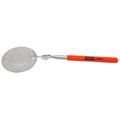
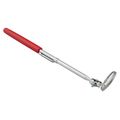
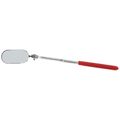
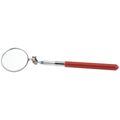

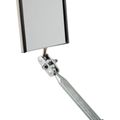
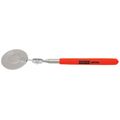
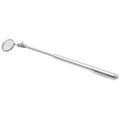

Inspection Mirrors are extendable hand tools that let a technician see into tight or blocked spaces without pulling equipment apart or cutting into a wall. A typical telescoping model extends from about 9.5 inches up to 36 inches with a 2.25 inch round mirror head that swivels a full 360 degrees for angle adjustment. Stainless steel construction holds up to repeated use in tight, often dirty spaces like duct interiors, behind fixtures, and inside mechanical cavities. Plumbers use these tools to check for leaks, blockages, or damage behind fixtures and inside pipe runs, while HVAC technicians use them to inspect ducts, vents, and other components that a flashlight alone can't reach around a corner. Because the tool collapses to a compact length for storage, it fits in a standard tool pouch alongside other hand tools. Choosing the right reach and mirror size for the job avoids wasted time swapping tools mid inspection.
Subcategories
- Round Head Mirrors: Round mirror heads, commonly sized around 2.25 inches in diameter, work well for inspecting round pipe interiors, duct sections, and cylindrical cavities. A telescoping handle typically extends from about 9.5 inches out to 36 inches, giving reach into a duct run or behind a fixture without disassembly. The double ball articulated mount lets the head tilt independently of the handle angle. The round head style remains the most common configuration sold for general plumbing and HVAC inspection work.
- Rectangular and Articulating Head Mirrors: Rectangular mirror heads provide a wider field of view than a round head of similar size, useful when scanning a flat surface like the inside of a cabinet or behind an appliance. Articulating heads swivel a full 360 degrees on a double ball mount, letting a technician angle the mirror without repositioning the whole handle. Telescoping versions extend to lengths similar to round head models, commonly reaching up to 30 or 36 inches. Contractors pick this style when the inspection area is wider than it is deep.
- Lighted Inspection Mirrors: Some inspection mirrors add a built in LED light source near the mirror head to illuminate dark cavities that a standard mirror alone can't show clearly. Crawlspaces, wall chases, and the inside of mechanical closets benefit most from the added light source. A lighted model still keeps the same telescoping handle and articulating head found on standard mirrors. Battery placement usually sits in the handle for easy replacement in the field.
- Compact Storage Mirrors: Telescoping mirrors collapse to a shorter length for storage, commonly around 6.25 inches, small enough to fit in a standard tool pouch or bag pocket. A contoured grip handle keeps the collapsed tool comfortable to carry alongside other hand tools. Stainless steel construction on both the handle and head holds up to daily jobsite handling. Compact storage length matters most for technicians who carry the mirror on every service call rather than pulling it from a truck only when needed.
Buying Guide
Choosing an inspection mirror starts with the reach a job actually requires. A telescoping handle that extends from roughly 9.5 inches to 36 inches covers most plumbing and HVAC inspection work, reaching into duct runs, behind fixtures, and inside wall cavities without cutting an access hole. Mirror head shape matters next. Round heads around 2.25 inches in diameter suit round pipe and duct interiors, while rectangular heads give a wider field of view for flat surfaces like the inside of a cabinet or behind an appliance. Articulation adds flexibility on top of shape. A head that swivels a full 360 degrees on a double ball mount lets a technician angle the mirror to catch a reflection without repositioning the entire handle, which matters in a cramped crawlspace or mechanical closet. Lighting comes into play in spaces without a nearby power source or enough ambient light to see a reflection clearly. A built in LED near the mirror head solves that without needing a separate flashlight held in the other hand. Material and storage length round out the decision. Stainless steel construction holds up to repeated use in dirty or wet spaces better than lighter alternatives, and a tool that collapses to a compact length fits a standard tool pouch for daily carry rather than staying in a truck box until a specific job calls for it.
Frequently Asked Questions
How far do telescoping inspection mirrors extend?
Most telescoping inspection mirrors extend from roughly 9.5 inches collapsed up to about 36 inches fully extended. The range covers most duct, pipe, and behind-fixture inspection work without needing a longer specialty tool. Collapsed length matters too, since a shorter collapsed size fits a tool pouch more easily.
What mirror head shape works best for pipe inspection?
Round mirror heads, typically around 2.25 inches in diameter, suit round pipe and duct interiors better than rectangular heads. Rectangular heads work better on flat surfaces like the inside of a cabinet or wall cavity. Choosing head shape depends more on the surface being inspected than personal preference.
Do inspection mirrors come with built-in lighting?
Some inspection mirror models add a built in LED near the mirror head for dark spaces like crawlspaces or wall chases. Lighted models keep the same telescoping handle and articulating head found on standard mirrors. Choosing a lighted model saves carrying a separate flashlight for dark inspection areas.
What's the benefit of an articulating mirror head?
An articulating head swivels a full 360 degrees on a double ball mount, letting the mirror angle change without repositioning the entire handle. Added flexibility matters most in cramped spaces like a mechanical closet or crawlspace where handle movement is limited. Fixed head mirrors work fine in open spaces but lose that adjustment range.
How durable are inspection mirrors for daily jobsite use?
Stainless steel construction on the handle and head holds up to repeated use in dirty, wet, or cramped jobsite conditions. A contoured grip keeps the tool comfortable to hold during extended inspection work. Compact collapsed length also helps the tool survive daily transport in a tool pouch alongside other hand tools.
