



Johnson Controls Actuators & Valves
Johnson Controls Actuators & Valves covers replacement and upgrade components for building automation and HVAC control systems built around Johnson Controls hardware. The category includes damper actuators, valve actuators, control valves, and combined valve and actuator assemblies. Facilities technicians and HVAC contractors turn to this category when a zone damper, mixing valve, or actuator on a Johnson Controls system needs to be replaced or when a system is being retrofitted with compatible control components.
Matching a Johnson Controls actuator or valve to the existing system depends on the control signal type (such as two-position, floating, or proportional), voltage, and torque or flow requirements of the damper or valve being operated. Confirming these specifications against the original component's nameplate is the most reliable way to keep a control loop working correctly after a replacement.



Subcategories
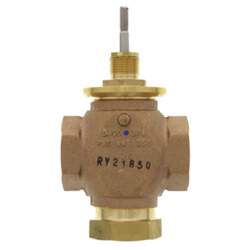
- HVAC Control Valves: HVAC control valves regulate the flow of hot or chilled water, steam, or other fluids through coils and other heat-exchange equipment. They are paired with an actuator that opens and closes the valve in response to a control signal from the building automation system.
- Johnson Controls Actuators: Johnson Controls actuators drive dampers open and closed in response to a control signal. They are selected based on torque rating, control signal type, and the physical shaft size of the damper they're operating.
- Valve & Actuator Assemblies: Valve and actuator assemblies combine a control valve and its matching actuator into a single pre-configured unit, simplifying replacement or new installation by removing the guesswork of pairing a standalone valve with a compatible actuator.
Buying Guide
Identifying the control signal type the building automation system uses, two-position, floating point, or proportional (such as 0-10V or 4-20mA), is the first step, since an actuator built for one signal type generally won't respond correctly to another.
Torque and flow ratings need to match the damper or valve being driven. An undersized actuator can struggle to fully open or close a larger damper, while an oversized valve can make a control loop harder to tune precisely.
Voltage compatibility, typically 24V in most commercial control applications, should be confirmed against both the actuator and the transformer or power supply feeding it, since a mismatch can prevent the actuator from operating at all.
Purchasing a pre-matched valve and actuator assembly removes the risk of pairing incompatible components, which is a common consideration when a facility is replacing an aging control valve rather than servicing just the actuator.
Confirming physical mounting and shaft size, particularly for actuators being retrofitted onto an existing damper from a different manufacturer, prevents a compatible electrical match from being undermined by a fitment issue at installation.
Frequently Asked Questions
What's the difference between a two-position and a proportional actuator?
A two-position actuator only drives a damper or valve fully open or fully closed, while a proportional actuator can modulate to intermediate positions based on a variable control signal, allowing finer control over flow or airflow.
Can a Johnson Controls actuator be used on a damper from a different manufacturer?
It depends on matching torque rating, shaft size, and control signal type between the actuator and the damper. Physical mounting compatibility needs to be confirmed separately from the electrical specifications before making that pairing.
Why buy a combined valve and actuator assembly instead of the parts separately?
A pre-matched assembly removes the risk of pairing an incompatible valve and actuator, which can otherwise result in a control loop that doesn't modulate correctly. It also simplifies ordering for a straightforward replacement.
What voltage do most Johnson Controls actuators in commercial buildings run on?
24V is the most common voltage in commercial HVAC control applications, though confirming the specific actuator's voltage rating against the building's control transformer is still necessary before installation.
How is torque rating determined for a replacement actuator?
Torque rating is generally based on the size and resistance of the damper or valve being driven. Checking the original actuator's nameplate is the most reliable way to size a replacement.
Resources
Subcategories
- HVAC Control Valves: HVAC control valves regulate the flow of hot or chilled water, steam, or other fluids through coils and other heat-exchange equipment. They are paired with an actuator that opens and closes the valve in response to a control signal from the building automation system.
- Johnson Controls Actuators: Johnson Controls actuators drive dampers open and closed in response to a control signal. They are selected based on torque rating, control signal type, and the physical shaft size of the damper they're operating.
- Valve & Actuator Assemblies: Valve and actuator assemblies combine a control valve and its matching actuator into a single pre-configured unit, simplifying replacement or new installation by removing the guesswork of pairing a standalone valve with a compatible actuator.
Buying Guide
Identifying the control signal type the building automation system uses, two-position, floating point, or proportional (such as 0-10V or 4-20mA), is the first step, since an actuator built for one signal type generally won't respond correctly to another.
Torque and flow ratings need to match the damper or valve being driven. An undersized actuator can struggle to fully open or close a larger damper, while an oversized valve can make a control loop harder to tune precisely.
Voltage compatibility, typically 24V in most commercial control applications, should be confirmed against both the actuator and the transformer or power supply feeding it, since a mismatch can prevent the actuator from operating at all.
Purchasing a pre-matched valve and actuator assembly removes the risk of pairing incompatible components, which is a common consideration when a facility is replacing an aging control valve rather than servicing just the actuator.
Confirming physical mounting and shaft size, particularly for actuators being retrofitted onto an existing damper from a different manufacturer, prevents a compatible electrical match from being undermined by a fitment issue at installation.
Frequently Asked Questions
What's the difference between a two-position and a proportional actuator?
A two-position actuator only drives a damper or valve fully open or fully closed, while a proportional actuator can modulate to intermediate positions based on a variable control signal, allowing finer control over flow or airflow.
Can a Johnson Controls actuator be used on a damper from a different manufacturer?
It depends on matching torque rating, shaft size, and control signal type between the actuator and the damper. Physical mounting compatibility needs to be confirmed separately from the electrical specifications before making that pairing.
Why buy a combined valve and actuator assembly instead of the parts separately?
A pre-matched assembly removes the risk of pairing an incompatible valve and actuator, which can otherwise result in a control loop that doesn't modulate correctly. It also simplifies ordering for a straightforward replacement.
What voltage do most Johnson Controls actuators in commercial buildings run on?
24V is the most common voltage in commercial HVAC control applications, though confirming the specific actuator's voltage rating against the building's control transformer is still necessary before installation.
How is torque rating determined for a replacement actuator?
Torque rating is generally based on the size and resistance of the damper or valve being driven. Checking the original actuator's nameplate is the most reliable way to size a replacement.