



Filters
SORT
Product Availability –
Number Of Blades –
Diameter (Inches) –
Bore –
Review Score –
 --%3E %3Csvg version='1.1' id='Fill' xmlns='http://www.w3.org/2000/svg' xmlns:xlink='http://www.w3.org/1999/xlink' x='0px' y='0px' viewBox='0 0 100 100' enable-background='new 0 0 100 100' xml:space='preserve'%3E %3Cpath fill='%23F15C02' d='M79.44,0.95H20.56C9.78,0.95,0.95,9.78,0.95,20.56v58.87c0,10.79,8.82,19.61,19.61,19.61h58.87 c10.79,0,19.61-8.83,19.61-19.61V20.56C99.05,9.78,90.22,0.95,79.44,0.95z M65.38,58.24l9.38,29.58L49.69,69.78L24.5,87.82 l9.34-29.6L8.8,39.6l30.73-0.17c0,0,6.98-19.61,10-28.93c0.54,1.36,9.88,29.1,9.88,29.1H91.2L65.38,58.24z'/%3E %3C/svg%3E)
 --%3E %3Csvg version='1.1' id='With-RB' xmlns='http://www.w3.org/2000/svg' xmlns:xlink='http://www.w3.org/1999/xlink' x='0px' y='0px' viewBox='0 0 100 100' enable-background='new 0 0 100 100' xml:space='preserve'%3E %3Cpath fill='%23FBC8B4' d='M79.44,0.95H20.56C9.78,0.95,0.95,9.78,0.95,20.56v58.87c0,10.79,8.82,19.61,19.61,19.61h58.87 c10.79,0,19.61-8.83,19.61-19.61V20.56C99.05,9.78,90.22,0.95,79.44,0.95z M65.38,58.24l9.38,29.58L49.69,69.78L24.5,87.82 l9.34-29.6L8.8,39.6l30.73-0.17c0,0,6.98-19.61,10-28.93c0.54,1.36,9.88,29.1,9.88,29.1H91.2L65.38,58.24z'/%3E %3C/svg%3E)
Price Range –
Lennox Fan Motors & Blades

 --%3E %3Csvg version='1.1' id='No-RB' xmlns='http://www.w3.org/2000/svg' xmlns:xlink='http://www.w3.org/1999/xlink' x='0px' y='0px' viewBox='0 0 100 100' enable-background='new 0 0 100 100' xml:space='preserve'%3E %3Cpath fill='%23CECECE' d='M79.44,0.95H20.56C9.78,0.95,0.95,9.78,0.95,20.56v58.87c0,10.79,8.82,19.61,19.61,19.61h58.87 c10.79,0,19.61-8.83,19.61-19.61V20.56C99.05,9.78,90.22,0.95,79.44,0.95z M65.38,58.24l9.38,29.58L49.69,69.78L24.5,87.82 l9.34-29.6L8.8,39.6l30.73-0.17c0,0,6.98-19.61,10-28.93c0.54,1.36,9.88,29.1,9.88,29.1H91.2L65.38,58.24z'/%3E %3C/svg%3E)

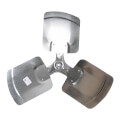
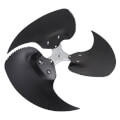
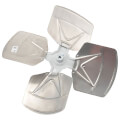
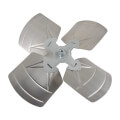
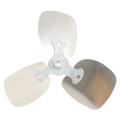
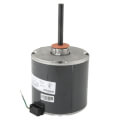
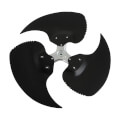
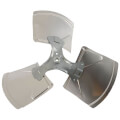

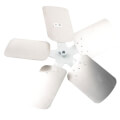
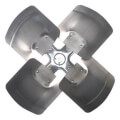
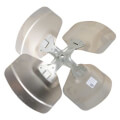
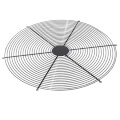
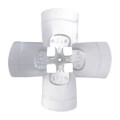
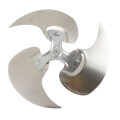
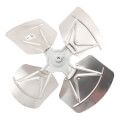

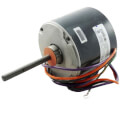
Lennox fan motors and blades move air through furnaces, air handlers, and condensing units, and they're one of the more common failure points on residential and light commercial HVAC equipment since they run for long stretches during every heating or cooling cycle. A worn bearing, a failed capacitor, or a cracked blade often shows up first as unusual noise or reduced airflow, well before the motor stops running altogether.
Matching the replacement motor's horsepower, speed, and rotation to the original, and pairing it with a blade sized correctly for the housing, keeps airflow and static pressure in the range the system was designed for. Getting either piece wrong can leave a system straining against the wrong resistance, so replacing a motor and blade as a matched pair is common practice on older equipment.
Subcategories
- Blower Motors: Blower motors drive the indoor fan that circulates air through the duct system. Contractors most often replace these when a motor develops a bearing noise or fails to start, since indoor blowers run far more hours per season than outdoor fan motors.
- Condenser Fan Motors: Condenser fan motors pull outdoor air across the condensing coil to reject heat during cooling operation. A failed condenser motor is a frequent no-cooling call in warm weather, since the compressor can trip on high pressure without adequate airflow.
- Blower Wheels & Blades: Blower wheels and fan blades move the actual air volume once the motor is spinning. A bent or unbalanced wheel can cause vibration and noise even when the motor itself is in good condition, so both parts are worth inspecting together.
- Motor Mounts & Brackets: Mounts and brackets hold the motor in position within the housing and absorb some operating vibration. Replacing a cracked or corroded mount alongside the motor prevents a repeat failure from misalignment.
Buying Guide
Selecting from Lennox fan motors and blades starts with confirming horsepower, voltage, and rotation direction against the original motor's nameplate, since a mismatch on any of these can cause premature failure or leave the system unable to reach its rated airflow. Speed setting matters as well on multi-speed blower motors, where the wrong tap can under- or over-drive the system.
Shaft diameter and length determine whether the existing blower wheel or fan blade will fit the replacement motor without modification. When the housing or mounting configuration has changed between motor generations, ordering a motor and blade together as a matched set avoids a fit issue discovered mid-installation.
For condenser fan motors, confirming the correct rotation direction is especially important, since a motor spinning the wrong way will move air in reverse and can trip the system on high pressure almost immediately. Blower motors are more forgiving on rotation but still need the correct speed and horsepower rating to move the design airflow.
Age and run hours of the surrounding equipment factor into the decision too. On a unit already several years into its service life, replacing the motor and blade together, along with the mount, tends to be more cost-effective than pricing out a single component and risking a second failure soon after.
Frequently Asked Questions
How do I know if a Lennox fan motor or the blade needs replacing?
Unusual noise, reduced airflow, or visible vibration point to either part. Inspecting the blade for cracks or imbalance while the motor is out is worth doing even if the motor was the suspected cause.
What information do I need before ordering a replacement motor?
Horsepower, voltage, speed setting, and rotation direction from the original motor's nameplate are the key specs to match. Shaft diameter and length matter too if reusing the existing blower wheel or blade.
Why does rotation direction matter so much on condenser fan motors?
A motor spinning the wrong direction moves air backward across the condensing coil, which can cause the system to trip on high pressure almost immediately rather than cool effectively.
Should I replace the motor and blade together or separately?
Replacing them together is common practice, especially on older equipment, since a mismatched pairing can affect airflow and a companion part is often close to failure anyway.
Can a blower motor be replaced without also replacing the mount?
Yes, but inspecting the mount is worth doing during the repair. A cracked or corroded mount can cause premature wear on a new motor through vibration and misalignment.
