




Mini Strut Clamps

 --%3E %3Csvg version='1.1' id='No-RB' xmlns='http://www.w3.org/2000/svg' xmlns:xlink='http://www.w3.org/1999/xlink' x='0px' y='0px' viewBox='0 0 100 100' enable-background='new 0 0 100 100' xml:space='preserve'%3E %3Cpath fill='%23CECECE' d='M79.44,0.95H20.56C9.78,0.95,0.95,9.78,0.95,20.56v58.87c0,10.79,8.82,19.61,19.61,19.61h58.87 c10.79,0,19.61-8.83,19.61-19.61V20.56C99.05,9.78,90.22,0.95,79.44,0.95z M65.38,58.24l9.38,29.58L49.69,69.78L24.5,87.82 l9.34-29.6L8.8,39.6l30.73-0.17c0,0,6.98-19.61,10-28.93c0.54,1.36,9.88,29.1,9.88,29.1H91.2L65.38,58.24z'/%3E %3C/svg%3E)

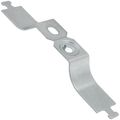
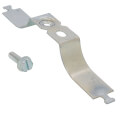
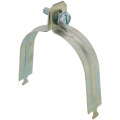
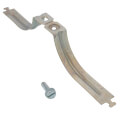

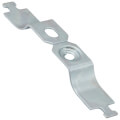
Mini Strut Clamps are compact pipe and conduit supports built for branch lines and low-voltage runs where a full-size strut clamp would be oversized for the load. Electricians and plumbers use these smaller clamps on tight runs, such as EMT conduit dropping into a panel or a small-diameter copper branch line feeding a fixture, where clamp bulk competes for limited space. The lineup covers common trade sizes starting at 1/2 inch, including options like a 1/2 inch IPS/EMT strut pipe clamp and a 1-1/4 inch EMT conduit clamp with bolt closure. Stainless steel versions, including a 1 inch 304 stainless steel rigid and IMC conduit clamp, hold up in wet or corrosive environments where a standard steel clamp would rust prematurely. Cushioned styles reduce noise and wear on lines that expand and contract with temperature changes, while rigid styles hold static equipment firmly in place without a cushion insert. Choosing the right style depends mainly on whether the supported line moves or stays fixed.
Subcategories
- IPS/EMT Clamps: IPS/EMT clamps fit both iron pipe size threaded pipe and EMT conduit within the same clamp body, covering two common trade applications with one part. A 1/2 inch version suits small branch lines and control conduit runs. Electricians reach for this style on panel feeds and low-voltage conduit drops where a single clamp needs to work across pipe or conduit interchangeably. The dual rating simplifies stocking for contractors who run both trades.
- Bolted EMT Conduit Clamps: Bolted EMT conduit clamps close around the conduit with a bolt rather than a snap-fit design, giving a more secure hold on runs subject to vibration or movement. A 1-1/4 inch version covers a common mid-size conduit trade size. Contractors use bolted styles on exposed runs where a clamp working loose would be a visible callback. The bolt allows the clamp to tighten fully around the conduit rather than relying on spring tension alone.
- Stainless Steel Rigid/IMC Clamps: Stainless steel clamps built for rigid and IMC conduit hold up in wet, outdoor, or corrosive environments where a standard steel clamp would rust prematurely. A 1 inch 304 stainless steel version covers a common rigid conduit trade size used in exposed exterior runs. Contractors specify stainless steel on rooftop equipment, wastewater treatment sites, and coastal installations where corrosion resistance matters most. The 304 stainless grade resists most atmospheric corrosion for these applications.
- Cushioned Clamps: Cushioned clamps add a rubber or vinyl insert between the clamp body and the pipe, reducing noise and wear on lines that expand and contract with temperature changes. Copper and other metal lines subject to thermal movement benefit from a cushion insert that prevents the clamp from wearing through the pipe wall over time. Mechanical contractors use cushioned styles on refrigerant lines and hydronic piping where vibration or thermal cycling would gradually wear an uncushioned clamp point. Rigid, uncushioned clamps remain the better choice for static equipment that does not move or vibrate.
Buying Guide
Match the clamp to the exact trade size of the pipe or conduit it supports, since mini strut clamps come sized for specific IPS, EMT, rigid, or IMC dimensions and an undersized or oversized clamp will not grip correctly. Decide between cushioned and rigid styles based on whether the supported line moves. Lines that expand and contract with temperature, such as refrigerant lines or hydronic piping, need a cushioned clamp to prevent the clamp from wearing through the pipe wall over repeated cycles. Static equipment and fixed conduit runs do fine with a rigid clamp, which holds tighter and simplifies bulk stocking.
Consider the environment before choosing a finish. Standard steel clamps handle typical indoor mechanical rooms, while stainless steel clamps resist corrosion on rooftop, coastal, or wastewater treatment installations where moisture exposure is constant. Choose a bolted closure over a snap-fit design on exposed runs subject to vibration, since a bolt tightens fully around the conduit and holds up better where a clamp working loose would be a visible callback. Contractors running both threaded pipe and EMT conduit on the same job should look at IPS/EMT dual-rated Mini Strut Clamps to simplify stocking, since one clamp body covers both applications instead of carrying separate parts for each. Confirm strut channel compatibility before ordering in bulk, since not every mini clamp attaches to every strut channel profile on the market.
Frequently Asked Questions
When should I use a mini strut clamp instead of a standard strut clamp?
Mini strut clamps fit smaller trade sizes and tighter spaces than standard strut clamps, making them the better choice on branch lines, low-voltage conduit, and other runs where a full-size clamp would be oversized for the load. Standard clamps remain the right choice on larger mains and heavier equipment supports. Checking the pipe or conduit trade size against the clamp's rated range confirms which category fits the job.
What's the difference between a cushioned and a rigid mini strut clamp?
Cushioned clamps include a rubber or vinyl insert that reduces noise and wear on lines subject to thermal expansion and contraction, such as refrigerant lines or hydronic piping. Rigid clamps hold static equipment firmly without a cushion insert, since a line that does not move does not need the extra wear protection. Choosing between the two depends mainly on whether the supported line experiences temperature-driven movement.
Do mini strut clamps work with both EMT conduit and threaded pipe?
IPS/EMT dual-rated clamps fit both iron pipe size threaded pipe and EMT conduit within the same clamp body, covering two trade applications with a single part. Electricians running both pipe and conduit on a job benefit from stocking dual-rated clamps instead of separate parts for each. Checking the clamp's rating confirms it covers both applications before ordering for a mixed-trade job.
When does a stainless steel mini strut clamp make sense over standard steel?
Stainless steel clamps resist corrosion in wet, outdoor, coastal, or wastewater treatment environments where a standard steel clamp would rust prematurely. A 304 stainless grade handles most atmospheric corrosion exposure in these settings. Indoor mechanical rooms with normal humidity levels typically do fine with standard steel clamps instead.
Why choose a bolted clamp instead of a snap-fit clamp?
Bolted clamps tighten fully around the conduit or pipe using a bolt, giving a more secure hold on exposed runs subject to vibration or movement. Snap-fit clamps install faster but rely on spring tension alone, which can work loose over time on a run that vibrates regularly. Exposed runs where a loose clamp would be a visible callback typically call for the bolted style.
