




Strut Pipe Clamps & Accessories
Strut clamps and accessories attach pipe, conduit, and equipment to steel strut channel, a common mounting system in mechanical and electrical rough-in work. The category covers channel nuts, beam clamps, post bases, and specialty clamps sized for smaller diameter pipe and conduit runs.
Post bases anchor vertical strut channel posts to a floor, roof, or other structural surface, forming the backbone of a freestanding support rack. Insulation coupling strut clamps join sections of pre-insulated pipe while maintaining the insulation's integrity at the connection point.

Subcategories
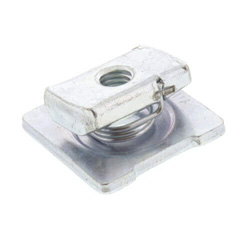
- Channel Nuts & Hardware: Channel nuts and related hardware slide into strut channel slots to create a secure anchor point for bolts, clamps, and brackets. Contractors stock spring nuts, square nuts, and washers to match different channel profiles and load requirements. Choosing the correct nut style keeps the connection from backing out under vibration.
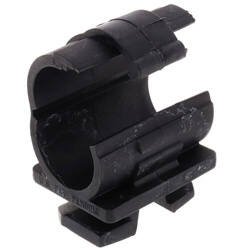
- Insulation Coupling Strut Clamps: Insulation coupling strut clamps join sections of pre-insulated pipe while maintaining the insulation's vapor barrier at the connection point. Mechanical contractors use them on refrigerant lines and chilled water piping where preserving the insulation seal prevents condensation and energy loss. Sizing the clamp to the outer diameter of the insulated pipe is necessary for a tight fit.
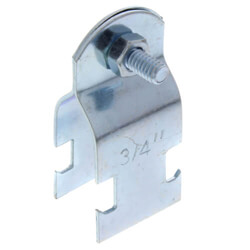
- Mini Strut Clamps: Mini strut clamps support smaller diameter pipe and conduit runs where a full-size clamp would be oversized for the load. Electricians and plumbers use them on branch lines and low-voltage conduit where space is tight. The smaller footprint still secures the run to strut channel without adding unnecessary bulk.
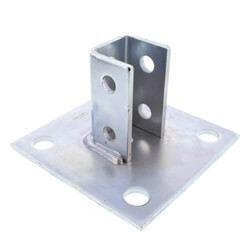
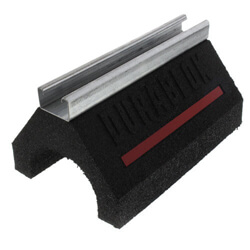
- Post Bases: Post bases anchor vertical strut channel posts to a floor, roof, or equipment pad, providing a stable base for freestanding support structures. Contractors use them when building unistrut frames for rooftop equipment, pipe racks, or electrical panel supports. Confirming the base plate size and mounting hole pattern against the installation surface simplifies anchoring.
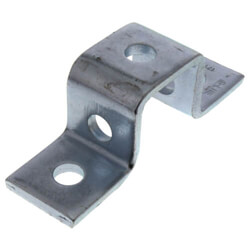
- Strut Accessories: Strut accessories include the smaller hardware, such as end caps, wing nuts, and splice plates, that finish out a strut channel assembly. Contractors keep these on hand to close off exposed channel ends and join channel sections end to end. The right accessory depends on the specific channel profile being used.
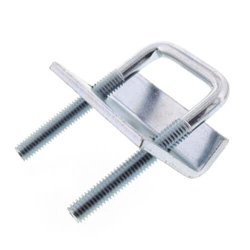
- Strut Beam Clamps: Strut beam clamps attach strut channel directly to a structural steel beam without drilling or welding, speeding up overhead support installations. Contractors use them to hang pipe, conduit, or cable tray from I-beams in commercial and industrial buildings. Beam flange thickness needs to be checked against the clamp's adjustment range before ordering.
Buying Guide
Identifying the load the assembly needs to support, whether pipe, conduit, cable tray, or equipment, is the starting point for selecting the right strut clamps and accessories, since each component in this category is sized for a specific weight range and mounting method.
Channel profile matters before any clamp or accessory gets ordered. Strut channel comes in different depths and hole spacing, and clamps built for one profile won't seat correctly on another, so confirming the channel size already installed avoids a mismatch.
Mounting method drives the next decision. Beam clamps attach directly to structural steel without drilling, post bases anchor freestanding frames to a floor or roof, and channel nuts create bolt-on connection points within the channel itself, so the surface being used sets which hardware applies.
Pipe and conduit size determines clamp sizing within each style. Mini clamps suit smaller branch lines, while standard and cushion clamps handle larger diameter runs, and insulation coupling clamps need to be sized to the outer diameter of pre-insulated pipe rather than the bare pipe size.
Vibration and thermal movement are worth planning for on longer runs. Cushioned clamps reduce noise and wear on lines that expand and contract, while rigid clamps hold static equipment firmly in place, so matching clamp type to how much the supported line moves keeps the installation secure over time.
Frequently Asked Questions
What's the difference between a standard strut clamp and a cushion clamp?
A standard clamp holds pipe or conduit rigidly against strut channel, while a cushion clamp adds an insulating liner that reduces vibration, noise, and wear on lines that expand and contract with temperature changes.
Do strut beam clamps require drilling into the steel beam?
No drilling is needed. Strut beam clamps grip the beam flange mechanically, which speeds up installation and avoids weakening the structural steel.
How do I know what size channel nut to use?
Channel nut size depends on the strut channel's slot width and the bolt diameter being used, so matching both dimensions to the installed channel profile keeps the connection from slipping.
When should I use a post base instead of a beam clamp?
A post base is the right choice when building a freestanding strut frame anchored to a floor, roof, or equipment pad. A beam clamp is used instead when attaching directly to an existing structural steel beam.
Why do insulation coupling clamps need special sizing?
Insulation coupling clamps need to match the outer diameter of the pipe's insulation rather than the bare pipe, since sizing to the wrong diameter breaks the vapor barrier and allows condensation to form at the joint.
Resources
Subcategories
- Channel Nuts & Hardware: Channel nuts and related hardware slide into strut channel slots to create a secure anchor point for bolts, clamps, and brackets. Contractors stock spring nuts, square nuts, and washers to match different channel profiles and load requirements. Choosing the correct nut style keeps the connection from backing out under vibration.
- Insulation Coupling Strut Clamps: Insulation coupling strut clamps join sections of pre-insulated pipe while maintaining the insulation's vapor barrier at the connection point. Mechanical contractors use them on refrigerant lines and chilled water piping where preserving the insulation seal prevents condensation and energy loss. Sizing the clamp to the outer diameter of the insulated pipe is necessary for a tight fit.
- Mini Strut Clamps: Mini strut clamps support smaller diameter pipe and conduit runs where a full-size clamp would be oversized for the load. Electricians and plumbers use them on branch lines and low-voltage conduit where space is tight. The smaller footprint still secures the run to strut channel without adding unnecessary bulk.
- Post Bases: Post bases anchor vertical strut channel posts to a floor, roof, or equipment pad, providing a stable base for freestanding support structures. Contractors use them when building unistrut frames for rooftop equipment, pipe racks, or electrical panel supports. Confirming the base plate size and mounting hole pattern against the installation surface simplifies anchoring.
- Strut Accessories: Strut accessories include the smaller hardware, such as end caps, wing nuts, and splice plates, that finish out a strut channel assembly. Contractors keep these on hand to close off exposed channel ends and join channel sections end to end. The right accessory depends on the specific channel profile being used.
- Strut Beam Clamps: Strut beam clamps attach strut channel directly to a structural steel beam without drilling or welding, speeding up overhead support installations. Contractors use them to hang pipe, conduit, or cable tray from I-beams in commercial and industrial buildings. Beam flange thickness needs to be checked against the clamp's adjustment range before ordering.
Buying Guide
Identifying the load the assembly needs to support, whether pipe, conduit, cable tray, or equipment, is the starting point for selecting the right strut clamps and accessories, since each component in this category is sized for a specific weight range and mounting method.
Channel profile matters before any clamp or accessory gets ordered. Strut channel comes in different depths and hole spacing, and clamps built for one profile won't seat correctly on another, so confirming the channel size already installed avoids a mismatch.
Mounting method drives the next decision. Beam clamps attach directly to structural steel without drilling, post bases anchor freestanding frames to a floor or roof, and channel nuts create bolt-on connection points within the channel itself, so the surface being used sets which hardware applies.
Pipe and conduit size determines clamp sizing within each style. Mini clamps suit smaller branch lines, while standard and cushion clamps handle larger diameter runs, and insulation coupling clamps need to be sized to the outer diameter of pre-insulated pipe rather than the bare pipe size.
Vibration and thermal movement are worth planning for on longer runs. Cushioned clamps reduce noise and wear on lines that expand and contract, while rigid clamps hold static equipment firmly in place, so matching clamp type to how much the supported line moves keeps the installation secure over time.
Frequently Asked Questions
What's the difference between a standard strut clamp and a cushion clamp?
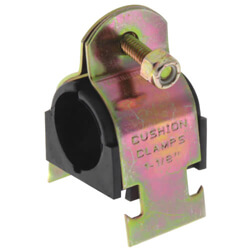
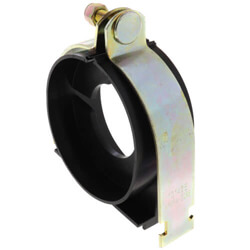
A standard clamp holds pipe or conduit rigidly against strut channel, while a cushion clamp adds an insulating liner that reduces vibration, noise, and wear on lines that expand and contract with temperature changes.
Do strut beam clamps require drilling into the steel beam?
No drilling is needed. Strut beam clamps grip the beam flange mechanically, which speeds up installation and avoids weakening the structural steel.
How do I know what size channel nut to use?
Channel nut size depends on the strut channel's slot width and the bolt diameter being used, so matching both dimensions to the installed channel profile keeps the connection from slipping.
When should I use a post base instead of a beam clamp?
A post base is the right choice when building a freestanding strut frame anchored to a floor, roof, or equipment pad. A beam clamp is used instead when attaching directly to an existing structural steel beam.
Why do insulation coupling clamps need special sizing?
Insulation coupling clamps need to match the outer diameter of the pipe's insulation rather than the bare pipe, since sizing to the wrong diameter breaks the vapor barrier and allows condensation to form at the joint.