




Heat PEX Fittings
PEX fittings are the connectors used to join cross-linked polyethylene (PEX) tubing sections, transition to other pipe materials, and branch or terminate a PEX plumbing or radiant heating run. Contractors choose among several connection methods, including expansion, crimp, press, and push-fit. The choice depends on the tools already in their kit, the working conditions on a given job, and the specific application. That application may be a potable water line, a radiant heat manifold, or a repair on an existing system.
Each connection method has a different installation process and a different set of compatible tools, so fittings within this category aren't universally interchangeable across methods. Matching the fitting type to the crimp rings, expander head, or press jaw a crew already carries keeps a job moving without requiring a second trip for different equipment.






Subcategories
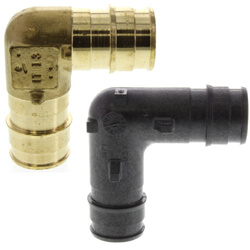
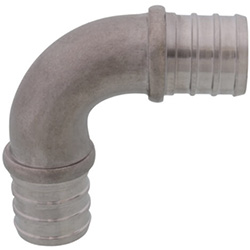
- Bluefin Expansion PEX Fittings: Bluefin expansion PEX fittings connect using the expansion method. A cold expansion tool stretches the PEX tubing end over a fitting, and the tubing contracts back to form a seal. This process leaves the fitting's full inner diameter unobstructed for water flow. The expansion method works with PEX-A tubing specifically, since the memory-return characteristic it depends on comes from that tubing's cross-linking process.
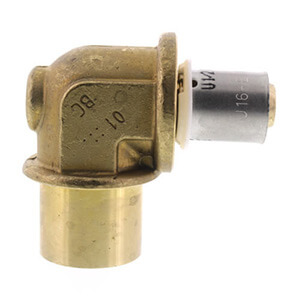
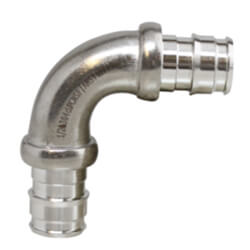
- Bluefin PEX Press Fittings: Bluefin PEX press fittings use a press tool with a jaw sized to the fitting. The tool compresses a stainless steel ring around the tubing and fitting, creating a mechanical seal without heating or expanding the pipe. Press connections work with PEX-A, PEX-B, and PEX-C tubing, which makes them a flexible option on jobs where more than one tubing type is in use. A visual indicator ring on many press fittings shows whether a connection has been fully pressed, helping a crew catch an incomplete connection before pressure testing.
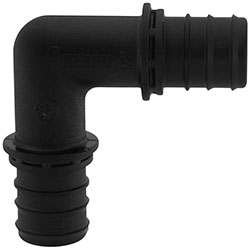
- Bluefin Poly PEX Crimp Fittings: Bluefin poly PEX crimp fittings use a copper or stainless steel crimp ring compressed around the tubing with a crimp tool. This is a widely used connection method for PEX-A, PEX-B, and PEX-C tubing on potable water and radiant heat lines. The poly (polymer) fitting body resists mineral buildup and corrosion compared to metal fitting bodies in some water conditions. A go/no-go gauge should be used after crimping to confirm the ring has been compressed to the correct diameter.
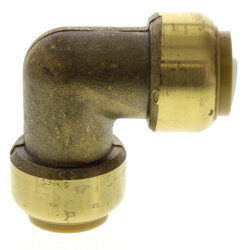
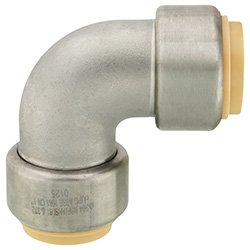
- Bluefin Push-Fit Fittings: Bluefin push-fit fittings connect to PEX, copper, and CPVC tubing without any tool at all. An internal stainless steel grip ring and O-ring seal the connection as soon as the tubing is inserted to the marked depth. That tool-free design makes them useful for repairs and tight spaces where running a crimp or press tool isn't practical. Many contractors reserve them for accessible locations, since they can be disconnected with a release tool as easily as they were installed.
- Boshart Stainless Steel Push-Fit Fittings: Boshart stainless steel push-fit fittings use the same tool-free push-to-connect method as other push-fit fittings, but with an all stainless steel body rather than a brass or polymer body. That stainless construction gives them corrosion resistance suited to applications where fitting material needs to withstand water chemistry that would otherwise degrade brass over time. They connect to PEX, copper, and CPVC tubing in the sizes commonly used on residential and light commercial plumbing lines.
- EVERLOC+ Compression PEX Fittings: EVERLOC+ compression PEX fittings use a compression nut and ring tightened over the tubing with a wrench. They need no dedicated crimp, press, or expansion tool, which makes them useful on service calls where a contractor doesn't have specialized PEX tools on hand. The compression method works across PEX-A, PEX-B, and PEX-C tubing. Because the connection depends on proper torque rather than a tool-verified crimp or press, contractors should tighten the nut to the correct torque and check the connection for leaks after pressurizing the line.
Buying Guide
Selecting PEX fittings starts with the tubing type already installed or specified for the job. PEX-A, PEX-B, and PEX-C tubing differ in how they respond to expansion, so not every connection method works with every tubing type.
The connection method matters as much as the tubing compatibility. Expansion fittings need a dedicated expander tool and work only with PEX-A. Crimp and press fittings need their respective crimp or press tools but work across all three PEX types. Push-fit and compression fittings need no dedicated tool at all, which makes them a practical choice for repairs or one-off connections.
For a whole-house repipe or new installation, standardizing on one connection method, most often crimp or press, keeps the tool investment down and simplifies inspection. A crew then only needs to carry and calibrate one type of gauge or press jaw.
Repair work calls for a different purchase. Push-fit and compression fittings let a technician complete a connection on the spot without carrying a full set of PEX tools. This matters most on service calls where the tubing type on-site isn't known in advance.
Fitting material is a secondary consideration once the connection method is set. Brass, poly, and stainless steel fitting bodies all seal the same way within a given connection method. The choice usually comes down to water chemistry concerns or a preference to avoid dezincification in brass fittings over the long term.
Frequently Asked Questions
Can PEX-B tubing be used with expansion fittings?
No. Expansion fittings depend on PEX-A tubing's ability to stretch and return to its original diameter after being expanded. PEX-B and PEX-C tubing don't share this memory characteristic, so expansion fittings are only rated for PEX-A.
Do push-fit PEX fittings need to be tested differently than crimped or pressed fittings?
All PEX connections should be pressure tested before a line is put into service, regardless of connection method. Push-fit fittings also warrant a close visual check that the tubing was inserted to its full marked depth, since a shallow insertion can cause a leak.
What tool is needed for PEX press fittings?
A press tool with a jaw sized to match the fitting diameter is required. The jaw also needs periodic calibration checks, since an out-of-calibration jaw can produce a connection that looks complete but doesn't seal properly.
Are crimp and press fittings interchangeable on the same tubing run?
The fittings themselves aren't interchangeable, since each requires its own tool. However, both connection methods can be used on the same PEX-A, PEX-B, or PEX-C tubing run if the contractor carries both a crimp tool and a press tool.
Why would a contractor choose a compression fitting over a crimp or press fitting?
Compression fittings need only a wrench to install. They're useful for a technician making a single repair or connection without dedicated PEX crimp or press tools on that call.
Resources

 --%3E %3C!DOCTYPE svg PUBLIC '-//W3C//DTD SVG 1.1//EN' 'http://www.w3.org/Graphics/SVG/1.1/DTD/svg11.dtd'%3E %3Csvg version='1.1' id='Layer_1' xmlns='http://www.w3.org/2000/svg' xmlns:xlink='http://www.w3.org/1999/xlink' x='0px' y='0px' width='90px' height='90px' viewBox='0 0 90 90' enable-background='new 0 0 90 90' xml:space='preserve'%3E %3Crect x='27' y='23' fill='%23FFFFFF' width='43' height='44'/%3E %3Cg%3E %3Cdefs%3E %3Crect id='SVGID_1_' width='90' height='90'/%3E %3C/defs%3E %3CclipPath id='SVGID_2_'%3E %3Cuse xlink:href='%23SVGID_1_' overflow='visible'/%3E %3C/clipPath%3E %3Cpath clip-path='url(%23SVGID_2_)' fill='%234186AD' d='M45,0C20.1,0,0,20.1,0,45c0,24.9,20.1,45,45,45c24.9,0,45-20.1,45-45 C90,20.1,69.9,0,45,0'/%3E %3C/g%3E %3Cpath fill='%23FFFFFF' d='M60.6,47.4l-22.5,14c-0.5,0.3-1,0.399-1.5,0.399s-0.9-0.1-1.4-0.399c-0.9-0.5-1.4-1.4-1.4-2.5v-28 c0-1,0.6-2,1.4-2.5c0.9-0.5,2-0.5,2.9,0.1l22.5,14.1C61.4,43.1,61.9,44,61.9,45S61.4,46.9,60.6,47.4'/%3E %3C/svg%3E)


Subcategories
- Bluefin Expansion PEX Fittings: Bluefin expansion PEX fittings connect using the expansion method. A cold expansion tool stretches the PEX tubing end over a fitting, and the tubing contracts back to form a seal. This process leaves the fitting's full inner diameter unobstructed for water flow. The expansion method works with PEX-A tubing specifically, since the memory-return characteristic it depends on comes from that tubing's cross-linking process.
- Bluefin PEX Press Fittings: Bluefin PEX press fittings use a press tool with a jaw sized to the fitting. The tool compresses a stainless steel ring around the tubing and fitting, creating a mechanical seal without heating or expanding the pipe. Press connections work with PEX-A, PEX-B, and PEX-C tubing, which makes them a flexible option on jobs where more than one tubing type is in use. A visual indicator ring on many press fittings shows whether a connection has been fully pressed, helping a crew catch an incomplete connection before pressure testing.
- Bluefin Poly PEX Crimp Fittings: Bluefin poly PEX crimp fittings use a copper or stainless steel crimp ring compressed around the tubing with a crimp tool. This is a widely used connection method for PEX-A, PEX-B, and PEX-C tubing on potable water and radiant heat lines. The poly (polymer) fitting body resists mineral buildup and corrosion compared to metal fitting bodies in some water conditions. A go/no-go gauge should be used after crimping to confirm the ring has been compressed to the correct diameter.
- Bluefin Push-Fit Fittings: Bluefin push-fit fittings connect to PEX, copper, and CPVC tubing without any tool at all. An internal stainless steel grip ring and O-ring seal the connection as soon as the tubing is inserted to the marked depth. That tool-free design makes them useful for repairs and tight spaces where running a crimp or press tool isn't practical. Many contractors reserve them for accessible locations, since they can be disconnected with a release tool as easily as they were installed.
- Boshart Stainless Steel Push-Fit Fittings: Boshart stainless steel push-fit fittings use the same tool-free push-to-connect method as other push-fit fittings, but with an all stainless steel body rather than a brass or polymer body. That stainless construction gives them corrosion resistance suited to applications where fitting material needs to withstand water chemistry that would otherwise degrade brass over time. They connect to PEX, copper, and CPVC tubing in the sizes commonly used on residential and light commercial plumbing lines.
- EVERLOC+ Compression PEX Fittings: EVERLOC+ compression PEX fittings use a compression nut and ring tightened over the tubing with a wrench. They need no dedicated crimp, press, or expansion tool, which makes them useful on service calls where a contractor doesn't have specialized PEX tools on hand. The compression method works across PEX-A, PEX-B, and PEX-C tubing. Because the connection depends on proper torque rather than a tool-verified crimp or press, contractors should tighten the nut to the correct torque and check the connection for leaks after pressurizing the line.
Buying Guide
Selecting PEX fittings starts with the tubing type already installed or specified for the job. PEX-A, PEX-B, and PEX-C tubing differ in how they respond to expansion, so not every connection method works with every tubing type.
The connection method matters as much as the tubing compatibility. Expansion fittings need a dedicated expander tool and work only with PEX-A. Crimp and press fittings need their respective crimp or press tools but work across all three PEX types. Push-fit and compression fittings need no dedicated tool at all, which makes them a practical choice for repairs or one-off connections.
For a whole-house repipe or new installation, standardizing on one connection method, most often crimp or press, keeps the tool investment down and simplifies inspection. A crew then only needs to carry and calibrate one type of gauge or press jaw.
Repair work calls for a different purchase. Push-fit and compression fittings let a technician complete a connection on the spot without carrying a full set of PEX tools. This matters most on service calls where the tubing type on-site isn't known in advance.
Fitting material is a secondary consideration once the connection method is set. Brass, poly, and stainless steel fitting bodies all seal the same way within a given connection method. The choice usually comes down to water chemistry concerns or a preference to avoid dezincification in brass fittings over the long term.
Frequently Asked Questions
Can PEX-B tubing be used with expansion fittings?
No. Expansion fittings depend on PEX-A tubing's ability to stretch and return to its original diameter after being expanded. PEX-B and PEX-C tubing don't share this memory characteristic, so expansion fittings are only rated for PEX-A.
Do push-fit PEX fittings need to be tested differently than crimped or pressed fittings?
All PEX connections should be pressure tested before a line is put into service, regardless of connection method. Push-fit fittings also warrant a close visual check that the tubing was inserted to its full marked depth, since a shallow insertion can cause a leak.
What tool is needed for PEX press fittings?
A press tool with a jaw sized to match the fitting diameter is required. The jaw also needs periodic calibration checks, since an out-of-calibration jaw can produce a connection that looks complete but doesn't seal properly.
Are crimp and press fittings interchangeable on the same tubing run?
The fittings themselves aren't interchangeable, since each requires its own tool. However, both connection methods can be used on the same PEX-A, PEX-B, or PEX-C tubing run if the contractor carries both a crimp tool and a press tool.
Why would a contractor choose a compression fitting over a crimp or press fitting?
Compression fittings need only a wrench to install. They're useful for a technician making a single repair or connection without dedicated PEX crimp or press tools on that call.