




PEX Press Polymer Reducer Tees

 --%3E %3Csvg version='1.1' id='No-RB' xmlns='http://www.w3.org/2000/svg' xmlns:xlink='http://www.w3.org/1999/xlink' x='0px' y='0px' viewBox='0 0 100 100' enable-background='new 0 0 100 100' xml:space='preserve'%3E %3Cpath fill='%23CECECE' d='M79.44,0.95H20.56C9.78,0.95,0.95,9.78,0.95,20.56v58.87c0,10.79,8.82,19.61,19.61,19.61h58.87 c10.79,0,19.61-8.83,19.61-19.61V20.56C99.05,9.78,90.22,0.95,79.44,0.95z M65.38,58.24l9.38,29.58L49.69,69.78L24.5,87.82 l9.34-29.6L8.8,39.6l30.73-0.17c0,0,6.98-19.61,10-28.93c0.54,1.36,9.88,29.1,9.88,29.1H91.2L65.38,58.24z'/%3E %3C/svg%3E)



 --%3E %3Csvg version='1.1' id='Fill' xmlns='http://www.w3.org/2000/svg' xmlns:xlink='http://www.w3.org/1999/xlink' x='0px' y='0px' viewBox='0 0 100 100' enable-background='new 0 0 100 100' xml:space='preserve'%3E %3Cpath fill='%23F15C02' d='M79.44,0.95H20.56C9.78,0.95,0.95,9.78,0.95,20.56v58.87c0,10.79,8.82,19.61,19.61,19.61h58.87 c10.79,0,19.61-8.83,19.61-19.61V20.56C99.05,9.78,90.22,0.95,79.44,0.95z M65.38,58.24l9.38,29.58L49.69,69.78L24.5,87.82 l9.34-29.6L8.8,39.6l30.73-0.17c0,0,6.98-19.61,10-28.93c0.54,1.36,9.88,29.1,9.88,29.1H91.2L65.38,58.24z'/%3E %3C/svg%3E)
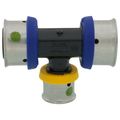
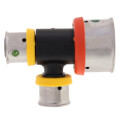


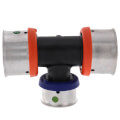
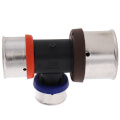

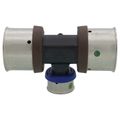
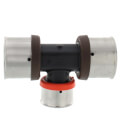
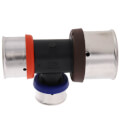
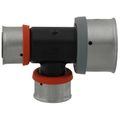
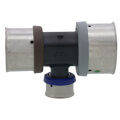
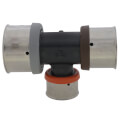
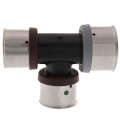

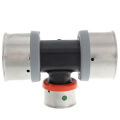

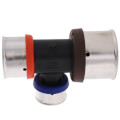
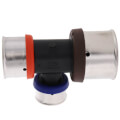
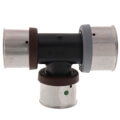
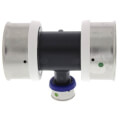
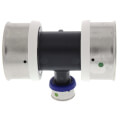

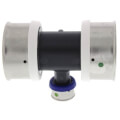
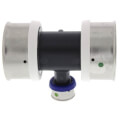


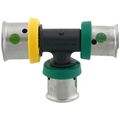
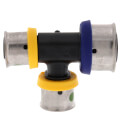
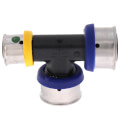
PEX press polymer reducer tees join three sections of PEX tubing at a single fitting while stepping down from a larger diameter line to a smaller branch, all secured with a press tool rather than a crimp ring or clamp. The polymer body keeps the fitting lightweight compared to a metal equivalent and resists the mineral buildup that can affect metal fittings over time in certain water conditions. Plumbers use the press connection method because it seats the fitting in a single squeeze of a press tool, without the separate step of positioning and crimping a ring by hand. Reducer tees specifically solve the common branch-line problem where a main supply run is a larger diameter than the fixture or zone it feeds, letting an installer step down pipe size at the branch point instead of running a full-size line the entire distance. That combination of speed and reduced material cost is why these fittings show up often in both new residential plumbing and radiant heating manifold runs.
Subcategories
- Standard Reduction Ratios: Standard reduction ratios cover the most common step-downs plumbers need, such as a larger trunk line branching to a smaller fixture supply. Installers reach for these on typical residential jobs where a main line feeds individual bathroom or kitchen fixtures. Keeping a stock of the most common ratios on a service truck avoids a mid-job supply run. These are the highest-volume sizes in the category by a wide margin.
- Radiant Heat Manifold Reducers: Manifold reducer tees are sized specifically for radiant floor heating installations, where a larger supply or return line steps down to feed individual heating loops. Radiant heating installers use these at the manifold itself rather than out in the field branch lines. Matching the reducer to the manifold's port size keeps flow balanced across all the loops it feeds. This subcategory sees heavier use during new construction radiant jobs than in general plumbing repair work.
- Commercial and Multi-Family Sizes: Larger reduction sizes serve commercial and multi-family buildings where trunk lines run bigger diameter PEX than a typical single-family home. Mechanical contractors on apartment or light commercial jobs use these to step down from a larger riser to individual unit branch lines. Because the pipe sizes involved are larger, the fittings themselves are sized accordingly. These are ordered less frequently but in higher unit-count batches per job.
Buying Guide
Confirming the correct reduction ratio before ordering is the first step, since a reducer tee is defined by three separate diameters rather than one, and getting any of the three wrong means a wasted trip back to the counter.
The press tool and jaw compatibility matters just as much as the fitting itself. Different manufacturers' press systems are not always interchangeable, so confirming the jaw or ring size matches the tool already on hand avoids a mismatched connection at rough-in.
For radiant heating work specifically, matching the reducer to the manifold port size keeps flow balanced across all the loops being fed from that manifold, which affects how evenly heat distributes across a floor.
Buyers stocking PEX press polymer reducer tees for a busy service vehicle should prioritize the standard reduction ratios that come up most often on residential jobs, since those move faster than the larger commercial sizes and running out mid-job costs more time than the fitting itself.
Finally, confirm the polymer material is rated for the water temperature and pressure of the system it will serve, since hot water supply lines and radiant heating loops can run warmer than a typical cold water branch.
Frequently Asked Questions
What is the difference between a press fitting and a crimp fitting?
A press fitting seats in one squeeze of a press tool with a built-in gasket, while a crimp fitting requires a separate ring that is compressed onto the tubing with a crimp tool. Both create a permanent connection, but the tools and workflow differ.
Can I mix press tool brands with a polymer reducer tee?
Not always. Press systems from different manufacturers are not universally interchangeable, so confirming the jaw or fitting compatibility with the tool already in use avoids a failed connection.
Why use a reducer tee instead of a straight tee with a separate reducing coupling?
A reducer tee combines the branch and the size step-down into a single fitting, which means one connection instead of two and one less potential leak point in the line.
Are polymer reducer tees rated for hot water lines?
Many are, but temperature and pressure ratings vary by product line, so confirming the specific fitting's rating against the system's operating conditions is worth doing before installation.
Where are these reducer tees most commonly used?
They show up frequently in residential branch plumbing where a main line feeds smaller fixture supplies, and in radiant heat manifold runs where a supply or return line steps down to individual loops.
