




PEX Rails

 --%3E %3Csvg version='1.1' id='Fill' xmlns='http://www.w3.org/2000/svg' xmlns:xlink='http://www.w3.org/1999/xlink' x='0px' y='0px' viewBox='0 0 100 100' enable-background='new 0 0 100 100' xml:space='preserve'%3E %3Cpath fill='%23F15C02' d='M79.44,0.95H20.56C9.78,0.95,0.95,9.78,0.95,20.56v58.87c0,10.79,8.82,19.61,19.61,19.61h58.87 c10.79,0,19.61-8.83,19.61-19.61V20.56C99.05,9.78,90.22,0.95,79.44,0.95z M65.38,58.24l9.38,29.58L49.69,69.78L24.5,87.82 l9.34-29.6L8.8,39.6l30.73-0.17c0,0,6.98-19.61,10-28.93c0.54,1.36,9.88,29.1,9.88,29.1H91.2L65.38,58.24z'/%3E %3C/svg%3E)
 --%3E %3Csvg version='1.1' id='Half' xmlns='http://www.w3.org/2000/svg' xmlns:xlink='http://www.w3.org/1999/xlink' x='0px' y='0px' viewBox='0 0 100 100' enable-background='new 0 0 100 100' xml:space='preserve'%3E %3Cg%3E %3Cpath fill='%23F15C02' d='M30.05,70.23l3.79-12.01L8.8,39.6l30.73-0.17c0,0,6.98-19.61,10-28.93c0.54,1.36,9.88,29.1,9.88,29.1h1.58 L93.71,7.18c-3.58-3.82-8.66-6.23-14.28-6.23H20.56C9.78,0.95,0.95,9.78,0.95,20.56v58.87c0,5.41,2.22,10.32,5.79,13.88 L30.05,70.23z'/%3E %3C/g%3E %3Cpath fill='%23FBC8B4' d='M93.71,7.18L60.98,39.6H91.2L65.38,58.24l9.38,29.58L49.69,69.78L24.5,87.82l5.55-17.59L6.75,93.32 c3.55,3.54,8.44,5.73,13.82,5.73h58.87c10.79,0,19.61-8.83,19.61-19.61V20.56C99.05,15.4,97.01,10.69,93.71,7.18z'/%3E %3C/svg%3E)

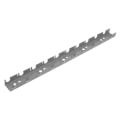
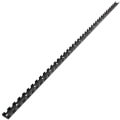

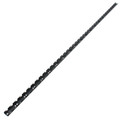
PEX Rails are rigid plastic strips that secure PEX tubing to concrete floors and wood subfloors during radiant heating installation, keeping tubing runs straight and evenly spaced before a slab pour or subfloor covering goes down. Uponor's line comes in three diameters, 1/2 inch, 5/8 inch, and 3/4 inch, each sold in 6.5 foot lengths that match common radiant tubing sizes. A rail holds tubing in place at consistent intervals along its length, keeping loop spacing uniform across a large room without an installer measuring and marking each run by hand. Fastening hardware isn't included with the rail itself, so a crew needs screws or concrete anchors sized for the subfloor or slab material being used. Rails work alongside other mounting parts, such as wall support brackets, to carry a tubing run from a wall penetration out across the open floor area. Getting tubing spacing right at this stage affects heat output evenness across the finished floor, which is difficult to correct once concrete is poured or flooring is installed over the top.
Subcategories
- 1/2 Inch PEX Rail: 1/2 inch PEX Rail is sized for the most common radiant tubing diameter used in residential slab and subfloor installations, sold in 6.5 foot lengths per rail. Installers lay these rails across a subfloor or slab base before setting tubing loops, using them to keep 1/2 inch tubing runs straight and properly spaced. Residential radiant heating jobs, from single rooms to full-floor systems, make up the majority of use cases for this size. Fastening hardware for the specific subfloor or slab material still needs to be sourced separately.
- 5/8 Inch PEX Rail: 5/8 inch PEX Rail matches the next tubing diameter up, used on radiant loops sized for longer runs or higher flow requirements than a 1/2 inch system needs. Rails come in the same 6.5 foot length as the smaller size, so multiple rails join together across a large room layout. Larger residential or light commercial radiant jobs, where loop length pushes past what 1/2 inch tubing comfortably handles, call for this size more often. Compatibility with the tubing diameter is the main factor in choosing this size over 1/2 inch or 3/4 inch rail.
- 3/4 Inch PEX Rail: 3/4 inch PEX Rail is built for the largest common radiant tubing diameter in Uponor's line, typically used on longer loops, larger commercial spaces, or snow melt systems where higher flow volume is needed. The rail ships in the same 6.5 foot length as the smaller sizes, keeping installation methods consistent across a job that mixes tubing diameters in different zones. Larger tubing carries more weight per foot, so rail spacing and fastening choice matter more on this size than on smaller tubing. Crews running mixed-diameter systems keep all three rail sizes on hand to match whichever loop is being installed that day.
Buying Guide
Tubing diameter decides rail size first, since a rail sized for 1/2 inch tubing won't properly seat 5/8 inch or 3/4 inch tubing and vice versa. Checking the tubing spec on the job's radiant design before ordering rail avoids a mismatch discovered mid-install. Substrate type matters next. A slab-on-grade pour needs rail fastened with concrete-rated anchors, while a wood subfloor takes standard wood screws instead, and neither type of fastener ships with the rail itself. PEX Rails install fastest when laid out in long, uninterrupted runs across open floor area, so planning the layout to minimize rail cuts and joints saves installation time on a large room. Loop length and room size determine how many 6.5 foot rail sections a job needs, and ordering a few extra sections covers cuts and waste at wall penetrations or around fixtures without a mid-job supply run. Rails work best paired with wall support brackets at the point where tubing exits the floor and continues into a wall, so checking that both products are on order together avoids a gap in the installation plan. Mixed-diameter systems, such as a job running 1/2 inch tubing in most rooms and 3/4 inch tubing on a longer loop or snow melt zone, need multiple rail sizes on hand rather than trying to make one size work across the whole layout.
Frequently Asked Questions
What sizes do PEX Rails come in?
PEX Rails come in three diameters, 1/2 inch, 5/8 inch, and 3/4 inch, each sold in 6.5 foot lengths. Matching rail size to the tubing diameter specified in the radiant design keeps tubing properly seated along the run. A job using more than one tubing diameter across different zones needs the matching rail size for each zone.
Does fastening hardware come with PEX Rail?
No, fastening hardware isn't included with PEX Rail and needs to be sourced separately. A slab installation needs concrete-rated anchors, while a wood subfloor takes standard wood screws instead. Confirming the substrate type before ordering fasteners avoids a mismatch between the rail and the mounting surface.
What substrates can PEX Rail be installed on?
PEX Rail installs on both concrete floors and wood subfloors, covering the two most common substrates in radiant heating installation. The rail itself works the same way regardless of substrate, but the fastening hardware used to secure it changes between the two. Checking the job's substrate before ordering fasteners keeps the installation on schedule.
How long is a single section of PEX Rail?
A single section of PEX Rail measures 6.5 feet across all three available diameters. Larger rooms or longer loops need multiple sections joined together to cover the full run. Ordering a few extra sections beyond the minimum calculated length covers cuts and waste around wall penetrations or fixtures.
Can different tubing diameters be used on the same radiant job with PEX Rail?
Yes, a single radiant job can use different tubing diameters in different zones, such as 1/2 inch tubing in most rooms and 3/4 inch tubing on a longer loop or snow melt zone. Each diameter needs its matching rail size rather than trying to fit tubing into a rail sized for a different diameter. Keeping all needed rail sizes on hand before starting installation avoids delays mid-job.
