




Radiant Heat Install Parts
Radiant heat install parts are the smaller components that hold PEX tubing in place and route it through a subfloor or between joists. They also protect the tubing during a radiant heating installation. This category does not cover the tubing, manifolds, or boilers that form the core of a radiant system. It covers the brackets, clips, rails, fixing wire, and protective plates a crew uses to install tubing correctly. These parts also keep the tubing safe from damage afterward.
A radiant heat system depends on tubing that stays where it was designed to run, spaced consistently and protected from punctures during later trades' work. Installers use different mounting methods depending on whether tubing runs under a subfloor, between joists, or in a slab. A wrong choice can mean tubing that sags out of position or gets nicked by a screw driven from above. Stocking the right mix of brackets, clips, and protective hardware helps a radiant install go in straight the first time and hold up over the life of the floor.







Subcategories
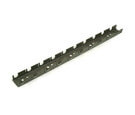
- EZ Route PEX Routing: EZ Route PEX routing systems guide tubing through joist bays or subfloor installations in a consistent, repeatable pattern, which helps maintain even tubing spacing across a radiant floor. Consistent spacing matters for even heat distribution across the finished floor. These systems typically pair a routing guide or track with standard PEX tubing already used elsewhere in the installation.
- Fixing Wire & Zip Ties: Fixing wire and zip ties secure PEX tubing to rebar, wire mesh, or insulation panels in slab and thin-slab radiant installations. They hold tubing in its designed pattern before the pour or floor covering goes down. Reliable fasteners keep tubing from shifting out of place during concrete placement or subsequent construction. Contractors typically keep a supply on hand because the quantity needed scales directly with the tubing layout.
- Glycol Feeders: Glycol feeders automatically maintain fluid volume and pressure in a closed-loop radiant or hydronic system by adding glycol-water mixture as needed. They reduce the chance of a system running low on fluid and drawing in air, which can cause noise or reduced heat transfer. A feeder is typically installed near the boiler or manifold where it can monitor system pressure directly.
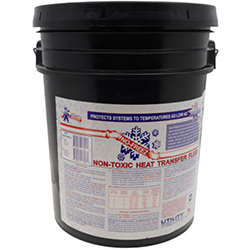
- No-Freez Non-Toxic Anti-Freeze: No-Freez non-toxic anti-freeze protects a hydronic or radiant system's fluid from freezing in unheated spaces, garages, or systems that see extended shutdowns in cold climates. Non-toxic formulations are specified where a leak or spill could contact drinking water or living space. Contractors match the glycol concentration to the expected minimum temperature at the installation site.
- PEX Bend Supports: PEX bend supports keep tubing from kinking at tight turns, such as where a line comes up out of a subfloor or bends sharply near a manifold. A kinked line restricts flow and can create a weak point in the tubing over time. Bend supports are typically installed at every sharp turn in an exposed run rather than only at a few key locations.
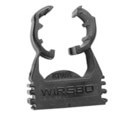
- PEX Clips: PEX clips fasten tubing to a subfloor, joist, or insulation panel at regular intervals to hold it in its designed spacing pattern. Consistent clip spacing keeps tubing from sagging or shifting before the finished floor covering is installed over it. Clip style and spacing needs vary depending on whether tubing runs under a subfloor, in a staple-up application, or across insulation panels.
Buying Guide
Choosing radiant install parts starts with the installation method already planned for the job, since staple-up, subfloor, slab, and panel systems each rely on different mounting hardware. A slab installation depends heavily on fixing wire and stakes to hold tubing to reinforcement before the pour. A staple-up or subfloor job relies more on clips, rails, and routing guides.
Tubing spacing and pattern consistency directly affect how evenly a radiant floor heats. Mounting hardware that holds a consistent spacing interval is worth prioritizing over parts that only loosely secure tubing. Routing systems that guide tubing through joist bays in a repeatable pattern help maintain that consistency across a large floor area.
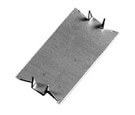
Protection against damage from other trades is easy to overlook. It matters on any job where a floor covering installer, electrician, or other trade will later drive fasteners near radiant tubing. Steel plate protectors placed over exposed tubing runs reduce the risk of a punctured line discovered only after the floor is finished.
System fluid maintenance parts, such as glycol feeders and non-toxic anti-freeze, matter most on closed-loop systems that see cold ambient temperatures or extended periods without heat demand. Specifying the correct glycol concentration for the coldest expected temperature at the site protects the system from a freeze-related failure.
Organization and support hardware, including tubing organizers and stand-up brackets, keep runs orderly at a manifold or mechanical room wall. This simplifies future troubleshooting and balancing. A neatly organized manifold wall also makes it easier to identify which loop feeds which zone when a system needs service.
Frequently Asked Questions
Why does PEX tubing spacing matter in a radiant floor?
Even spacing keeps heat output consistent across the whole floor rather than creating hot and cold stripes. Mounting hardware that holds a fixed spacing interval, such as clips or a routing system, helps a floor heat evenly once the system is running.
What's the purpose of a bend support on PEX tubing?
A bend support keeps tubing from kinking at a sharp turn, which would otherwise restrict flow and weaken the tubing at that point. They're typically placed at every tight bend in an exposed section of tubing rather than only at a few spots.
Is non-toxic anti-freeze required in every radiant system?
It's mainly specified for systems in unheated spaces, garages, or locations that see extended shutdowns in cold climates where the fluid could otherwise freeze. A system that stays heated and occupied year-round may not need it, but the risk depends on the specific installation.
How does a glycol feeder help a hydronic system?
A glycol feeder automatically adds fluid to maintain system pressure and volume, which helps prevent air from entering the system when fluid volume drops. It's typically installed near the boiler or manifold so it can monitor pressure directly.
Why use steel plate protectors on a radiant install?
Steel plate protectors shield tubing from being punctured by a screw or nail that another trade drives later in the project. They protect tubing that runs behind a wall or under a subfloor. They're placed over exposed tubing runs in areas likely to see later fastening work.
Resources

 --%3E %3C!DOCTYPE svg PUBLIC '-//W3C//DTD SVG 1.1//EN' 'http://www.w3.org/Graphics/SVG/1.1/DTD/svg11.dtd'%3E %3Csvg version='1.1' id='Layer_1' xmlns='http://www.w3.org/2000/svg' xmlns:xlink='http://www.w3.org/1999/xlink' x='0px' y='0px' width='90px' height='90px' viewBox='0 0 90 90' enable-background='new 0 0 90 90' xml:space='preserve'%3E %3Crect x='27' y='23' fill='%23FFFFFF' width='43' height='44'/%3E %3Cg%3E %3Cdefs%3E %3Crect id='SVGID_1_' width='90' height='90'/%3E %3C/defs%3E %3CclipPath id='SVGID_2_'%3E %3Cuse xlink:href='%23SVGID_1_' overflow='visible'/%3E %3C/clipPath%3E %3Cpath clip-path='url(%23SVGID_2_)' fill='%234186AD' d='M45,0C20.1,0,0,20.1,0,45c0,24.9,20.1,45,45,45c24.9,0,45-20.1,45-45 C90,20.1,69.9,0,45,0'/%3E %3C/g%3E %3Cpath fill='%23FFFFFF' d='M60.6,47.4l-22.5,14c-0.5,0.3-1,0.399-1.5,0.399s-0.9-0.1-1.4-0.399c-0.9-0.5-1.4-1.4-1.4-2.5v-28 c0-1,0.6-2,1.4-2.5c0.9-0.5,2-0.5,2.9,0.1l22.5,14.1C61.4,43.1,61.9,44,61.9,45S61.4,46.9,60.6,47.4'/%3E %3C/svg%3E)
Subcategories
- EZ Route PEX Routing: EZ Route PEX routing systems guide tubing through joist bays or subfloor installations in a consistent, repeatable pattern, which helps maintain even tubing spacing across a radiant floor. Consistent spacing matters for even heat distribution across the finished floor. These systems typically pair a routing guide or track with standard PEX tubing already used elsewhere in the installation.
- Fixing Wire & Zip Ties: Fixing wire and zip ties secure PEX tubing to rebar, wire mesh, or insulation panels in slab and thin-slab radiant installations. They hold tubing in its designed pattern before the pour or floor covering goes down. Reliable fasteners keep tubing from shifting out of place during concrete placement or subsequent construction. Contractors typically keep a supply on hand because the quantity needed scales directly with the tubing layout.
- Glycol Feeders: Glycol feeders automatically maintain fluid volume and pressure in a closed-loop radiant or hydronic system by adding glycol-water mixture as needed. They reduce the chance of a system running low on fluid and drawing in air, which can cause noise or reduced heat transfer. A feeder is typically installed near the boiler or manifold where it can monitor system pressure directly.
- No-Freez Non-Toxic Anti-Freeze: No-Freez non-toxic anti-freeze protects a hydronic or radiant system's fluid from freezing in unheated spaces, garages, or systems that see extended shutdowns in cold climates. Non-toxic formulations are specified where a leak or spill could contact drinking water or living space. Contractors match the glycol concentration to the expected minimum temperature at the installation site.
- PEX Bend Supports: PEX bend supports keep tubing from kinking at tight turns, such as where a line comes up out of a subfloor or bends sharply near a manifold. A kinked line restricts flow and can create a weak point in the tubing over time. Bend supports are typically installed at every sharp turn in an exposed run rather than only at a few key locations.
- PEX Clips: PEX clips fasten tubing to a subfloor, joist, or insulation panel at regular intervals to hold it in its designed spacing pattern. Consistent clip spacing keeps tubing from sagging or shifting before the finished floor covering is installed over it. Clip style and spacing needs vary depending on whether tubing runs under a subfloor, in a staple-up application, or across insulation panels.
Buying Guide
Choosing radiant install parts starts with the installation method already planned for the job, since staple-up, subfloor, slab, and panel systems each rely on different mounting hardware. A slab installation depends heavily on fixing wire and stakes to hold tubing to reinforcement before the pour. A staple-up or subfloor job relies more on clips, rails, and routing guides.
Tubing spacing and pattern consistency directly affect how evenly a radiant floor heats. Mounting hardware that holds a consistent spacing interval is worth prioritizing over parts that only loosely secure tubing. Routing systems that guide tubing through joist bays in a repeatable pattern help maintain that consistency across a large floor area.
Protection against damage from other trades is easy to overlook. It matters on any job where a floor covering installer, electrician, or other trade will later drive fasteners near radiant tubing. Steel plate protectors placed over exposed tubing runs reduce the risk of a punctured line discovered only after the floor is finished.
System fluid maintenance parts, such as glycol feeders and non-toxic anti-freeze, matter most on closed-loop systems that see cold ambient temperatures or extended periods without heat demand. Specifying the correct glycol concentration for the coldest expected temperature at the site protects the system from a freeze-related failure.
Organization and support hardware, including tubing organizers and stand-up brackets, keep runs orderly at a manifold or mechanical room wall. This simplifies future troubleshooting and balancing. A neatly organized manifold wall also makes it easier to identify which loop feeds which zone when a system needs service.
Frequently Asked Questions
Why does PEX tubing spacing matter in a radiant floor?
Even spacing keeps heat output consistent across the whole floor rather than creating hot and cold stripes. Mounting hardware that holds a fixed spacing interval, such as clips or a routing system, helps a floor heat evenly once the system is running.
What's the purpose of a bend support on PEX tubing?
A bend support keeps tubing from kinking at a sharp turn, which would otherwise restrict flow and weaken the tubing at that point. They're typically placed at every tight bend in an exposed section of tubing rather than only at a few spots.
Is non-toxic anti-freeze required in every radiant system?
It's mainly specified for systems in unheated spaces, garages, or locations that see extended shutdowns in cold climates where the fluid could otherwise freeze. A system that stays heated and occupied year-round may not need it, but the risk depends on the specific installation.
How does a glycol feeder help a hydronic system?
A glycol feeder automatically adds fluid to maintain system pressure and volume, which helps prevent air from entering the system when fluid volume drops. It's typically installed near the boiler or manifold so it can monitor pressure directly.
Why use steel plate protectors on a radiant install?
Steel plate protectors shield tubing from being punctured by a screw or nail that another trade drives later in the project. They protect tubing that runs behind a wall or under a subfloor. They're placed over exposed tubing runs in areas likely to see later fastening work.