




Filters
SORT
Product Availability –
Brand –
Application –
Volume –
Review Score –
 --%3E %3Csvg version='1.1' id='Fill' xmlns='http://www.w3.org/2000/svg' xmlns:xlink='http://www.w3.org/1999/xlink' x='0px' y='0px' viewBox='0 0 100 100' enable-background='new 0 0 100 100' xml:space='preserve'%3E %3Cpath fill='%23F15C02' d='M79.44,0.95H20.56C9.78,0.95,0.95,9.78,0.95,20.56v58.87c0,10.79,8.82,19.61,19.61,19.61h58.87 c10.79,0,19.61-8.83,19.61-19.61V20.56C99.05,9.78,90.22,0.95,79.44,0.95z M65.38,58.24l9.38,29.58L49.69,69.78L24.5,87.82 l9.34-29.6L8.8,39.6l30.73-0.17c0,0,6.98-19.61,10-28.93c0.54,1.36,9.88,29.1,9.88,29.1H91.2L65.38,58.24z'/%3E %3C/svg%3E)
 --%3E %3Csvg version='1.1' id='With-RB' xmlns='http://www.w3.org/2000/svg' xmlns:xlink='http://www.w3.org/1999/xlink' x='0px' y='0px' viewBox='0 0 100 100' enable-background='new 0 0 100 100' xml:space='preserve'%3E %3Cpath fill='%23FBC8B4' d='M79.44,0.95H20.56C9.78,0.95,0.95,9.78,0.95,20.56v58.87c0,10.79,8.82,19.61,19.61,19.61h58.87 c10.79,0,19.61-8.83,19.61-19.61V20.56C99.05,9.78,90.22,0.95,79.44,0.95z M65.38,58.24l9.38,29.58L49.69,69.78L24.5,87.82 l9.34-29.6L8.8,39.6l30.73-0.17c0,0,6.98-19.61,10-28.93c0.54,1.36,9.88,29.1,9.88,29.1H91.2L65.38,58.24z'/%3E %3C/svg%3E)
Price Range –
PVC Cleaners


 --%3E %3Csvg version='1.1' id='Half' xmlns='http://www.w3.org/2000/svg' xmlns:xlink='http://www.w3.org/1999/xlink' x='0px' y='0px' viewBox='0 0 100 100' enable-background='new 0 0 100 100' xml:space='preserve'%3E %3Cg%3E %3Cpath fill='%23F15C02' d='M30.05,70.23l3.79-12.01L8.8,39.6l30.73-0.17c0,0,6.98-19.61,10-28.93c0.54,1.36,9.88,29.1,9.88,29.1h1.58 L93.71,7.18c-3.58-3.82-8.66-6.23-14.28-6.23H20.56C9.78,0.95,0.95,9.78,0.95,20.56v58.87c0,5.41,2.22,10.32,5.79,13.88 L30.05,70.23z'/%3E %3C/g%3E %3Cpath fill='%23FBC8B4' d='M93.71,7.18L60.98,39.6H91.2L65.38,58.24l9.38,29.58L49.69,69.78L24.5,87.82l5.55-17.59L6.75,93.32 c3.55,3.54,8.44,5.73,13.82,5.73h58.87c10.79,0,19.61-8.83,19.61-19.61V20.56C99.05,15.4,97.01,10.69,93.71,7.18z'/%3E %3C/svg%3E)

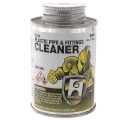
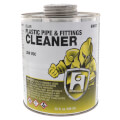

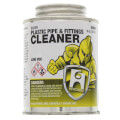
PVC Cleaners are solvent-based products that remove surface dirt, oils, and other contaminants from PVC, CPVC, and ABS pipe and fittings before a solvent-weld joint goes together. A clean surface matters because solvent cement bonds by chemically fusing the two mating surfaces, and any residue left behind weakens that bond and raises the risk of a leak. Cleaner is not the same product as primer: cleaner only removes contaminants from the surface, while primer both cleans and starts the chemical reaction needed to soften the material and bond pipe and fittings together. Oatey defines a low-VOC formula as one rated at or below 150 grams per liter, a benchmark that matters in regions enforcing strict air quality rules. Many code jurisdictions require a primer step, sometimes with a purple tint for visual verification, before cementing PVC, so pairing a cleaner with the right NSF-listed primer keeps the joint code-compliant and reduces callbacks from failed connections.
Subcategories
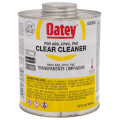
- Clear Cleaners: Clear cleaners remove surface dirt, oils, and other contaminants from ABS, PVC, and CPVC pipe and fittings without leaving a tint on the joint. Oatey's cleaner line specifically states that cleaners are not primers, since a cleaner only strips contaminants while a primer starts the chemical bonding reaction. Crews use clear cleaner ahead of cementing on jobs where local code doesn't require a color-change primer step.
- Clear Primers: Clear primers clean the PVC or CPVC surface and soften it so solvent cement can fuse the joint, and Oatey's clear primer is NSF listed for that purpose. The formula is built for all schedules and classes of PVC and CPVC pipe and fittings. Crews choose clear primer over purple when the finished joint needs to stay cosmetically clean, such as on exposed, visible runs.
- Purple Primers: Purple primers perform the same cleaning and softening function as clear primer but leave a visible purple tint on the pipe once applied. Oatey's industrial grade purple primer is NSF listed, meets ASTM F656, and complies with NSF/ANSI 61 health effects requirements. Many plumbing codes require that purple tint so an inspector can visually confirm primer was applied to every joint before cement went on.
- Industrial Grade Primers: Industrial grade clear and purple primers are aggressive, NSF-listed formulas built for commercial and large-diameter thermoplastic piping systems, including CPVC Schedule 40 and 80, in cold-weather applications. Both meet ASTM F656 and comply with SCAQMD low-VOC air quality limits. Crews working larger commercial pipe runs or cold job sites reach for the industrial grade formula when a standard primer doesn't cut through surface contaminants fast enough.
Buying Guide
Check local plumbing code before choosing between clear and purple primer. Many jurisdictions require a purple, color-change primer so an inspector can confirm every joint was primed before cementing, while other jurisdictions accept clear primer or even skip the primer requirement on smaller non-pressure lines. Confirm the requirement with the local inspector or code book before stocking a truck with the wrong color.
Match the cleaner or primer to the pipe material on the job. Standard formulas cover PVC, but CPVC hot and cold water lines need a primer rated for CPVC as well, and industrial grade formulas exist specifically for larger diameter or cold-weather commercial work. Reading the label for material compatibility before opening a can avoids a weak joint on a pressure line.
Look for NSF/ANSI 61 certification on any PVC Cleaners and primers going into a potable water system, since that certification confirms the formula meets health effects requirements for drinking water contact. Pair the cleaner with a primer and cement system from a compatible formula family, since mixing chemistries across cleaner, primer, and cement can affect cure time and joint strength. Check primer labels against regional air quality rules, particularly in areas that enforce SCAQMD or BAAQMD low-VOC limits, since a noncompliant product can hold up an inspection. Stocking both clear and purple primer alongside a general cleaner covers most residential and light commercial jobs without guessing at what a given inspector will require on-site.
Frequently Asked Questions
What's the difference between PVC cleaner and PVC primer?
PVC cleaner only strips dirt, oils, and other contaminants from the pipe before cementing. PVC primer does that same cleaning step but also starts the chemical reaction that softens the surface so solvent cement can bond the joint. Oatey's own product line draws that exact distinction between the two categories.
Does purple primer work any differently than clear primer?
Purple and clear primer clean and soften PVC and CPVC surfaces the same way; the purple version simply adds a visible tint. Oatey's clear and purple primers are both NSF listed and meet ASTM F656. Many plumbing codes specifically require the purple tint so an inspector can confirm primer was applied to every joint.
Is a primer step required on every PVC joint?
Primer requirements vary by jurisdiction, and some codes treat pressure piping differently than non-pressure drain, waste, and vent lines. Checking the local plumbing code or asking the inspector before starting a job confirms which lines need a primer step. Skipping a required primer step can fail an inspection even if the joint holds pressure during testing.
What does NSF/ANSI 61 certification mean for a primer?
NSF/ANSI 61 certification confirms the formula meets health effects requirements for products that contact drinking water. Primers going into a potable water system should carry that certification on the label. Oatey's clear and industrial grade purple and clear primers all comply with NSF/ANSI 61 for that reason.
When does industrial grade primer make more sense than standard primer?
Industrial grade clear and purple primers are formulated for commercial and large-diameter thermoplastic piping, including CPVC Schedule 40 and 80, and for cold-weather applications. Standard primer covers most residential jobs at normal temperatures. Crews working larger commercial runs or cold job sites reach for the industrial grade formula since it's built to cut through contaminants faster in those conditions.
