




PVC Conduit Straps

 --%3E %3Csvg version='1.1' id='No-RB' xmlns='http://www.w3.org/2000/svg' xmlns:xlink='http://www.w3.org/1999/xlink' x='0px' y='0px' viewBox='0 0 100 100' enable-background='new 0 0 100 100' xml:space='preserve'%3E %3Cpath fill='%23CECECE' d='M79.44,0.95H20.56C9.78,0.95,0.95,9.78,0.95,20.56v58.87c0,10.79,8.82,19.61,19.61,19.61h58.87 c10.79,0,19.61-8.83,19.61-19.61V20.56C99.05,9.78,90.22,0.95,79.44,0.95z M65.38,58.24l9.38,29.58L49.69,69.78L24.5,87.82 l9.34-29.6L8.8,39.6l30.73-0.17c0,0,6.98-19.61,10-28.93c0.54,1.36,9.88,29.1,9.88,29.1H91.2L65.38,58.24z'/%3E %3C/svg%3E)


 --%3E %3Csvg version='1.1' id='Fill' xmlns='http://www.w3.org/2000/svg' xmlns:xlink='http://www.w3.org/1999/xlink' x='0px' y='0px' viewBox='0 0 100 100' enable-background='new 0 0 100 100' xml:space='preserve'%3E %3Cpath fill='%23F15C02' d='M79.44,0.95H20.56C9.78,0.95,0.95,9.78,0.95,20.56v58.87c0,10.79,8.82,19.61,19.61,19.61h58.87 c10.79,0,19.61-8.83,19.61-19.61V20.56C99.05,9.78,90.22,0.95,79.44,0.95z M65.38,58.24l9.38,29.58L49.69,69.78L24.5,87.82 l9.34-29.6L8.8,39.6l30.73-0.17c0,0,6.98-19.61,10-28.93c0.54,1.36,9.88,29.1,9.88,29.1H91.2L65.38,58.24z'/%3E %3C/svg%3E)
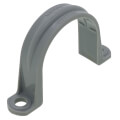
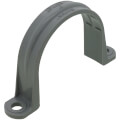

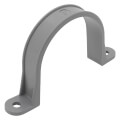
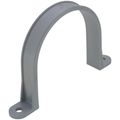

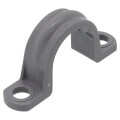
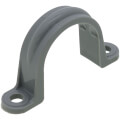
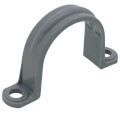
PVC conduit straps are the non-metallic fasteners electricians and plumbers use to secure PVC conduit runs to walls, framing, and other mounting surfaces. A two-hole strap places two fasteners across the mounting foot, spreading the load across two anchor points for a more rigid hold than a single-point mount, while a one-hole strap uses a single center fastener that some installers prefer for quick, low-load mounting. Because the material is non-conductive PVC or nylon rather than steel, these straps resist the corrosion that develops on uncoated metal hardware, particularly in wet, buried, or chemically exposed locations. Contractors running conduit through crawlspaces, exterior walls, or industrial areas with corrosive vapors reach for PVC straps instead of steel for exactly that reason. Choosing between a one-hole and a two-hole design comes down to how much load the run carries and how much the strap needs to resist rotation once installed.
Subcategories
- One-Hole PVC Straps: One-hole PVC and nylon straps use a single center fastener, which lets the strap pivot slightly during installation for faster, low-load mounting. The Carlon E978JC-CAR is a 2 inch nylon one-hole conduit support snap strap built for this style of quick mounting. Electricians favor one-hole straps on runs where speed matters more than maximum rigidity. They work well on lighter conduit runs inside walls or ceilings where the strap will not face outdoor exposure.
- Two-Hole PVC Straps: Two-hole PVC straps place two fasteners into the mounting foot, spreading the load across two anchor points for a more rigid hold than a one-hole design. The two-fastener design suits runs compatible with Schedule 40 and Schedule 80 PVC conduit that need to stay fixed under vibration or heavier cable loads. Contractors mounting exposed conduit runs along exterior walls or mechanical rooms typically default to two-hole straps for the added stability. The extra fastener point also reduces the chance of the strap twisting over time.
- PVC Conduit Clamps: PVC conduit clamps offer a non-metallic alternative to steel clamps for securing conduit to masonry, wood framing, or strut. Because they are plastic rather than steel, they will not rust or corrode in wet, buried, or chemically exposed locations. Electricians select clamp size to match the outside diameter of the specific conduit schedule being run. Clamp sizes span a range to fit both small branch circuits and larger conduit runs.
Buying Guide
Start by matching strap size to the actual outside diameter of the conduit, not just its trade size, since PVC conduit walls vary in thickness between Schedule 40 and Schedule 80. Decide between a one-hole and two-hole design based on how much the run will be exposed to vibration, foot traffic, or heavier cable fill. A one-hole strap saves installation time on light, protected runs, while a two-hole strap holds firm on exposed runs that see more physical stress. PVC Conduit Straps make sense over steel any time the installation sits in a wet, buried, or chemically corrosive environment, since the non-conductive plastic will not rust the way uncoated steel hardware does over time. Mounting surface matters too: masonry anchors, wood screws, and strut clips all call for different strap foot designs, so confirm the strap is rated for the actual wall or framing material before ordering in bulk. Spacing code requirements also drive quantity, since most electrical codes require conduit supports at set intervals along horizontal and vertical runs, and undersizing an order midway through a job stalls a rough-in inspection. For outdoor or underground work, pair PVC straps with corrosion-resistant fasteners, since a rusted screw at the mounting point defeats the purpose of a non-metallic strap. Buying a small stock of both one-hole and two-hole straps in the most common trade sizes covers most residential and light commercial rough-in work without overcommitting to a single style.
Frequently Asked Questions
When should a one-hole PVC strap be used instead of a two-hole strap?
One-hole straps work best on light, protected conduit runs where installation speed matters more than maximum holding strength, such as branch runs inside a wall cavity. Two-hole straps distribute the load across two fasteners and hold up better on exposed runs subject to vibration or physical contact. Choosing between the two comes down to how much stress the specific run will see over its service life.
Why choose a PVC conduit strap over a steel strap?
PVC and nylon straps are non-conductive and will not rust or corrode the way uncoated steel hardware does, especially in wet, buried, or chemically exposed locations. Steel straps still make sense on heavy-duty industrial runs where load capacity outweighs corrosion concerns. Choosing plastic over steel mostly comes down to the exposure conditions of the specific installation.
Are PVC conduit straps compatible with both Schedule 40 and Schedule 80 conduit?
Many PVC straps and clamps are built to fit both Schedule 40 and Schedule 80 PVC conduit at a given trade size, since the outside diameter is similar between the two schedules. Confirming compatibility on the specific product before ordering avoids a mismatch on-site. Trade size, not wall thickness, is what determines strap fit in most cases.
How far apart should conduit straps be spaced on a PVC run?
Spacing requirements come from the electrical code governing the specific installation and generally call for supports at set intervals along both horizontal and vertical conduit runs. Confirming local code requirements before starting a rough-in avoids having to add supports after the fact. Support spacing also depends on conduit trade size, with larger diameters typically allowing longer intervals between straps.
Can a PVC conduit clamp be used on masonry walls?
PVC conduit clamps mount to masonry, wood framing, or strut channel depending on the fastener used with the clamp. Selecting the right anchor for masonry, such as a concrete screw or expansion anchor, matters as much as choosing the correct clamp size. The clamp material itself, being non-metallic, resists the corrosion that can develop in masonry applications exposed to moisture.
