




Poly PEX Crimp x NPT Elbows

 --%3E %3Csvg version='1.1' id='No-RB' xmlns='http://www.w3.org/2000/svg' xmlns:xlink='http://www.w3.org/1999/xlink' x='0px' y='0px' viewBox='0 0 100 100' enable-background='new 0 0 100 100' xml:space='preserve'%3E %3Cpath fill='%23CECECE' d='M79.44,0.95H20.56C9.78,0.95,0.95,9.78,0.95,20.56v58.87c0,10.79,8.82,19.61,19.61,19.61h58.87 c10.79,0,19.61-8.83,19.61-19.61V20.56C99.05,9.78,90.22,0.95,79.44,0.95z M65.38,58.24l9.38,29.58L49.69,69.78L24.5,87.82 l9.34-29.6L8.8,39.6l30.73-0.17c0,0,6.98-19.61,10-28.93c0.54,1.36,9.88,29.1,9.88,29.1H91.2L65.38,58.24z'/%3E %3C/svg%3E)


 --%3E %3Csvg version='1.1' id='Fill' xmlns='http://www.w3.org/2000/svg' xmlns:xlink='http://www.w3.org/1999/xlink' x='0px' y='0px' viewBox='0 0 100 100' enable-background='new 0 0 100 100' xml:space='preserve'%3E %3Cpath fill='%23F15C02' d='M79.44,0.95H20.56C9.78,0.95,0.95,9.78,0.95,20.56v58.87c0,10.79,8.82,19.61,19.61,19.61h58.87 c10.79,0,19.61-8.83,19.61-19.61V20.56C99.05,9.78,90.22,0.95,79.44,0.95z M65.38,58.24l9.38,29.58L49.69,69.78L24.5,87.82 l9.34-29.6L8.8,39.6l30.73-0.17c0,0,6.98-19.61,10-28.93c0.54,1.36,9.88,29.1,9.88,29.1H91.2L65.38,58.24z'/%3E %3C/svg%3E)
 --%3E %3Csvg version='1.1' id='Half' xmlns='http://www.w3.org/2000/svg' xmlns:xlink='http://www.w3.org/1999/xlink' x='0px' y='0px' viewBox='0 0 100 100' enable-background='new 0 0 100 100' xml:space='preserve'%3E %3Cg%3E %3Cpath fill='%23F15C02' d='M30.05,70.23l3.79-12.01L8.8,39.6l30.73-0.17c0,0,6.98-19.61,10-28.93c0.54,1.36,9.88,29.1,9.88,29.1h1.58 L93.71,7.18c-3.58-3.82-8.66-6.23-14.28-6.23H20.56C9.78,0.95,0.95,9.78,0.95,20.56v58.87c0,5.41,2.22,10.32,5.79,13.88 L30.05,70.23z'/%3E %3C/g%3E %3Cpath fill='%23FBC8B4' d='M93.71,7.18L60.98,39.6H91.2L65.38,58.24l9.38,29.58L49.69,69.78L24.5,87.82l5.55-17.59L6.75,93.32 c3.55,3.54,8.44,5.73,13.82,5.73h58.87c10.79,0,19.61-8.83,19.61-19.61V20.56C99.05,15.4,97.01,10.69,93.71,7.18z'/%3E %3C/svg%3E)
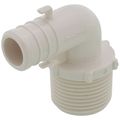


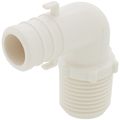
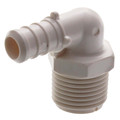

Poly PEX Crimp x NPT Elbows are transition fittings with one PEX crimp end and one NPT threaded end joined at a right angle, letting a plumber route PEX tubing into a threaded fixture or valve without a separate straight adapter and elbow. Poly construction, typically a reinforced polymer body, offers a lighter and lower cost alternative to brass or bronze fittings for jobs where local code and water chemistry allow a plastic fitting at that connection point. The PEX side crimps onto tubing using a copper crimp ring and a calibrated crimp tool, the same connection method used across most PEX crimp fittings, while the NPT side threads directly into a tapped fixture using standard pipe thread sealant or tape. Combining the direction change and material transition into one fitting reduces the number of joints in a run, cutting down on potential leak points compared with assembling the same transition from separate parts. Confirming local plumbing code permits poly fittings at the specific connection point is worth checking before specifying them on a job.
Subcategories
- 1/2 Inch Crimp x NPT Elbows: Half inch crimp by NPT elbows are among the most common sizes used in residential plumbing, sized to match standard half inch PEX tubing runs feeding fixtures like sinks, toilets, and washing machine connections. The half inch NPT thread matches the tapped openings on most residential valves and fixture supply ports. Stocking this size in bulk makes sense for a crew running mostly standard residential rough in work. Crimping requires a properly calibrated half inch crimp tool and matching copper rings.
- 3/4 Inch Crimp x NPT Elbows: Three quarter inch crimp by NPT elbows step up to match larger PEX trunk lines and main distribution runs feeding multiple fixtures from a manifold. They're common at the point where a main line branches off toward a water heater or a larger fixture group. The larger NPT thread size matches larger valves and fittings typically found on main supply lines rather than individual fixture branches. A separate crimp tool jaw size is needed compared with the half inch version.
- Reducing Crimp x NPT Elbows: Reducing elbows step down from a larger PEX tubing size on the crimp end to a smaller NPT thread size, or the reverse, letting a plumber transition between mismatched pipe sizes without adding a separate reducing coupling. They're useful where a main trunk line needs to branch down to a smaller fixture supply through a single fitting. Matching the exact reduction ratio to the job avoids needing an additional adapter downstream. Available reduction sizes vary by manufacturer and should be confirmed against the specific tubing and fixture sizes involved.
Buying Guide
Selecting Poly PEX Crimp x NPT Elbows starts with confirming the tubing size on the crimp end matches the PEX already run or planned for the job, since a mismatched crimp diameter won't seal properly regardless of crimp tool pressure. The NPT thread size on the opposite end needs to match the tapped fixture, valve, or fitting it connects to, and reducing versions are available when the crimp and thread sizes need to differ. Poly construction costs less than brass or bronze and won't corrode from mineral buildup the way metal fittings can in hard water areas, but local plumbing code doesn't always permit plastic fittings on every type of connection, so checking code compliance before specifying poly fittings on a job matters more than material cost alone. A calibrated crimp tool sized to match the specific fitting brand and tubing size is required for a reliable seal, and mixing crimp tool brands with fittings from a different manufacturer can produce an under or over crimped connection even when the ring looks properly seated. Buying crimp rings and fittings from the same source keeps sizing and tolerances consistent across a job. For repeat work on the same size and configuration, purchasing in bulk quantities cuts down on per unit cost and reduces how often a crew runs out mid job.
Frequently Asked Questions
Can poly PEX crimp fittings be used on potable water lines?
In most jurisdictions, yes, provided the specific fitting carries the appropriate certification for potable water contact, but local plumbing code varies enough that confirming approval with the local inspector before installation is worth the extra step. Some municipalities restrict plastic fittings on certain connection types even when the fitting itself is rated for potable use. Checking code requirements before a job starts avoids a failed inspection after the work is done.
Do poly PEX fittings require a different crimp tool than brass fittings?
Crimp tools are generally matched to the fitting manufacturer and tubing size rather than the fitting's body material, so a properly sized crimp tool works on both poly and brass crimp fittings from the same manufacturer. Mixing tools and fittings from different manufacturers can produce an improperly sealed connection even when the crimp looks correct visually. Checking the fitting manufacturer's specifications for compatible crimp tools before starting a job is the safest approach.
What's the advantage of a poly fitting over a brass one at the same connection?
Poly fittings typically cost less than brass or bronze equivalents and resist the mineral scale buildup that can affect metal fittings in hard water areas over time. They also weigh less, which can matter on larger jobs with many fittings. The tradeoff is that poly fittings aren't accepted for every application under every local code, so brass remains the more universally accepted option where code restricts plastic fittings.
How is the NPT side of this fitting sealed during installation?
The NPT side threads into a tapped fixture, valve, or fitting using standard pipe thread sealant or thread sealing tape, the same method used on any standard NPT threaded connection. Overtightening a plastic fitted NPT connection can crack the fitting body, so following the manufacturer's torque guidance matters more on poly fittings than on metal ones. A properly sealed NPT joint shouldn't require excessive tightening to stop a leak.
Can a reducing crimp by NPT elbow replace a separate reducing coupling and elbow?
Yes, a reducing crimp by NPT elbow combines the size transition and the direction change into a single fitting, which reduces the number of joints in a run compared with installing a separate reducing coupling and a standard elbow. Fewer joints generally means fewer potential leak points in the finished installation. Confirming the specific reduction ratio needed for the job before ordering avoids having to add another adapter downstream.
