




ProPEX Expansion Valved Access Plates

 --%3E %3Csvg version='1.1' id='Fill' xmlns='http://www.w3.org/2000/svg' xmlns:xlink='http://www.w3.org/1999/xlink' x='0px' y='0px' viewBox='0 0 100 100' enable-background='new 0 0 100 100' xml:space='preserve'%3E %3Cpath fill='%23F15C02' d='M79.44,0.95H20.56C9.78,0.95,0.95,9.78,0.95,20.56v58.87c0,10.79,8.82,19.61,19.61,19.61h58.87 c10.79,0,19.61-8.83,19.61-19.61V20.56C99.05,9.78,90.22,0.95,79.44,0.95z M65.38,58.24l9.38,29.58L49.69,69.78L24.5,87.82 l9.34-29.6L8.8,39.6l30.73-0.17c0,0,6.98-19.61,10-28.93c0.54,1.36,9.88,29.1,9.88,29.1H91.2L65.38,58.24z'/%3E %3C/svg%3E)


 --%3E %3Csvg version='1.1' id='With-RB' xmlns='http://www.w3.org/2000/svg' xmlns:xlink='http://www.w3.org/1999/xlink' x='0px' y='0px' viewBox='0 0 100 100' enable-background='new 0 0 100 100' xml:space='preserve'%3E %3Cpath fill='%23FBC8B4' d='M79.44,0.95H20.56C9.78,0.95,0.95,9.78,0.95,20.56v58.87c0,10.79,8.82,19.61,19.61,19.61h58.87 c10.79,0,19.61-8.83,19.61-19.61V20.56C99.05,9.78,90.22,0.95,79.44,0.95z M65.38,58.24l9.38,29.58L49.69,69.78L24.5,87.82 l9.34-29.6L8.8,39.6l30.73-0.17c0,0,6.98-19.61,10-28.93c0.54,1.36,9.88,29.1,9.88,29.1H91.2L65.38,58.24z'/%3E %3C/svg%3E)

 --%3E %3Csvg version='1.1' id='No-RB' xmlns='http://www.w3.org/2000/svg' xmlns:xlink='http://www.w3.org/1999/xlink' x='0px' y='0px' viewBox='0 0 100 100' enable-background='new 0 0 100 100' xml:space='preserve'%3E %3Cpath fill='%23CECECE' d='M79.44,0.95H20.56C9.78,0.95,0.95,9.78,0.95,20.56v58.87c0,10.79,8.82,19.61,19.61,19.61h58.87 c10.79,0,19.61-8.83,19.61-19.61V20.56C99.05,9.78,90.22,0.95,79.44,0.95z M65.38,58.24l9.38,29.58L49.69,69.78L24.5,87.82 l9.34-29.6L8.8,39.6l30.73-0.17c0,0,6.98-19.61,10-28.93c0.54,1.36,9.88,29.1,9.88,29.1H91.2L65.38,58.24z'/%3E %3C/svg%3E)
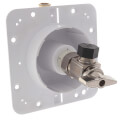

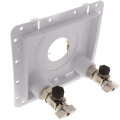
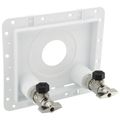
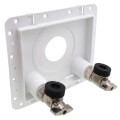
ProPEX Expansion Valved Access Plates are rough-in fittings that combine a shutoff valve, escutcheon, and stub out into a single plate mounted to framing behind a fixture. A Sioux Chief OmegaPlate single valve panel uses a 1/2 inch F1960 PEX inlet paired with a 1/4 inch compression outlet, matching the expansion style ProPEX connection method. Dual valve OmniPanel versions, such as the 698-A11AWR, add a second valve and outlet on the same plate, letting one panel serve two fixture supplies from a single rough-in location. Some dual valve panels also include water hammer arresters built into the plate body to absorb pressure spikes when a fixture valve closes quickly. Installing a valved access plate during rough-in means a plumber sets the stub out, valve, and mounting bracket in one step instead of assembling several separate parts, which keeps fixture connections consistent across a project and simplifies later service since the valve stays accessible behind a cover plate rather than buried inside a wall.
Subcategories
- Single Valve Access Plates: Single valve access plates serve one fixture supply line from a single rough-in location, typically for an individual sink, toilet, or appliance connection. The Sioux Chief 699-A0-WR pairs a 1/2 inch F1960 PEX inlet with a 1/4 inch compression outlet on an OmegaPlate body. Plumbers use this style where only one shutoff point is needed behind a fixture. A replaceable valve cartridge allows service without removing the entire plate from the wall.
- Dual Valve Access Panels: Dual valve access panels add a second independent valve and outlet to the same plate, covering two fixture supplies, such as hot and cold lines, from one rough-in opening. The Sioux Chief 698-A11AWR uses a 1/2 inch F1960 PEX inlet with a 3/8 inch OD compression outlet on each valve. Installers favor this style for sinks or appliances that need separate hot and cold shutoffs in a tight wall cavity. OmniPanel bodies include a debris cover to keep the opening protected until fixtures are connected.
- Panels with Water Hammer Arresters: Panels in this group add a built in water hammer arrester to each valve, absorbing the pressure spike that occurs when a fast closing fixture valve, such as a washing machine solenoid, shuts suddenly. The Sioux Chief 698-A33AWR pairs a 1/2 inch F1960 PEX inlet with a 3/4 inch male hose thread outlet, suited to washing machine supply connections. Building this protection into the access plate avoids installing separate arresters elsewhere in the line. Laundry room rough-ins commonly specify this style, since water hammer complaints are common without it.
Buying Guide
Choosing between a single and dual valve plate starts with how many fixture supplies need to terminate at one rough-in location. A toilet or single appliance connection typically needs only one valve, while a sink with separate hot and cold lines or a combined fixture needs the dual valve panel instead, since running two single valve plates in the same bay wastes space and adds extra mounting steps.
Outlet type should match whatever fixture connection method a project standardizes on. Compression outlets suit copper or flexible supply line connections at the fixture, while a male hose thread outlet matches a washing machine supply hose directly without an adapter. ProPEX Expansion Valved Access Plates all share the same F1960 PEX inlet on the supply side, so the outlet configuration is what actually needs matching to the fixture being served.
Water hammer protection deserves consideration anywhere a fast closing solenoid valve exists on the fixture side, most commonly laundry connections and some dishwasher or ice maker lines. Adding an arrester at the plate avoids running a separate inline arrester elsewhere and keeps the protection accessible if it ever needs replacement. Confirming wall cavity depth before selecting a plate model matters too, since dual valve and arrester equipped panels sit deeper in the wall than a basic single valve plate.
Frequently Asked Questions
What's the difference between a single valve and dual valve access plate?
A single valve plate serves one fixture supply from a single rough-in location, typically for a toilet or single appliance connection. A dual valve panel adds a second independent valve and outlet on the same plate, covering hot and cold supplies to a sink or combined fixture from one opening. Both styles share the same F1960 PEX inlet connection on the supply side.
Do these plates work with standard PEX crimp or clamp fittings?
ProPEX Expansion Valved Access Plates use an F1960 expansion style PEX inlet, which requires a PEX-A expansion tool rather than a crimp ring or clamp. A plumber working primarily with PEX-B or PEX-C crimp systems would need the matching crimp style valved access plate instead. Checking tubing type before ordering avoids an incompatible connection at rough-in.
When is a water hammer arrester built into the plate worth choosing?
Fixtures with a fast closing solenoid valve, most notably washing machines and some dishwashers or ice makers, commonly cause water hammer in rigid piping. A plate with a built in arrester absorbs that pressure spike right at the connection rather than needing a separate arrester installed elsewhere in the line. Laundry room rough-ins benefit most often from this feature.
What outlet connection types are available on these access plates?
Outlet options include compression fittings in sizes such as 1/4 inch and 3/8 inch OD for copper or flexible supply connections, along with male hose thread outlets sized for washing machine supply hoses. The supply side inlet stays consistent at 1/2 inch F1960 PEX across these configurations. Matching outlet type to the fixture being served avoids needing an extra adapter at installation.
Can the valve inside the plate be serviced without replacing the whole panel?
Many valved access plates use a replaceable valve cartridge, letting a plumber service or replace the valve itself without removing the surrounding plate or disturbing the wall finish. A debris cover also protects the opening during rough-in before fixtures are connected. Long term maintenance stays simpler with this design compared to a valve soldered directly into concealed piping.
