




Filters
SORT
Product Availability –
Review Score –
 --%3E %3Csvg version='1.1' id='Fill' xmlns='http://www.w3.org/2000/svg' xmlns:xlink='http://www.w3.org/1999/xlink' x='0px' y='0px' viewBox='0 0 100 100' enable-background='new 0 0 100 100' xml:space='preserve'%3E %3Cpath fill='%23F15C02' d='M79.44,0.95H20.56C9.78,0.95,0.95,9.78,0.95,20.56v58.87c0,10.79,8.82,19.61,19.61,19.61h58.87 c10.79,0,19.61-8.83,19.61-19.61V20.56C99.05,9.78,90.22,0.95,79.44,0.95z M65.38,58.24l9.38,29.58L49.69,69.78L24.5,87.82 l9.34-29.6L8.8,39.6l30.73-0.17c0,0,6.98-19.61,10-28.93c0.54,1.36,9.88,29.1,9.88,29.1H91.2L65.38,58.24z'/%3E %3C/svg%3E)
 --%3E %3Csvg version='1.1' id='With-RB' xmlns='http://www.w3.org/2000/svg' xmlns:xlink='http://www.w3.org/1999/xlink' x='0px' y='0px' viewBox='0 0 100 100' enable-background='new 0 0 100 100' xml:space='preserve'%3E %3Cpath fill='%23FBC8B4' d='M79.44,0.95H20.56C9.78,0.95,0.95,9.78,0.95,20.56v58.87c0,10.79,8.82,19.61,19.61,19.61h58.87 c10.79,0,19.61-8.83,19.61-19.61V20.56C99.05,9.78,90.22,0.95,79.44,0.95z M65.38,58.24l9.38,29.58L49.69,69.78L24.5,87.82 l9.34-29.6L8.8,39.6l30.73-0.17c0,0,6.98-19.61,10-28.93c0.54,1.36,9.88,29.1,9.88,29.1H91.2L65.38,58.24z'/%3E %3C/svg%3E)
Price Range –
Probes



 --%3E %3Csvg version='1.1' id='Half' xmlns='http://www.w3.org/2000/svg' xmlns:xlink='http://www.w3.org/1999/xlink' x='0px' y='0px' viewBox='0 0 100 100' enable-background='new 0 0 100 100' xml:space='preserve'%3E %3Cg%3E %3Cpath fill='%23F15C02' d='M30.05,70.23l3.79-12.01L8.8,39.6l30.73-0.17c0,0,6.98-19.61,10-28.93c0.54,1.36,9.88,29.1,9.88,29.1h1.58 L93.71,7.18c-3.58-3.82-8.66-6.23-14.28-6.23H20.56C9.78,0.95,0.95,9.78,0.95,20.56v58.87c0,5.41,2.22,10.32,5.79,13.88 L30.05,70.23z'/%3E %3C/g%3E %3Cpath fill='%23FBC8B4' d='M93.71,7.18L60.98,39.6H91.2L65.38,58.24l9.38,29.58L49.69,69.78L24.5,87.82l5.55-17.59L6.75,93.32 c3.55,3.54,8.44,5.73,13.82,5.73h58.87c10.79,0,19.61-8.83,19.61-19.61V20.56C99.05,15.4,97.01,10.69,93.71,7.18z'/%3E %3C/svg%3E)
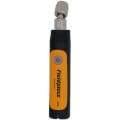
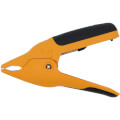

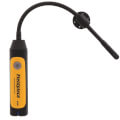
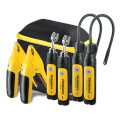
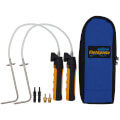
Probes are the sensing attachments that connect to digital multimeters, thermometers, and combustion analyzers to take a specific temperature, humidity, or electrical reading out in the field. A technician swaps probes on the same base instrument depending on whether the job calls for reading duct air temperature, refrigerant line temperature, or a surface reading on a pipe or panel. Thermocouple-type probes are among the most common, converting a temperature difference into a small voltage signal the connected meter interprets and displays. Pipe clamp probes, immersion probes, and air probes each shape the sensing tip differently to fit the surface or medium being measured, since a flat surface reading calls for a different tip geometry than measuring air moving through a duct. Keeping a small assortment of probe types on hand lets one meter cover far more diagnostic situations than its stock probe alone would allow.
Subcategories
- Temperature Probes: Temperature probes measure air, surface, or liquid temperature and feed the reading back to a connected meter or data logger. Thermocouple types are the most common because they respond quickly and cover a wide temperature range without needing their own power source. Technicians use these for everything from checking supply air temperature at a register to confirming water temperature at a fixture. Probe tip shape and cable length both affect how easily a given probe reaches the measurement point on a job.
- Pipe Clamp Probes: Pipe clamp probes attach directly around a refrigerant line or water pipe to take a surface temperature reading without puncturing the line. A spring-loaded clamp holds the sensing tip firmly against the pipe surface for a stable reading rather than one that drifts as the probe shifts position. These probes are common in refrigerant charging and superheat/subcooling checks, where accurate line temperature is central to the diagnosis. Clamp size needs to match the pipe diameter for good contact and an accurate reading.
- Air Probes: Air probes are shaped to measure moving air rather than a solid surface, commonly used to check supply and return air temperature or velocity inside ductwork. Their exposed sensing tip responds quickly to changes in air temperature as it passes over the probe. Technicians insert these through a small hole drilled in the duct or through an existing access point. Reading stable duct air temperature is one of the more common diagnostic steps for confirming proper system airflow and charge.
- Combustion Analyzer Probes: Combustion analyzer probes sample flue gas from a furnace, boiler, or water heater to measure oxygen, carbon monoxide, and temperature at the flue outlet. Getting an accurate sample means positioning the probe at the correct depth and location in the flue, since a reading taken too close to the appliance or too far downstream can skew the result. These probes typically include a filter to keep condensation and particulates from reaching the analyzer's internal sensors. Routine combustion testing depends on a probe that's still sealed and undamaged, since a cracked sample line lets in outside air and throws off the reading.
- Replacement Probe Tips: Replacement tips let a technician restore a damaged or worn probe without replacing the entire probe and cable assembly. Probe tips take the most physical wear of any part of the assembly, since they're the point of contact with pipes, ductwork, and flue gas. Keeping spare tips on the truck avoids taking a probe out of service over a single bent or corroded point. Matching the replacement tip's connector type to the base probe cable is the main thing to check before ordering.
Buying Guide
Choosing the right probe starts with matching its connector type to the base meter or analyzer already on the truck, since a mismatched connector makes an otherwise perfect probe useless without an adapter. Probe tip geometry matters just as much as the connector: a flat surface tip works well against a pipe or panel but performs poorly measuring moving air, while an exposed-tip air probe responds too slowly for an accurate surface reading. Cable length affects how far a technician can stand from the measurement point, which matters when working near live electrical panels or hot flue surfaces where some distance is worth keeping. Response time is worth checking for jobs where conditions change quickly, since a slow-responding probe can report a reading that's already out of date by the time it displays. Technicians who carry a full range of Probes covering surface, air, immersion, and clamp styles can diagnose a wider range of calls with a single base meter rather than needing a separate dedicated instrument for each measurement type. Durability matters too: a probe used daily in dusty attics or wet crawlspaces needs a cable jacket and tip material that holds up to that environment rather than one built for occasional bench use. Replacing a probe promptly once its readings start drifting avoids a misdiagnosis that traces back to bad data rather than an actual equipment fault.
Frequently Asked Questions
Can any probe be used with any meter?
Compatibility depends on the connector type and the signal the probe outputs, not just the physical shape of the plug. A thermocouple probe built for one meter brand's connector typically won't read correctly on a meter expecting a different signal type even if the plug happens to fit. Checking the base meter's specifications before ordering a replacement probe avoids an expensive mismatch.
Why does a probe give an inaccurate reading even though the meter itself is fine?
A worn, corroded, or bent probe tip is one of the most common causes of a reading that doesn't match reality, since the tip is the part in direct contact with whatever is being measured. Contamination or condensation inside a combustion probe's sample line produces similar problems. Swapping in a known-good probe is a quick way to rule out the meter itself as the source of a suspect reading.
How often do probe tips need to be replaced?
Replacement frequency depends heavily on use, but a probe used daily in the field typically needs a new tip well before the cable or connector shows any wear. Visible corrosion, a bent sensing element, or a growing gap between readings taken with a new versus old probe are all signs it's time to replace the tip. Waiting until a probe fails completely during a service call is the more expensive way to find out.
What's the difference between a clamp probe and an immersion probe?
A clamp probe reads surface temperature by attaching around the outside of a pipe, while an immersion probe is designed to be inserted directly into a liquid or airstream. Clamp probes suit refrigerant line and water pipe readings where puncturing the line isn't an option. Immersion probes are better suited to tanks, open containers, or airflow readings where direct contact with the medium is possible.
Do combustion analyzer probes need regular maintenance?
Combustion probes benefit from a quick inspection before each use, checking the sample line for cracks, blockages, or condensation buildup that can throw off flue gas readings. Filters inside the probe assembly typically need periodic replacement since they trap particulates that would otherwise damage the analyzer's internal sensors. Skipping this maintenance risks a combustion test that reports numbers the appliance isn't actually producing.
