




Proximity Sensors

 --%3E %3Csvg version='1.1' id='No-RB' xmlns='http://www.w3.org/2000/svg' xmlns:xlink='http://www.w3.org/1999/xlink' x='0px' y='0px' viewBox='0 0 100 100' enable-background='new 0 0 100 100' xml:space='preserve'%3E %3Cpath fill='%23CECECE' d='M79.44,0.95H20.56C9.78,0.95,0.95,9.78,0.95,20.56v58.87c0,10.79,8.82,19.61,19.61,19.61h58.87 c10.79,0,19.61-8.83,19.61-19.61V20.56C99.05,9.78,90.22,0.95,79.44,0.95z M65.38,58.24l9.38,29.58L49.69,69.78L24.5,87.82 l9.34-29.6L8.8,39.6l30.73-0.17c0,0,6.98-19.61,10-28.93c0.54,1.36,9.88,29.1,9.88,29.1H91.2L65.38,58.24z'/%3E %3C/svg%3E)
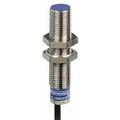
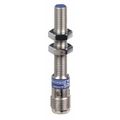
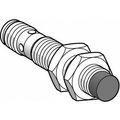
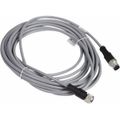
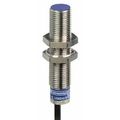
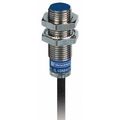
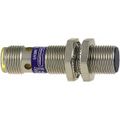
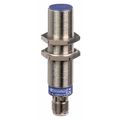
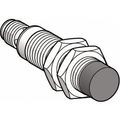
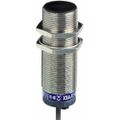
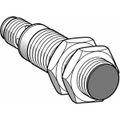
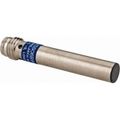
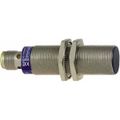
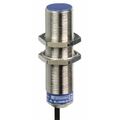
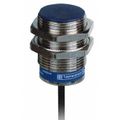
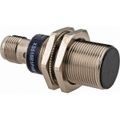
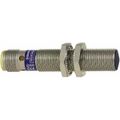
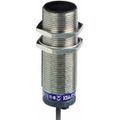
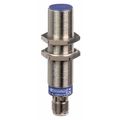
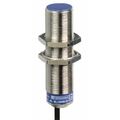
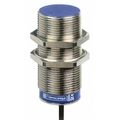
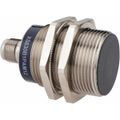
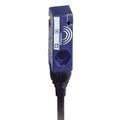
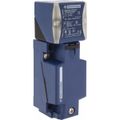
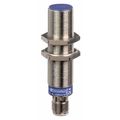
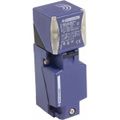
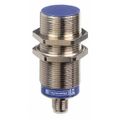
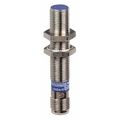
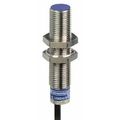
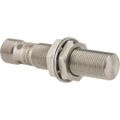
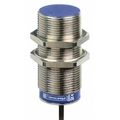
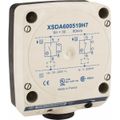
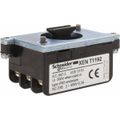
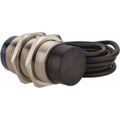
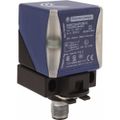
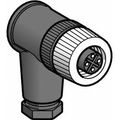
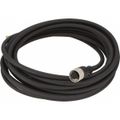
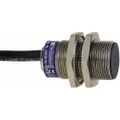
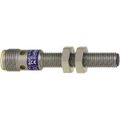
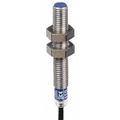
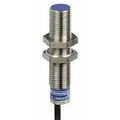
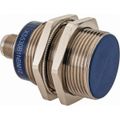

Proximity Sensors are non-contact switches that detect the presence of a metal target without physical touch, commonly used to confirm damper position, valve position, or equipment status in HVAC and mechanical control systems. Inductive models like the Telemecanique XSAV11801 detect a target at a 10mm sensing distance and operate on a 24 to 240 VDC supply, while larger-body versions like the XS630B4MAU20 extend sensing distance to 22mm and support both NPN and PNP outputs on the same sensor. Body sizes range from compact M8 threaded housings up to larger rectangular styles built for longer sensing distances. Because these sensors have no moving parts and no physical contact point, they hold up better than mechanical limit switches in dusty or vibration-heavy equipment locations. Picking the right sensing distance, body size, and output type keeps a control system reading position accurately without false triggers.
Subcategories
- Standard Range Sensors: Standard range inductive sensors like the Telemecanique XSAV11801 detect a target at a 10mm sensing distance on a 24 to 240 VDC supply. Control panels monitoring damper or valve position commonly use this range for reliable, close-proximity detection. The M30 threaded body and 2-meter cable suit most panel-mounted installations. Most standard HVAC and mechanical position-sensing applications fall within this range.
- Extended Range Sensors: Extended range sensors like the XS630B4MAU20 detect targets up to 22mm away and support both NPN and PNP outputs on the same unit. Longer sensing distance matters where mounting precision can't guarantee a tight, consistent gap to the target. Dual NPN and PNP output support lets one sensor model work with more than one control system without ordering a different part. A 20-meter cable option covers runs to equipment mounted farther from the control panel.
- Compact & Small-Diameter Sensors: Compact sensors like the M8-threaded XS1N08PA349S detect targets at a shorter 2.5mm sensing distance in tighter mounting spaces. Equipment with limited clearance around a target, like small linkages or compact valve actuators, benefit from the smaller M8 or M18 body sizes. The M18 XS218B4PBL2 extends sensing distance to 16mm while keeping a smaller body than M30 sensors. Panel builders use these where a full-size M30 sensor won't physically fit the mounting location.
- Hazardous Location Sensors: Hazardous location sensors like the XS612B1PBL10EX and XSPN04122EX are built for dust-rated and ATEX-classified environments where standard sensors aren't rated for use. The XSPN04122EX uses a NAMUR-style output on a low-voltage 7 to 12 VDC supply, common in intrinsically safe control loops. Certified housings in this class limit sensing distance to around 4mm, since approved enclosures restrict how much sensing coil fits inside. Facilities handling combustible dust or gas near mechanical equipment specify this class of sensor over standard inductive models.
Buying Guide
Sensing distance is the first spec to confirm when choosing among Proximity Sensors. A target that sits close and consistently, like a damper blade near its fully-closed position, works fine with a standard range sensor rated around 10mm. A target with more mounting variation, or one that sits farther from the sensor body due to equipment design, needs an extended range sensor rated closer to 22mm to avoid missed detection.
Output type and voltage need to match the control system next. Sensors wired into a DC control loop need a DC-rated or NPN/PNP dual-output sensor, while some panels use higher AC voltages instead. The XS630B4MAU20, for example, supports both NPN and PNP outputs on the same body, which removes the guesswork of matching sensor output type to a specific controller in advance. Confirming supply voltage and output type against the existing control wiring before ordering avoids a sensor that arrives wired the wrong way for the panel.
Body size and mounting environment come last but matter just as much. Compact M8 or M18 sensors fit tighter mounting locations than full-size M30 sensors, and hazardous location sensors rated for dust or ATEX environments cost sensing distance for certification, typically dropping to around 4mm. Facilities working around combustible dust, gas, or vibration-heavy equipment need to specify the correct hazardous location rating rather than defaulting to a standard inductive sensor, since using an unrated sensor in a classified area creates a real safety and code compliance problem.
Frequently Asked Questions
What sensing distance is right for a typical HVAC damper or valve application?
Standard range inductive sensors rated around 10mm, like the Telemecanique XSAV11801, cover most damper and valve position sensing where the target sits close and consistently. Applications with more mounting variation or a target that sits farther from the sensor body need an extended range sensor rated closer to 22mm instead. Missed detection usually traces back to a sensing distance that's too short for the actual gap. Measuring the real gap between sensor and target before ordering avoids that mismatch.
What's the difference between NPN and PNP output sensors?
NPN and PNP describe how a proximity sensor switches its output signal relative to the control system's voltage. Some sensors, like the XS630B4MAU20, support both NPN and PNP outputs on the same body, removing the need to match output type to a specific controller in advance. Sensors with only one output type need to match the existing control wiring exactly. Checking the controller's input requirements before ordering keeps output type from becoming a wiring problem later.
Can a standard proximity sensor be used in a dusty or hazardous mechanical room?
Standard inductive sensors aren't rated for dust-classified or ATEX hazardous locations, and using one in a classified area creates a real safety and code compliance problem. Hazardous location sensors, like the XS612B1PBL10EX and XSPN04122EX, are built and certified specifically for those environments. Certified sensors typically sense at a shorter distance, around 4mm, since approved housings limit how much sensing coil fits inside. Confirming the area's classification before selecting a sensor keeps the installation code-compliant.
Do smaller body sensors sacrifice performance compared to full-size sensors?
Compact M8 or M18 sensors, like the XS1N08PA349S and XS218B4PBL2, generally sense at shorter distances than full-size M30 sensors due to less room for the internal sensing coil. Equipment with tight mounting clearance still needs the smaller body size regardless of that trade-off. Matching sensing distance to the actual application gap matters more than defaulting to the largest available body size. Panel builders choose body size based on available mounting space first, then confirm sensing distance meets the application.
What voltage range do inductive proximity sensors typically run on?
Voltage range varies by model, with sensors like the XSAV11801 running on a wide 24 to 240 VDC supply and hazardous location sensors like the XSPN04122EX running on a lower 7 to 12 VDC intrinsically safe supply. Matching supply voltage to the existing control panel wiring is required before installing any sensor. Wide-range sensors add flexibility on panels with variable supply voltage. Confirming the panel's actual output voltage against the sensor's rated input range avoids a sensor that won't operate correctly.
