




Pump Flanges
Pump flanges connect a circulator pump to the piping system in a hydronic heating or cooling loop. They provide a bolted, gasketed joint that allows the pump to be removed for service without cutting into the pipe. Most flange sets are matched to a specific pump manufacturer and model, since bolt pattern and flange face design vary between brands. Isolation flanges add shutoff valves built into the flange itself, letting a technician isolate the pump without draining the whole system.
Selecting the correct flange starts with matching it to the pump it will support. A flange sized for the wrong pump body will not seal correctly even if the pipe size matches. Isolation flanges are worth the added cost on most circulator installations because they cut service time significantly when a pump needs to come out for repair or replacement.



Subcategories
- Armstrong Pump Flanges: Armstrong pump flanges are built to match the bolt pattern and flange face used on Armstrong circulator pumps. Using the manufacturer-specific flange keeps the seal reliable and avoids leaks that can occur when mixing flange brands. Isolation valve versions are available for installations where quick pump removal matters.
- Bell & Gossett Flanges: Bell & Gossett flanges are sized to fit that manufacturer's line of circulator pumps, matching bolt spacing and flange face dimensions specific to the brand. They are commonly replaced when a gasket fails or when upgrading to an isolation-style flange during a service call. Standard and isolation valve versions are both available depending on the installation.
- Flange Gaskets: Flange gaskets create the seal between the pump body and the flange, and they are one of the most common failure points in a circulator pump connection. A worn or improperly seated gasket typically shows up as a slow weep or drip at the pump connection rather than a sudden failure. Gasket material and thickness need to match the flange manufacturer's specification for a reliable seal.
- Grundfos Pump Flanges: Grundfos pump flanges match the bolt pattern and flange face used on that manufacturer's circulator pumps. As with other brand-specific flanges, mixing a Grundfos pump with a different manufacturer's flange typically will not produce a reliable seal. Isolation valve versions let a technician shut off the pump without draining the loop.
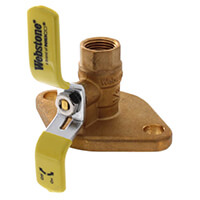
- Isolation Valve Flanges: Isolation valve flanges combine a shutoff valve directly into the flange assembly, letting a technician close off the pump on both sides before removing it for service. This eliminates the need to drain the entire hydronic loop just to swap or repair a circulator pump. They cost more than standard flanges but save significant labor time on future service calls.
- Taco 1400 Series Flanges: Taco 1400 series flanges are built to match Taco's 1400 series circulator pump line, using that series' specific bolt pattern and flange face. They are available in both standard and isolation valve configurations. Confirming the pump series number before ordering avoids a flange that does not match the pump body.
Buying Guide
Matching a pump flange to the specific pump it will support is the most important step in this category. Bolt pattern and flange face design vary between manufacturers and even between product lines from the same manufacturer. A flange built for the wrong pump body will not create a reliable seal even when the pipe size lines up.
Isolation valve flanges add a built-in shutoff on each side of the pump, which lets a technician remove the pump for service without draining the entire hydronic loop. The added cost of an isolation flange is generally worth it on any installation where the pump may need future service.
Gasket condition deserves attention any time a pump is removed and reinstalled. Reusing an old, compressed gasket is a common cause of a leak that shows up shortly after service. Replacing the gasket during any pump removal is inexpensive compared to a return trip for a leak.
Pump flanges also vary by pipe size and by threaded or solder connection style. Confirming whether the piping connection is threaded or soldered before ordering avoids needing an adapter fitting at the flange.
Commercial or larger residential systems may swap a pump for a different brand down the line. Choosing flanges based on standardized dimensions rather than a single manufacturer's proprietary pattern can simplify a future pump replacement.
Frequently Asked Questions
What is a pump flange used for?
A pump flange creates a bolted, gasketed connection between a circulator pump and the piping in a hydronic system. It allows the pump to be unbolted and removed for service or replacement without cutting into the pipe. Flanges are typically matched to a specific pump manufacturer and model.
Why won't my pump flange seal properly?
A flange that will not seal usually has one of three causes. These are a worn or improperly seated gasket, a mismatched bolt pattern, or a flange that does not match the pump's flange face design. Replacing the gasket first is the simplest troubleshooting step, followed by confirming the flange is actually rated for the installed pump.
What's the benefit of an isolation valve flange?
An isolation valve flange has a shutoff valve built into each side of the flange assembly, letting a technician close off the pump completely before removing it. This means the pump can be serviced or replaced without draining the entire hydronic loop, which saves significant time on future service calls.
Can I mix pump brands with a different flange brand?
Generally no. Bolt pattern and flange face dimensions vary between manufacturers, so a flange built for one brand's pump typically will not seal correctly against a different brand's pump body. Matching the flange to the pump manufacturer and model is the safest approach.
How often should a pump flange gasket be replaced?
A flange gasket should be replaced any time the pump is removed and reinstalled. Reusing a compressed or worn gasket is a common cause of a leak developing shortly after service. Gaskets are inexpensive relative to the labor cost of a return trip for a leak.
Resources

 --%3E %3C!DOCTYPE svg PUBLIC '-//W3C//DTD SVG 1.1//EN' 'http://www.w3.org/Graphics/SVG/1.1/DTD/svg11.dtd'%3E %3Csvg version='1.1' id='Layer_1' xmlns='http://www.w3.org/2000/svg' xmlns:xlink='http://www.w3.org/1999/xlink' x='0px' y='0px' width='90px' height='90px' viewBox='0 0 90 90' enable-background='new 0 0 90 90' xml:space='preserve'%3E %3Crect x='27' y='23' fill='%23FFFFFF' width='43' height='44'/%3E %3Cg%3E %3Cdefs%3E %3Crect id='SVGID_1_' width='90' height='90'/%3E %3C/defs%3E %3CclipPath id='SVGID_2_'%3E %3Cuse xlink:href='%23SVGID_1_' overflow='visible'/%3E %3C/clipPath%3E %3Cpath clip-path='url(%23SVGID_2_)' fill='%234186AD' d='M45,0C20.1,0,0,20.1,0,45c0,24.9,20.1,45,45,45c24.9,0,45-20.1,45-45 C90,20.1,69.9,0,45,0'/%3E %3C/g%3E %3Cpath fill='%23FFFFFF' d='M60.6,47.4l-22.5,14c-0.5,0.3-1,0.399-1.5,0.399s-0.9-0.1-1.4-0.399c-0.9-0.5-1.4-1.4-1.4-2.5v-28 c0-1,0.6-2,1.4-2.5c0.9-0.5,2-0.5,2.9,0.1l22.5,14.1C61.4,43.1,61.9,44,61.9,45S61.4,46.9,60.6,47.4'/%3E %3C/svg%3E)
Subcategories
- Armstrong Pump Flanges: Armstrong pump flanges are built to match the bolt pattern and flange face used on Armstrong circulator pumps. Using the manufacturer-specific flange keeps the seal reliable and avoids leaks that can occur when mixing flange brands. Isolation valve versions are available for installations where quick pump removal matters.
- Bell & Gossett Flanges: Bell & Gossett flanges are sized to fit that manufacturer's line of circulator pumps, matching bolt spacing and flange face dimensions specific to the brand. They are commonly replaced when a gasket fails or when upgrading to an isolation-style flange during a service call. Standard and isolation valve versions are both available depending on the installation.
- Flange Gaskets: Flange gaskets create the seal between the pump body and the flange, and they are one of the most common failure points in a circulator pump connection. A worn or improperly seated gasket typically shows up as a slow weep or drip at the pump connection rather than a sudden failure. Gasket material and thickness need to match the flange manufacturer's specification for a reliable seal.
- Grundfos Pump Flanges: Grundfos pump flanges match the bolt pattern and flange face used on that manufacturer's circulator pumps. As with other brand-specific flanges, mixing a Grundfos pump with a different manufacturer's flange typically will not produce a reliable seal. Isolation valve versions let a technician shut off the pump without draining the loop.
- Isolation Valve Flanges: Isolation valve flanges combine a shutoff valve directly into the flange assembly, letting a technician close off the pump on both sides before removing it for service. This eliminates the need to drain the entire hydronic loop just to swap or repair a circulator pump. They cost more than standard flanges but save significant labor time on future service calls.
- Taco 1400 Series Flanges: Taco 1400 series flanges are built to match Taco's 1400 series circulator pump line, using that series' specific bolt pattern and flange face. They are available in both standard and isolation valve configurations. Confirming the pump series number before ordering avoids a flange that does not match the pump body.
Buying Guide
Matching a pump flange to the specific pump it will support is the most important step in this category. Bolt pattern and flange face design vary between manufacturers and even between product lines from the same manufacturer. A flange built for the wrong pump body will not create a reliable seal even when the pipe size lines up.
Isolation valve flanges add a built-in shutoff on each side of the pump, which lets a technician remove the pump for service without draining the entire hydronic loop. The added cost of an isolation flange is generally worth it on any installation where the pump may need future service.
Gasket condition deserves attention any time a pump is removed and reinstalled. Reusing an old, compressed gasket is a common cause of a leak that shows up shortly after service. Replacing the gasket during any pump removal is inexpensive compared to a return trip for a leak.
Pump flanges also vary by pipe size and by threaded or solder connection style. Confirming whether the piping connection is threaded or soldered before ordering avoids needing an adapter fitting at the flange.
Commercial or larger residential systems may swap a pump for a different brand down the line. Choosing flanges based on standardized dimensions rather than a single manufacturer's proprietary pattern can simplify a future pump replacement.
Frequently Asked Questions
What is a pump flange used for?
A pump flange creates a bolted, gasketed connection between a circulator pump and the piping in a hydronic system. It allows the pump to be unbolted and removed for service or replacement without cutting into the pipe. Flanges are typically matched to a specific pump manufacturer and model.
Why won't my pump flange seal properly?
A flange that will not seal usually has one of three causes. These are a worn or improperly seated gasket, a mismatched bolt pattern, or a flange that does not match the pump's flange face design. Replacing the gasket first is the simplest troubleshooting step, followed by confirming the flange is actually rated for the installed pump.
What's the benefit of an isolation valve flange?
An isolation valve flange has a shutoff valve built into each side of the flange assembly, letting a technician close off the pump completely before removing it. This means the pump can be serviced or replaced without draining the entire hydronic loop, which saves significant time on future service calls.
Can I mix pump brands with a different flange brand?
Generally no. Bolt pattern and flange face dimensions vary between manufacturers, so a flange built for one brand's pump typically will not seal correctly against a different brand's pump body. Matching the flange to the pump manufacturer and model is the safest approach.
How often should a pump flange gasket be replaced?
A flange gasket should be replaced any time the pump is removed and reinstalled. Reusing a compressed or worn gasket is a common cause of a leak developing shortly after service. Gaskets are inexpensive relative to the labor cost of a return trip for a leak.