




Filters
SORT
Product Availability –
Ton –
Review Score –
 --%3E %3Csvg version='1.1' id='Fill' xmlns='http://www.w3.org/2000/svg' xmlns:xlink='http://www.w3.org/1999/xlink' x='0px' y='0px' viewBox='0 0 100 100' enable-background='new 0 0 100 100' xml:space='preserve'%3E %3Cpath fill='%23F15C02' d='M79.44,0.95H20.56C9.78,0.95,0.95,9.78,0.95,20.56v58.87c0,10.79,8.82,19.61,19.61,19.61h58.87 c10.79,0,19.61-8.83,19.61-19.61V20.56C99.05,9.78,90.22,0.95,79.44,0.95z M65.38,58.24l9.38,29.58L49.69,69.78L24.5,87.82 l9.34-29.6L8.8,39.6l30.73-0.17c0,0,6.98-19.61,10-28.93c0.54,1.36,9.88,29.1,9.88,29.1H91.2L65.38,58.24z'/%3E %3C/svg%3E)
 --%3E %3Csvg version='1.1' id='With-RB' xmlns='http://www.w3.org/2000/svg' xmlns:xlink='http://www.w3.org/1999/xlink' x='0px' y='0px' viewBox='0 0 100 100' enable-background='new 0 0 100 100' xml:space='preserve'%3E %3Cpath fill='%23FBC8B4' d='M79.44,0.95H20.56C9.78,0.95,0.95,9.78,0.95,20.56v58.87c0,10.79,8.82,19.61,19.61,19.61h58.87 c10.79,0,19.61-8.83,19.61-19.61V20.56C99.05,9.78,90.22,0.95,79.44,0.95z M65.38,58.24l9.38,29.58L49.69,69.78L24.5,87.82 l9.34-29.6L8.8,39.6l30.73-0.17c0,0,6.98-19.61,10-28.93c0.54,1.36,9.88,29.1,9.88,29.1H91.2L65.38,58.24z'/%3E %3C/svg%3E)
Price Range –
RSG Condensers

 --%3E %3Csvg version='1.1' id='No-RB' xmlns='http://www.w3.org/2000/svg' xmlns:xlink='http://www.w3.org/1999/xlink' x='0px' y='0px' viewBox='0 0 100 100' enable-background='new 0 0 100 100' xml:space='preserve'%3E %3Cpath fill='%23CECECE' d='M79.44,0.95H20.56C9.78,0.95,0.95,9.78,0.95,20.56v58.87c0,10.79,8.82,19.61,19.61,19.61h58.87 c10.79,0,19.61-8.83,19.61-19.61V20.56C99.05,9.78,90.22,0.95,79.44,0.95z M65.38,58.24l9.38,29.58L49.69,69.78L24.5,87.82 l9.34-29.6L8.8,39.6l30.73-0.17c0,0,6.98-19.61,10-28.93c0.54,1.36,9.88,29.1,9.88,29.1H91.2L65.38,58.24z'/%3E %3C/svg%3E)

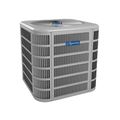
RSG condensers are outdoor condensing units used in split system air conditioning to reject heat collected from an indoor evaporator coil, completing the refrigeration cycle that cools a home or building. Installed outside on a pad or elevated stand, the condenser houses the compressor, condenser coil, and fan that push heat out of the refrigerant and back into the outdoor air. Contractors specify RSG condensers when replacing an aging outdoor unit, converting a system to match new efficiency requirements, or completing a full system swap alongside a new indoor coil and air handler. Correct condenser selection depends on matching capacity and refrigerant type to the paired indoor components, since a mismatched combination can reduce efficiency and shorten equipment life. Placement also matters, with adequate clearance around the unit needed for proper airflow and service access.
Subcategories
- Single Stage RSG Condensers: Single stage condensers run the compressor at one fixed capacity any time the system calls for cooling, cycling on and off to maintain the set temperature. Contractors often specify single stage units on straightforward replacement jobs where matching the existing system's operation is the priority. The simpler single stage design also tends to mean fewer components that can fail over the equipment's service life. These units pair with standard single stage thermostats without special controls.
- Two Stage RSG Condensers: Two stage condensers can run at a lower capacity during mild weather and step up to full capacity only when the load demands it, spending more time at the lower stage for steadier temperatures and quieter operation. Homeowners upgrading from an older single stage system often choose two stage equipment for that added comfort. Two stage operation does require a compatible two stage thermostat to take advantage of both capacity levels. Installers confirm thermostat compatibility before specifying a two stage condenser on a job.
- RSG Condenser Coils: The condenser coil is the internal component that releases heat from the refrigerant into the outdoor air as the outdoor fan pulls air across its fins. Replacing a damaged or leaking coil on its own is sometimes possible without swapping the entire condensing unit, depending on the extent of the damage and the unit's age. Coil condition also affects overall system efficiency, since a coil coated in dirt or debris cannot reject heat as effectively. Regular cleaning helps the coil perform at its rated capacity longer.
- RSG Condenser Fan Motors: The fan motor drives the outdoor fan blade that pulls ambient air across the condenser coil, and it is one of the more common individual parts to fail or wear out over a unit's service life. Replacing just the fan motor is usually far simpler than replacing the whole condensing unit when the rest of the equipment is still in good working order. Matching motor horsepower and rotation direction to the original part is necessary for proper operation. Contractors keep common replacement motors on hand for exactly this kind of repair call.
Buying Guide
Choosing the right condenser starts with matching capacity to the space it will serve, which typically means following a load calculation for the building rather than simply replacing an old unit with an identically sized one, since prior sizing was not always done correctly to begin with. Refrigerant type is the next major decision point, since the condenser has to use the same refrigerant as the paired indoor coil for the system to operate as designed, and mismatched refrigerant types are not interchangeable in the field. Contractors replacing only the outdoor unit on an existing system need to confirm the indoor coil's refrigerant compatibility before ordering new RSG Condensers, since installing a unit designed for a different refrigerant can create a system that will not charge or operate correctly. Stage type matters for comfort and efficiency: single stage equipment suits straightforward replacements and tighter budgets, while two stage condensers offer steadier temperatures and quieter running in exchange for needing a compatible two stage thermostat. Physical placement deserves attention too, since the unit needs a level pad, clearance on all sides for airflow, and enough service access for a technician to reach the panels and components during future maintenance. Finally, confirming electrical requirements, including voltage and circuit sizing, against the specific unit's nameplate rating before installation avoids a mismatch discovered only once the equipment is already set in place.
Frequently Asked Questions
Can an RSG condenser be replaced without replacing the indoor coil?
Replacing only the outdoor condenser is possible as long as the existing indoor coil uses the same refrigerant and is compatible in capacity with the new unit. Mismatched refrigerant types between the old coil and new condenser will prevent the system from operating correctly. A contractor typically checks the existing coil's nameplate data before recommending a condenser only replacement.
What is the difference between single stage and two stage condensers?
Single stage condensers operate at one fixed capacity whenever cooling is called for, cycling on and off to hold the set temperature. Two stage condensers can run at a lower capacity during mild conditions and shift to full capacity only when needed, generally giving steadier temperatures and quieter operation. Two stage units need a compatible two stage thermostat to use both capacity levels.
How much clearance does a condenser need around it?
Outdoor condensers generally need clearance on all sides for airflow into the coil, plus additional space on the service panel side for a technician to access internal components. Specific clearance requirements come from the manufacturer's installation instructions for the particular unit. Blocking airflow around the unit with plantings, fencing, or stored items can reduce system efficiency over time.
Can just the fan motor or coil be replaced instead of the whole unit?
Individual components like the fan motor or condenser coil can often be replaced on their own when the rest of the unit is still functioning properly, avoiding the cost of a full condenser replacement. The fan motor is one of the more frequently replaced individual parts due to normal wear over time. A technician evaluates the specific failure to determine whether a component repair or full unit replacement makes more sense.
What electrical information is needed before installing a new condenser?
Voltage, minimum circuit ampacity, and maximum breaker size all come from the specific unit's nameplate and need to match the electrical circuit it will be connected to. Confirming this information before installation avoids a mismatch that could require additional electrical work. An electrician or HVAC technician typically verifies these specifications as part of the installation process.
