




Filters
SORT
Product Availability –
Category –
Brand –
Refrigerant Type –
SEER –
SEER2 –
Ton –
Review Score –
 --%3E %3Csvg version='1.1' id='Fill' xmlns='http://www.w3.org/2000/svg' xmlns:xlink='http://www.w3.org/1999/xlink' x='0px' y='0px' viewBox='0 0 100 100' enable-background='new 0 0 100 100' xml:space='preserve'%3E %3Cpath fill='%23F15C02' d='M79.44,0.95H20.56C9.78,0.95,0.95,9.78,0.95,20.56v58.87c0,10.79,8.82,19.61,19.61,19.61h58.87 c10.79,0,19.61-8.83,19.61-19.61V20.56C99.05,9.78,90.22,0.95,79.44,0.95z M65.38,58.24l9.38,29.58L49.69,69.78L24.5,87.82 l9.34-29.6L8.8,39.6l30.73-0.17c0,0,6.98-19.61,10-28.93c0.54,1.36,9.88,29.1,9.88,29.1H91.2L65.38,58.24z'/%3E %3C/svg%3E)
 --%3E %3Csvg version='1.1' id='With-RB' xmlns='http://www.w3.org/2000/svg' xmlns:xlink='http://www.w3.org/1999/xlink' x='0px' y='0px' viewBox='0 0 100 100' enable-background='new 0 0 100 100' xml:space='preserve'%3E %3Cpath fill='%23FBC8B4' d='M79.44,0.95H20.56C9.78,0.95,0.95,9.78,0.95,20.56v58.87c0,10.79,8.82,19.61,19.61,19.61h58.87 c10.79,0,19.61-8.83,19.61-19.61V20.56C99.05,9.78,90.22,0.95,79.44,0.95z M65.38,58.24l9.38,29.58L49.69,69.78L24.5,87.82 l9.34-29.6L8.8,39.6l30.73-0.17c0,0,6.98-19.61,10-28.93c0.54,1.36,9.88,29.1,9.88,29.1H91.2L65.38,58.24z'/%3E %3C/svg%3E)
Price Range –
Air Conditioner Condensers
 --%3E %3Csvg version='1.1' id='No-RB' xmlns='http://www.w3.org/2000/svg' xmlns:xlink='http://www.w3.org/1999/xlink' x='0px' y='0px' viewBox='0 0 100 100' enable-background='new 0 0 100 100' xml:space='preserve'%3E %3Cpath fill='%23CECECE' d='M79.44,0.95H20.56C9.78,0.95,0.95,9.78,0.95,20.56v58.87c0,10.79,8.82,19.61,19.61,19.61h58.87 c10.79,0,19.61-8.83,19.61-19.61V20.56C99.05,9.78,90.22,0.95,79.44,0.95z M65.38,58.24l9.38,29.58L49.69,69.78L24.5,87.82 l9.34-29.6L8.8,39.6l30.73-0.17c0,0,6.98-19.61,10-28.93c0.54,1.36,9.88,29.1,9.88,29.1H91.2L65.38,58.24z'/%3E %3C/svg%3E)
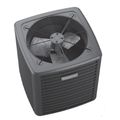
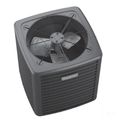
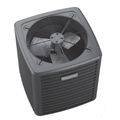
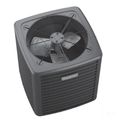
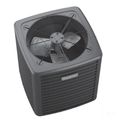
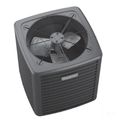
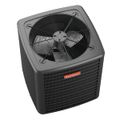
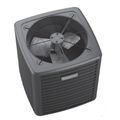
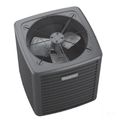
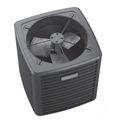
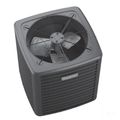
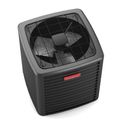
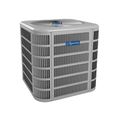
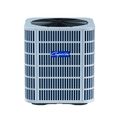
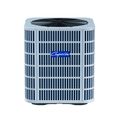
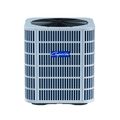

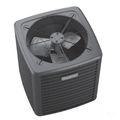
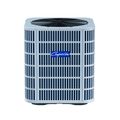
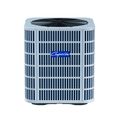
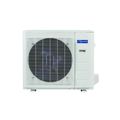
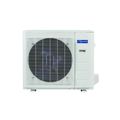
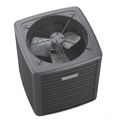

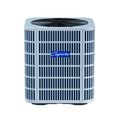
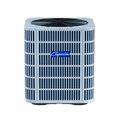
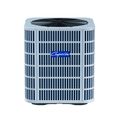

Air Conditioner Condensers house the compressor, condenser coil, and fan that reject heat from a home's cooling system, and Goodman's outdoor condenser lineup spans efficiency levels from standard 14.3 SEER2 units up to premium models rated as high as 22.5 SEER2. Higher efficiency models typically use variable speed or two stage compressors that modulate output to match the home's actual cooling load rather than cycling on and off at full capacity. Several current Goodman models, including the GLXS4M and GXV9S lines, run on R-32 refrigerant, which requires technicians to follow updated handling and charging procedures compared with older refrigerants. Matching condenser capacity to the home's cooling load, and to the indoor coil already installed, keeps the system operating at its rated efficiency instead of short cycling or running longer than necessary.
Subcategories
- Standard Efficiency Condensers: Standard efficiency models such as Goodman's GSXN4 and GSXB4 lines deliver up to 14.3 SEER2, which meets current minimum efficiency requirements in most regions. Contractors typically spec these units for straightforward replacements where the homeowner is prioritizing upfront cost over long term energy savings. A single stage compressor runs at full capacity whenever the thermostat calls for cooling, which keeps the unit simple to service.
- High Efficiency Condensers: High efficiency units like the GSXS6 and GXV6S reach up to 17.2 SEER2 and often pair a variable or two stage compressor with a matched indoor coil to hit that rating. Technicians need to confirm the outdoor condenser and indoor coil are AHRI matched, since pairing mismatched components can drop the system below its rated efficiency. These units suit homeowners looking to lower utility bills without stepping up to the premium tier.
- Premium Efficiency Condensers: Premium models such as the GSXV9 reach up to 22.5 SEER2, the highest rating in Goodman's residential lineup, using variable speed compressor technology that continuously adjusts output. Continuous modulation improves humidity control alongside raw efficiency, which matters in humid climates as much as the cooling bill itself. Installing these units correctly requires attention to refrigerant charge and airflow, since variable speed systems are less forgiving of installation errors than single stage units.
- R-32 Refrigerant Condensers: Several current Goodman models, including the GLXS4M, GLXS4B, and GLXT7C lines, use R-32 refrigerant instead of the R-410A found in older systems. R-32 has a lower global warming potential, but it also carries a mild flammability classification that changes some handling, recovery, and charging procedures on the job site. Technicians working on these units for the first time should review R-32 specific safety procedures before charging or servicing the system.
Buying Guide
Sizing the replacement condenser to the home's actual cooling load is the starting point for any installation, since an oversized unit short cycles and struggles with humidity control while an undersized unit runs constantly during peak heat without keeping up. A Manual J load calculation, rather than a rule of thumb based on square footage, gives the most reliable sizing number for the job.
Efficiency tier is the next decision, and it depends more on the homeowner's priorities than on the climate alone. Standard efficiency units meeting the 14.3 SEER2 minimum suit budget conscious replacements, while high efficiency and premium tiers reaching up to 22.5 SEER2 suit homeowners focused on long term utility savings or improved humidity control. Air Conditioner Condensers in the higher efficiency tiers generally pair with a matched variable or two stage indoor coil, so the indoor equipment needs to be part of the same decision rather than an afterthought.
Refrigerant type matters more than it used to. Systems using R-32 require different recovery equipment and handling procedures than older R-410A systems, so confirming which refrigerant a replacement condenser uses before the job starts avoids arriving without the right tools or certifications on site.
Frequently Asked Questions
How do I size a replacement air conditioner condenser correctly?
A Manual J load calculation gives the most reliable capacity number for the home, rather than sizing off the old unit's tonnage or square footage alone. Oversized units short cycle and struggle with humidity control, while undersized units run constantly during peak heat. Confirming the load calculation before ordering avoids a callback for comfort complaints.
What's the difference between standard, high, and premium efficiency Goodman condensers?
Standard efficiency units reach up to 14.3 SEER2 with a single stage compressor that runs at full capacity whenever cooling is called for. High efficiency units reach up to 17.2 SEER2 using two stage or variable compressors. Premium units reach up to 22.5 SEER2 with variable speed compressors that continuously modulate output.
Do I need special tools to service an R-32 condenser?
Yes, R-32 carries a mild flammability classification that changes recovery, charging, and handling procedures compared with R-410A systems. Confirming refrigerant type before the job starts avoids arriving without the correct recovery equipment. Reviewing R-32 specific safety procedures is worthwhile even for technicians experienced with older refrigerants.
Does the indoor coil need to match the outdoor condenser?
Yes, particularly on high efficiency and premium tier condensers where the rated SEER2 depends on an AHRI matched combination with the indoor coil. Pairing a mismatched coil can drop the system below its rated efficiency even though it will still run. Confirming the match before ordering keeps the installation eligible for the efficiency rating advertised.
Why would a new high efficiency condenser not perform as expected?
A mismatched indoor coil is one of the most common reasons a system underperforms its rated SEER2. Incorrect refrigerant charge or airflow, especially on variable speed units, can also affect performance since these systems are less forgiving of installation errors than single stage units. Verifying charge and coil match against the manufacturer's specifications resolves most of these issues.
