




Filters
SORT
Product Availability –
Size –
Review Score –
 --%3E %3Csvg version='1.1' id='Fill' xmlns='http://www.w3.org/2000/svg' xmlns:xlink='http://www.w3.org/1999/xlink' x='0px' y='0px' viewBox='0 0 100 100' enable-background='new 0 0 100 100' xml:space='preserve'%3E %3Cpath fill='%23F15C02' d='M79.44,0.95H20.56C9.78,0.95,0.95,9.78,0.95,20.56v58.87c0,10.79,8.82,19.61,19.61,19.61h58.87 c10.79,0,19.61-8.83,19.61-19.61V20.56C99.05,9.78,90.22,0.95,79.44,0.95z M65.38,58.24l9.38,29.58L49.69,69.78L24.5,87.82 l9.34-29.6L8.8,39.6l30.73-0.17c0,0,6.98-19.61,10-28.93c0.54,1.36,9.88,29.1,9.88,29.1H91.2L65.38,58.24z'/%3E %3C/svg%3E)
 --%3E %3Csvg version='1.1' id='With-RB' xmlns='http://www.w3.org/2000/svg' xmlns:xlink='http://www.w3.org/1999/xlink' x='0px' y='0px' viewBox='0 0 100 100' enable-background='new 0 0 100 100' xml:space='preserve'%3E %3Cpath fill='%23FBC8B4' d='M79.44,0.95H20.56C9.78,0.95,0.95,9.78,0.95,20.56v58.87c0,10.79,8.82,19.61,19.61,19.61h58.87 c10.79,0,19.61-8.83,19.61-19.61V20.56C99.05,9.78,90.22,0.95,79.44,0.95z M65.38,58.24l9.38,29.58L49.69,69.78L24.5,87.82 l9.34-29.6L8.8,39.6l30.73-0.17c0,0,6.98-19.61,10-28.93c0.54,1.36,9.88,29.1,9.88,29.1H91.2L65.38,58.24z'/%3E %3C/svg%3E)
Radiator Union Elbows


 --%3E %3Csvg version='1.1' id='Half' xmlns='http://www.w3.org/2000/svg' xmlns:xlink='http://www.w3.org/1999/xlink' x='0px' y='0px' viewBox='0 0 100 100' enable-background='new 0 0 100 100' xml:space='preserve'%3E %3Cg%3E %3Cpath fill='%23F15C02' d='M30.05,70.23l3.79-12.01L8.8,39.6l30.73-0.17c0,0,6.98-19.61,10-28.93c0.54,1.36,9.88,29.1,9.88,29.1h1.58 L93.71,7.18c-3.58-3.82-8.66-6.23-14.28-6.23H20.56C9.78,0.95,0.95,9.78,0.95,20.56v58.87c0,5.41,2.22,10.32,5.79,13.88 L30.05,70.23z'/%3E %3C/g%3E %3Cpath fill='%23FBC8B4' d='M93.71,7.18L60.98,39.6H91.2L65.38,58.24l9.38,29.58L49.69,69.78L24.5,87.82l5.55-17.59L6.75,93.32 c3.55,3.54,8.44,5.73,13.82,5.73h58.87c10.79,0,19.61-8.83,19.61-19.61V20.56C99.05,15.4,97.01,10.69,93.71,7.18z'/%3E %3C/svg%3E)




 --%3E %3Csvg version='1.1' id='No-RB' xmlns='http://www.w3.org/2000/svg' xmlns:xlink='http://www.w3.org/1999/xlink' x='0px' y='0px' viewBox='0 0 100 100' enable-background='new 0 0 100 100' xml:space='preserve'%3E %3Cpath fill='%23CECECE' d='M79.44,0.95H20.56C9.78,0.95,0.95,9.78,0.95,20.56v58.87c0,10.79,8.82,19.61,19.61,19.61h58.87 c10.79,0,19.61-8.83,19.61-19.61V20.56C99.05,9.78,90.22,0.95,79.44,0.95z M65.38,58.24l9.38,29.58L49.69,69.78L24.5,87.82 l9.34-29.6L8.8,39.6l30.73-0.17c0,0,6.98-19.61,10-28.93c0.54,1.36,9.88,29.1,9.88,29.1H91.2L65.38,58.24z'/%3E %3C/svg%3E)


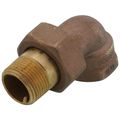
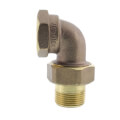
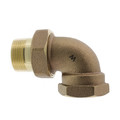
Radiator union elbows are 90 degree brass or bronze fittings that connect a threaded pipe run to the side outlet of a cast iron or steel radiator in a steam or hot water heating system. The union portion of the fitting, made up of a nut and tailpiece, lets a plumber disconnect the radiator valve or the radiator itself without cutting or unthreading the supply pipe, which matters on older systems where the pipe run is fixed in place and difficult to rotate. Most radiator union elbows use a female threaded connection on one end to accept the radiator valve and a male threaded union connection on the other to join the branch piping, though solder connections are also common on hot water systems. Because these fittings see repeated thermal cycling as a system heats and cools, heavy duty brass or bronze construction resists the wear that can eventually cause a lower quality fitting to leak at the union joint.
Subcategories
- FIP x MIP Union Elbows: FIP x MIP union elbows use a female threaded connection on the radiator side and a male threaded union connection on the branch piping side, making them a common choice for retrofitting an existing threaded radiator valve onto a new or repaired pipe run. The threaded design works well on older steam and hot water systems where every connection in the run is already threaded rather than soldered. Because both ends are threaded, no soldering equipment is needed on-site, which speeds up a repair in an occupied space. Common sizes for residential cast iron and panel radiators are all available in this threaded style.
- Solder x MIP Union Elbows: Solder x MIP union elbows pair a soldered copper connection on the pipe side with a male threaded union on the radiator side, suited to hot water systems plumbed in copper rather than steel or iron pipe. The union nut still allows the radiator valve to be disconnected without touching the soldered joint, which keeps future service work simple even though the initial installation requires sweating a joint. The solder x MIP style shows up more often in newer hydronic installations or in system upgrades where copper pipe replaces older steel branch lines. Matching the solder connection's pipe size to the existing copper run avoids an awkward reducing fitting.
- Sizes for Baseboard vs Cast Iron Radiators: Radiator union elbows come in sizes matched to the two most common radiator types, with smaller diameters typically serving baseboard heating units and larger sizes fitting cast iron or panel style radiators. Baseboard systems generally run smaller pipe and lower flow requirements, so a smaller union elbow is usually correct even though it looks similar to the larger cast iron version at a glance. Double-checking the radiator valve's connection size before ordering avoids a mismatch that shows up only after the old fitting has already been removed. Keeping both size ranges in stock covers most residential heating repair calls.
Buying Guide
Matching a radiator union elbow to the existing system starts with confirming both the connection type and thread direction on the radiator side, since these fittings connect directly to a radiator valve that's often original to the building and not always a standard modern thread. Removing the old elbow and taking it along when sourcing a replacement, or at minimum noting its size and connection style, avoids a return trip.
Connection style depends mostly on what the branch piping is made of. Threaded FIP x MIP elbows suit systems already plumbed in steel or iron pipe, while solder x MIP elbows fit copper branch lines. Mixing connection types unnecessarily, such as sweating a threaded elbow onto copper with an adapter when a solder version is available, adds joints and potential leak points without a real benefit.
Material quality matters given how much thermal cycling these fittings endure over a heating season. Heavy duty brass or bronze construction holds up better than a lighter weight fitting, particularly at the union nut and tailpiece where repeated tightening and loosening during service work can wear a lower grade fitting faster.
Sizing correctly the first time saves the most hassle. Baseboard and cast iron radiators typically call for different diameters, so measuring the radiator's own valve connection, not just the branch pipe, before ordering a radiator union elbow keeps the replacement straightforward.
Frequently Asked Questions
Why do radiators use a union elbow instead of a standard elbow?
The union nut and tailpiece let a plumber disconnect the radiator valve or the radiator itself for service or replacement without cutting or unthreading the supply pipe. A standard elbow without a union would require breaking a joint further down the line just to remove the radiator.
How do I know whether I need a threaded or solder union elbow?
It depends on what the branch piping leading to the radiator is made of. Steel or iron pipe runs call for a threaded FIP x MIP union elbow, while copper branch lines typically use a solder x MIP version. Checking the existing pipe material before ordering avoids buying the wrong connection type.
What size radiator union elbow do I need?
Sizing depends on the radiator's valve connection rather than just the branch pipe, and baseboard units typically use a smaller size than cast iron or panel radiators. Measuring the old fitting or the radiator valve directly, rather than guessing from the pipe size alone, gets the right size on the first order.
Can a radiator union elbow leak at the union joint over time?
Yes, repeated heating and cooling cycles combined with periodic servicing can eventually wear the union nut and tailpiece enough to cause a leak, especially on a lower quality fitting. Heavy duty brass or bronze construction resists this wear better than lighter alternatives and typically lasts longer between replacements.
Is a radiator union elbow only used on steam systems?
No, both steam and hot water radiator systems use union elbows, since the union's main purpose is allowing the radiator to be disconnected for service regardless of what's flowing through the pipe. The main difference between systems is usually the connection style, threaded or soldered, rather than the union function itself.
