



Filters
SORT
Product Availability –
Capillary Length –
Switch Action –
Max Temp (F) –
Min Temp (F) –
Review Score –
 --%3E %3Csvg version='1.1' id='Fill' xmlns='http://www.w3.org/2000/svg' xmlns:xlink='http://www.w3.org/1999/xlink' x='0px' y='0px' viewBox='0 0 100 100' enable-background='new 0 0 100 100' xml:space='preserve'%3E %3Cpath fill='%23F15C02' d='M79.44,0.95H20.56C9.78,0.95,0.95,9.78,0.95,20.56v58.87c0,10.79,8.82,19.61,19.61,19.61h58.87 c10.79,0,19.61-8.83,19.61-19.61V20.56C99.05,9.78,90.22,0.95,79.44,0.95z M65.38,58.24l9.38,29.58L49.69,69.78L24.5,87.82 l9.34-29.6L8.8,39.6l30.73-0.17c0,0,6.98-19.61,10-28.93c0.54,1.36,9.88,29.1,9.88,29.1H91.2L65.38,58.24z'/%3E %3C/svg%3E)
 --%3E %3Csvg version='1.1' id='With-RB' xmlns='http://www.w3.org/2000/svg' xmlns:xlink='http://www.w3.org/1999/xlink' x='0px' y='0px' viewBox='0 0 100 100' enable-background='new 0 0 100 100' xml:space='preserve'%3E %3Cpath fill='%23FBC8B4' d='M79.44,0.95H20.56C9.78,0.95,0.95,9.78,0.95,20.56v58.87c0,10.79,8.82,19.61,19.61,19.61h58.87 c10.79,0,19.61-8.83,19.61-19.61V20.56C99.05,9.78,90.22,0.95,79.44,0.95z M65.38,58.24l9.38,29.58L49.69,69.78L24.5,87.82 l9.34-29.6L8.8,39.6l30.73-0.17c0,0,6.98-19.61,10-28.93c0.54,1.36,9.88,29.1,9.88,29.1H91.2L65.38,58.24z'/%3E %3C/svg%3E)
Price Range –
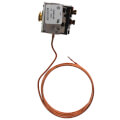
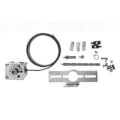
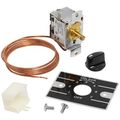
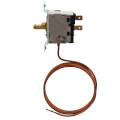
Ranco Temperature Controls

 --%3E %3Csvg version='1.1' id='No-RB' xmlns='http://www.w3.org/2000/svg' xmlns:xlink='http://www.w3.org/1999/xlink' x='0px' y='0px' viewBox='0 0 100 100' enable-background='new 0 0 100 100' xml:space='preserve'%3E %3Cpath fill='%23CECECE' d='M79.44,0.95H20.56C9.78,0.95,0.95,9.78,0.95,20.56v58.87c0,10.79,8.82,19.61,19.61,19.61h58.87 c10.79,0,19.61-8.83,19.61-19.61V20.56C99.05,9.78,90.22,0.95,79.44,0.95z M65.38,58.24l9.38,29.58L49.69,69.78L24.5,87.82 l9.34-29.6L8.8,39.6l30.73-0.17c0,0,6.98-19.61,10-28.93c0.54,1.36,9.88,29.1,9.88,29.1H91.2L65.38,58.24z'/%3E %3C/svg%3E)

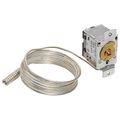
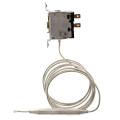
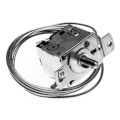
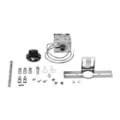
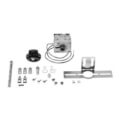
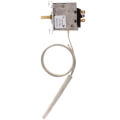
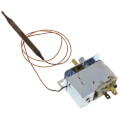

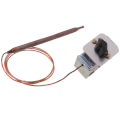
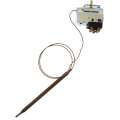
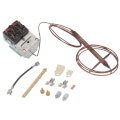
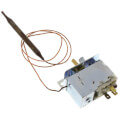
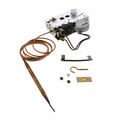
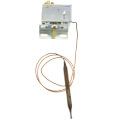
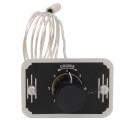
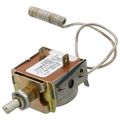
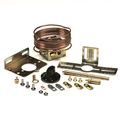

Ranco temperature controls regulate when refrigeration, HVAC, and appliance equipment switches on or off based on sensed temperature. Contractors specify these controls for commercial coolers, freezers, display cases, and heat pump systems where consistent cycling protects both the equipment and the product inside it. The lineup splits into two families: mechanical controls with plated steel frames and dial-based scales for straightforward field replacement, and electronic controls with microprocessor-based logic for programmable setpoints and multi-function management. Robertshaw, which now manufactures the Ranco brand, builds adjustable temperature differential into both families, letting a technician set exact cut-in and cut-out points within the unit's rated range. That flexibility matters on a service call: a control that only trips at one fixed point forces a full swap, while an adjustable differential lets a tech tune the same part to a wider range of equipment.
Subcategories
- Mechanical Temperature Controls: Mechanical Ranco controls use a heavy-duty plated steel frame with a dial-based scale, built for technicians who need a rugged part that survives repeated field swaps. The R Series, RC Series, and K Controls line covers most commercial refrigeration and light HVAC replacement jobs. Each control relies on a sealed bellows or bulb sensor rather than digital circuitry, which keeps installation simple on older equipment. Contractors reach for this family when a job calls for a direct mechanical swap without rewiring a control panel.
- Electronic Temperature Controls: Electronic Ranco controls, including the ETC Series, RDT Series, and RTC-500, add microprocessor-based logic and LCD displays to the same switching job. Programmable setpoints let a technician store multiple temperature profiles for equipment that runs different cycles throughout the day. The RTC-500 in particular targets installations where a visible readout speeds up diagnosis during a service call. Newer refrigeration racks and multi-function display cases that already run digital controls elsewhere in the system suit this family well.
- Refrigeration and Freezer Controls: Ranco controls in this family target commercial and residential refrigeration equipment: walk-in coolers, reach-in freezers, and retail display cases. Robertshaw designs the line specifically around the cycling demands of compressor-driven refrigeration rather than general HVAC. Adjustable differential settings let a contractor match the control to a case that needs tight temperature bands for perishable product. Techs working grocery and foodservice accounts keep several of these on the truck for same-day swaps.
- HVAC and Specialty Controls: Ranco controls extend into heat pump systems, freeze protection, humidity management, and defrost cycle control beyond core refrigeration work. A technician can select heating or cooling mode on the same control body depending on the system it's installed in. Configurable alarm functions on the digital versions flag a drift outside the set range before it becomes a callback. Contractors use this family on mixed HVAC jobs where one control needs to cover more than a single fixed function.
Buying Guide
Picking the right Ranco temperature control starts with matching the control type to the equipment it's replacing: mechanical controls handle straightforward dial-based switching, while electronic controls add programmable setpoints for equipment that needs different profiles across a shift. A contractor pulling an old control off a walk-in cooler should check whether the original unit used a bulb sensor or a digital probe before ordering a replacement, since swapping sensor types usually means rerunning wiring.
Temperature range and differential come next. Ranco Temperature Controls ship with adjustable cut-in and cut-out points within a rated range, so confirm the target equipment's operating range falls inside that window rather than at its edge. A control running near the top of its rated range cycles more often and wears out faster.
Application matters as much as range. Refrigeration jobs favor controls built around compressor cycling and tight temperature bands, while HVAC and heat pump jobs benefit from controls that switch between heating and cooling modes on the same body. Freeze protection and defrost cycle work often calls for the electronic line, since programmable alarms catch a drift before it turns into a service call.
Budget for the digital versions when a job needs a visible readout or multiple stored profiles; stick with mechanical controls when a rugged, low-maintenance swap is the priority.
Frequently Asked Questions
How do I know if I need a mechanical or electronic Ranco control?
Choose mechanical if the job is a straightforward swap on older equipment with a bulb or bellows sensor. Choose electronic if the application needs programmable setpoints, multiple temperature profiles, or a visible readout for faster diagnosis. Most single-function coolers and freezers still run fine on mechanical controls.
Can the temperature differential be adjusted on a Ranco control?
Yes, both mechanical and electronic Ranco controls allow differential adjustment within the manufacturer's rated range. Setting a wider differential reduces cycling frequency and can extend compressor life. Setting it too tight for the application increases wear and can trip nuisance callbacks.
What's the difference between the ETC Series and RTC-500?
Both are electronic Ranco controls, but the RTC-500 adds an LCD display for on-site readouts during service calls. The ETC Series covers general electronic temperature control needs without the display. Pick the RTC-500 when a technician needs to see the setpoint and current reading without opening a panel.
Will a Ranco control work on both refrigeration and HVAC equipment?
Some models are built specifically for refrigeration cycling, while others switch between heating and cooling modes for HVAC and heat pump applications. Check the control's rated application before ordering, since a refrigeration-only control won't have a heating mode. Mixed-use jobs usually call for the HVAC and specialty line.
How often do these controls need replacement?
There's no fixed replacement interval since it depends on cycling frequency and the range the control runs near. A control running consistently near the edge of its rated range wears out faster than one running mid-range. Watch for erratic cycling or a stuck contact as the first signs a control needs replacing.
