




Filters
SORT
Product Availability –
Review Score –
 --%3E %3Csvg version='1.1' id='Fill' xmlns='http://www.w3.org/2000/svg' xmlns:xlink='http://www.w3.org/1999/xlink' x='0px' y='0px' viewBox='0 0 100 100' enable-background='new 0 0 100 100' xml:space='preserve'%3E %3Cpath fill='%23F15C02' d='M79.44,0.95H20.56C9.78,0.95,0.95,9.78,0.95,20.56v58.87c0,10.79,8.82,19.61,19.61,19.61h58.87 c10.79,0,19.61-8.83,19.61-19.61V20.56C99.05,9.78,90.22,0.95,79.44,0.95z M65.38,58.24l9.38,29.58L49.69,69.78L24.5,87.82 l9.34-29.6L8.8,39.6l30.73-0.17c0,0,6.98-19.61,10-28.93c0.54,1.36,9.88,29.1,9.88,29.1H91.2L65.38,58.24z'/%3E %3C/svg%3E)
Price Range –
Rheem Thermocouples


 --%3E %3Csvg version='1.1' id='No-RB' xmlns='http://www.w3.org/2000/svg' xmlns:xlink='http://www.w3.org/1999/xlink' x='0px' y='0px' viewBox='0 0 100 100' enable-background='new 0 0 100 100' xml:space='preserve'%3E %3Cpath fill='%23CECECE' d='M79.44,0.95H20.56C9.78,0.95,0.95,9.78,0.95,20.56v58.87c0,10.79,8.82,19.61,19.61,19.61h58.87 c10.79,0,19.61-8.83,19.61-19.61V20.56C99.05,9.78,90.22,0.95,79.44,0.95z M65.38,58.24l9.38,29.58L49.69,69.78L24.5,87.82 l9.34-29.6L8.8,39.6l30.73-0.17c0,0,6.98-19.61,10-28.93c0.54,1.36,9.88,29.1,9.88,29.1H91.2L65.38,58.24z'/%3E %3C/svg%3E)
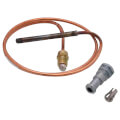

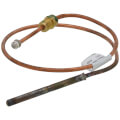

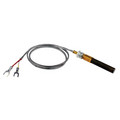

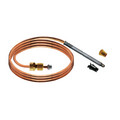
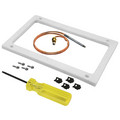

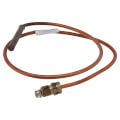

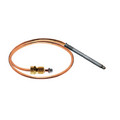
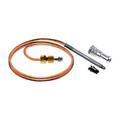

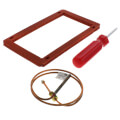
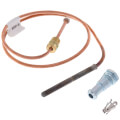
Rheem thermocouples are safety sensors used on Rheem and Ruud gas water heaters and furnaces to detect whether the pilot light is burning and keep the gas valve open only while that flame is present. The thermocouple sits directly in the pilot flame and generates a small millivolt signal through a thermoelectric effect; when the signal drops because the pilot has gone out, the gas control valve closes and shuts off gas flow to both the pilot and main burner as a safety measure. Technicians typically replace a thermocouple when a pilot won't stay lit even after the pilot orifice and thermocouple positioning have been checked, since a weak or degraded thermocouple is one of the most common causes of that complaint on standing-pilot Rheem equipment. Matching lead length and connector type to the specific gas control valve model is what makes a replacement thermocouple actually functional rather than just physically similar.
Subcategories
- Water Heater Thermocouples: These pair with standing-pilot gas water heater controls and are sized by lead length to reach from the pilot bracket to the gas control valve connection. A pilot that lights but won't stay on after releasing the control knob, once the flame is confirmed to be contacting the thermocouple tip properly, usually points to a failing thermocouple rather than a control valve problem.
- Furnace Thermocouples: Furnace-application thermocouples serve the same safety function on standing-pilot gas furnaces, holding the main gas valve open only while pilot flame is detected. These are less common on newer furnace models that use hot surface ignition or intermittent pilot systems instead, so confirming the ignition system type before ordering avoids buying the wrong part.
- Universal Replacement Thermocouples: Universal thermocouples come with adjustable or trimmable leads and interchangeable connector ends, letting a technician match length and fitting on the job rather than stocking every OEM-specific length. These are a practical option for service trucks covering a range of Rheem and Ruud equipment ages, though an exact OEM match is still preferable when the original part number is known.
Buying Guide
Confirm the ignition system before ordering, since a thermocouple only applies to standing-pilot equipment and won't fit or function on a unit with hot surface ignition or an intermittent pilot system. Once standing pilot is confirmed, measure the existing thermocouple's lead length from the pilot bracket to the gas control valve connection, since a lead that's too short won't reach and one that's excessively long can be more prone to kinking inside the burner compartment.
For Rheem Thermocouples specifically, check the connector style at the gas valve end, since Rheem and Ruud gas controls have used a few different thermocouple connector designs across production years, and an OEM part number match is the most reliable way to avoid a connection that doesn't seat properly. Universal thermocouples with trimmable leads are a reasonable fallback when the OEM part isn't readily available, but they add an extra step of trimming and testing millivolt output on site.
Before condemning a thermocouple, verify the pilot flame is actually contacting the thermocouple tip and that the tip isn't coated in soot or corrosion, since a misaligned or dirty thermocouple can mimic the symptoms of a failed one. A quick millivolt reading at the gas valve terminal, compared against manufacturer specification, confirms whether replacement is actually needed before the part is ordered and the job is closed out.
Frequently Asked Questions
How do I know if a thermocouple is bad versus just misaligned?
Check that the pilot flame is directly contacting the thermocouple tip and that the tip is free of soot before condemning it. If alignment and cleanliness are fine and the millivolt output is still low, the thermocouple itself needs replacement.
Will any thermocouple work on a Rheem water heater?
Lead length and connector style need to match the specific gas control valve, so an OEM Rheem part number match is the safest choice; a universal thermocouple with a trimmable lead can work as a fallback if trimmed and tested correctly.
Do all gas water heaters use a thermocouple?
Only standing-pilot models use a thermocouple in this way. Many newer water heaters use electronic ignition systems that monitor pilot or burner flame differently and don't use a traditional thermocouple.
Why does a pilot light but not stay lit after releasing the control knob?
That symptom commonly points to a weak or failing thermocouple that isn't generating enough millivolt signal to hold the gas valve open once the knob is released, assuming flame contact and cleanliness have already been checked.
Can a furnace thermocouple be used on a water heater or vice versa?
Only if the lead length and connector style match what the specific application's gas control valve requires; matching by application type first, then confirming physical fit, avoids ordering the wrong part.
