




Stainless Steel Insert Tees


 --%3E %3Csvg version='1.1' id='No-RB' xmlns='http://www.w3.org/2000/svg' xmlns:xlink='http://www.w3.org/1999/xlink' x='0px' y='0px' viewBox='0 0 100 100' enable-background='new 0 0 100 100' xml:space='preserve'%3E %3Cpath fill='%23CECECE' d='M79.44,0.95H20.56C9.78,0.95,0.95,9.78,0.95,20.56v58.87c0,10.79,8.82,19.61,19.61,19.61h58.87 c10.79,0,19.61-8.83,19.61-19.61V20.56C99.05,9.78,90.22,0.95,79.44,0.95z M65.38,58.24l9.38,29.58L49.69,69.78L24.5,87.82 l9.34-29.6L8.8,39.6l30.73-0.17c0,0,6.98-19.61,10-28.93c0.54,1.36,9.88,29.1,9.88,29.1H91.2L65.38,58.24z'/%3E %3C/svg%3E)

 --%3E %3Csvg version='1.1' id='Fill' xmlns='http://www.w3.org/2000/svg' xmlns:xlink='http://www.w3.org/1999/xlink' x='0px' y='0px' viewBox='0 0 100 100' enable-background='new 0 0 100 100' xml:space='preserve'%3E %3Cpath fill='%23F15C02' d='M79.44,0.95H20.56C9.78,0.95,0.95,9.78,0.95,20.56v58.87c0,10.79,8.82,19.61,19.61,19.61h58.87 c10.79,0,19.61-8.83,19.61-19.61V20.56C99.05,9.78,90.22,0.95,79.44,0.95z M65.38,58.24l9.38,29.58L49.69,69.78L24.5,87.82 l9.34-29.6L8.8,39.6l30.73-0.17c0,0,6.98-19.61,10-28.93c0.54,1.36,9.88,29.1,9.88,29.1H91.2L65.38,58.24z'/%3E %3C/svg%3E)
 --%3E %3Csvg version='1.1' id='Half' xmlns='http://www.w3.org/2000/svg' xmlns:xlink='http://www.w3.org/1999/xlink' x='0px' y='0px' viewBox='0 0 100 100' enable-background='new 0 0 100 100' xml:space='preserve'%3E %3Cg%3E %3Cpath fill='%23F15C02' d='M30.05,70.23l3.79-12.01L8.8,39.6l30.73-0.17c0,0,6.98-19.61,10-28.93c0.54,1.36,9.88,29.1,9.88,29.1h1.58 L93.71,7.18c-3.58-3.82-8.66-6.23-14.28-6.23H20.56C9.78,0.95,0.95,9.78,0.95,20.56v58.87c0,5.41,2.22,10.32,5.79,13.88 L30.05,70.23z'/%3E %3C/g%3E %3Cpath fill='%23FBC8B4' d='M93.71,7.18L60.98,39.6H91.2L65.38,58.24l9.38,29.58L49.69,69.78L24.5,87.82l5.55-17.59L6.75,93.32 c3.55,3.54,8.44,5.73,13.82,5.73h58.87c10.79,0,19.61-8.83,19.61-19.61V20.56C99.05,15.4,97.01,10.69,93.71,7.18z'/%3E %3C/svg%3E)

 --%3E %3Csvg version='1.1' id='With-RB' xmlns='http://www.w3.org/2000/svg' xmlns:xlink='http://www.w3.org/1999/xlink' x='0px' y='0px' viewBox='0 0 100 100' enable-background='new 0 0 100 100' xml:space='preserve'%3E %3Cpath fill='%23FBC8B4' d='M79.44,0.95H20.56C9.78,0.95,0.95,9.78,0.95,20.56v58.87c0,10.79,8.82,19.61,19.61,19.61h58.87 c10.79,0,19.61-8.83,19.61-19.61V20.56C99.05,9.78,90.22,0.95,79.44,0.95z M65.38,58.24l9.38,29.58L49.69,69.78L24.5,87.82 l9.34-29.6L8.8,39.6l30.73-0.17c0,0,6.98-19.61,10-28.93c0.54,1.36,9.88,29.1,9.88,29.1H91.2L65.38,58.24z'/%3E %3C/svg%3E)

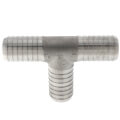
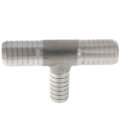
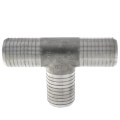
Stainless Steel Insert Tees are branch fittings that push into flexible poly pipe and lock down with a clamp, letting a water well, irrigation, or plumbing line split into two directions without a threaded or soldered joint. Built from 304 stainless steel, the fitting resists the corrosion that eventually pits or cracks a brass insert fitting buried in wet soil or exposed to well water chemistry. Sizes run from 3/4-inch through 1-1/4-inch insert connections, covering the poly pipe diameters most common on residential well systems and small irrigation runs. No-lead compliant construction keeps the fitting suitable for potable water distribution as well as non-potable irrigation and well applications. Installers favor insert tees over compression or threaded alternatives when a job calls for a fast push-and-clamp connection that still holds up to burial, freeze-thaw cycling, and long-term water exposure.
Subcategories
- Lateral Branch Insert Tees: Lateral branch insert tees split a poly pipe run into a straight branch line, connecting insert-to-insert-to-insert across all three ports. Well and irrigation installers use this configuration to tap a new zone or fixture off an existing lateral line without cutting in a threaded fitting. Sizes run 3/4-inch, 1-inch, and 1-1/4-inch insert to match common poly pipe diameters. The 304 stainless steel body resists corrosion in buried, wet soil conditions better than brass alternatives.
- Riser Insert Tees: Riser insert tees add a vertical outlet to a lateral poly line, feeding a hydrant, sprinkler head, or pitless adapter from a buried supply run. Irrigation and well contractors use this style wherever a fixture sits at a different elevation than the buried supply line. The insert connections on the lateral ports match the 3/4-inch through 1-1/4-inch range available across the lineup. No-lead compliant construction keeps the riser tee usable on potable well supply lines as well as irrigation-only systems.
- 304 Stainless Steel Construction Tees: 304 stainless steel construction distinguishes this tee style from brass or plastic insert fittings, resisting the pitting and cracking that corrosion causes in buried or well-water-exposed lines. Well drillers and irrigation contractors specify stainless steel where a fitting needs to last through repeated freeze-thaw cycles without failing at the clamp connection. The material holds up in both potable and non-potable water chemistry, including higher-mineral well water that degrades brass over time. Sizes across the stainless steel line run from 3/4-inch through 1-1/4-inch insert connections.
Buying Guide
Sizing a stainless steel insert tee starts with matching the fitting's insert diameter to the outside diameter of the poly pipe already in the ground or about to be installed. A 3/4-inch, 1-inch, or 1-1/4-inch insert connection needs to correspond exactly to the pipe size, since an undersized or oversized insert won't seal properly under a stainless steel clamp. Configuration matters next: a lateral tee splits a run into two branch outlets on the same plane, while a riser tee adds a vertical outlet for a hydrant, sprinkler head, or pitless adapter fed from a buried lateral line. Stainless Steel Insert Tees hold up better than brass in well water applications with high mineral content, since 304 stainless steel resists the pitting and cracking that eventually causes brass fittings to fail underground. Contractors installing potable well supply lines should confirm the fitting carries no-lead compliant construction, since non-compliant fittings aren't suitable for drinking water distribution even if they work fine on an irrigation-only system. Clamp selection also affects long-term performance. A stainless steel clamp rated for the same pipe size as the insert tee resists corrosion better than a plain steel clamp exposed to wet soil. Buried installations in freeze-prone regions benefit from the added strength of stainless steel over poly or brass insert fittings, since repeated freeze-thaw cycling puts more stress on a joint than steady-state burial in a warmer climate.
Frequently Asked Questions
What sizes do stainless steel insert tees come in?
Stainless steel insert tees are available in 3/4-inch, 1-inch, and 1-1/4-inch insert connections, covering the poly pipe diameters most common on residential well and irrigation systems. Matching the insert size exactly to the pipe's outside diameter keeps the clamp connection sealed. Larger commercial systems sometimes need a different fitting style if the pipe diameter falls outside this range.
Why choose stainless steel over brass for an insert tee?
304 stainless steel resists the pitting and cracking that corrosion eventually causes in a brass insert fitting buried in wet soil or exposed to mineral-heavy well water. Stainless steel holds up better through repeated freeze-thaw cycling in colder climates as well. Brass fittings can still work in less corrosive conditions, but stainless steel offers a longer service life in demanding well and irrigation applications.
What's the difference between a lateral tee and a riser tee?
A lateral insert tee splits a poly pipe run into a straight branch line, connecting three insert ports on the same plane. A riser tee adds a vertical outlet to a lateral line, feeding a hydrant, sprinkler head, or pitless adapter positioned higher than the buried supply run. Choosing between the two depends on whether the new connection needs to stay in line with the existing run or extend to a fixture positioned higher than it.
Are stainless steel insert tees safe for drinking water lines?
No-lead compliant stainless steel insert tees are suitable for potable water distribution, including residential well supply lines. Non-compliant fittings work fine on irrigation-only systems but shouldn't go on a line feeding a drinking water source. Checking for no-lead compliance before installation keeps a well system code-compliant.
What clamp works with a stainless steel insert tee?
A stainless steel clamp sized to match the insert tee and poly pipe diameter provides the most corrosion resistance in buried or wet-soil installations. Plain steel clamps can work in less demanding conditions but corrode faster than stainless steel over time underground. Matching clamp material to the fitting keeps the whole connection resistant to the same environmental conditions.
