




Unions
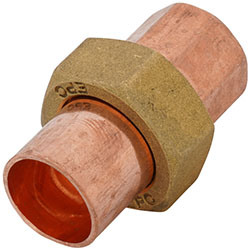
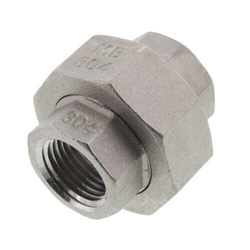
Unions let a plumber disconnect a section of pipe without cutting it, using a three-piece design that separates in the middle. The category covers MegaPress unions for steel and stainless piping and PVC unions built to ASTM D2467 for plastic piping systems.
Adding a union near a piece of equipment, such as a water heater or pump, makes future service or replacement much easier since the surrounding pipe does not need to be cut. Selecting the right pressure rating and pipe size keeps a union from becoming a weak point in the system.









Subcategories
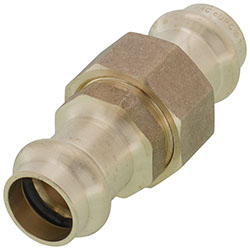
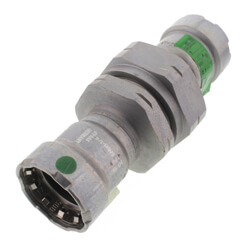
- MegaPress Unions: MegaPress unions use a press tool instead of a torch or pipe dope, sealing carbon steel pipe with an HNBR gasket and a zinc-nickel coating that resists corrosion on gas and hydronic lines. Approved non-fuel gas applications carry a maximum operating pressure of 200 psi, while fuel gas service is limited to 125 psi, which covers most residential and light commercial heating and gas piping jobs. Crews doing occupied-building retrofits favor the system because it removes the fire watch and ventilation requirements that come with soldering or welding.
- PVC Unions: PVC unions built to ASTM D2467 come in Schedule 80 wall thickness with NSF certification for potable water contact, running from 1/4 inch to 1-1/2 inch and sealing with an EPDM O-ring instead of a gasket that requires torque to compress. Chemical plants, irrigation contractors, and anyone piping corrosive drainage reach for PVC unions because the material won't rust or scale the way steel does in that service. Solvent-welded ends on either side of the union mean the joint goes in during initial pipe assembly, not as a repair later.
Buying Guide
Matching the union to the media in the line comes first. Fuel gas, water, oil, and compressed air each carry different pressure and temperature limits, and a union rated for one may not be listed for another even if the fitting looks similar.
Pressure and temperature ratings narrow the field quickly. A union rated for a given psi at a specific temperature in water service won't necessarily carry the same rating in a fuel gas application, so checking the manufacturer's data sheet for the specific application beats assuming a single rating covers every use.
Connection method affects both labor time and jobsite requirements. Press-fit unions cut installation time and remove the need for an open flame, threaded unions allow future disassembly with basic hand tools, and solvent-weld unions need clean, dry pipe and enough cure time before pressure testing.
Local plumbing and mechanical codes often dictate where a union can go, particularly on gas lines and inside walls or ceilings without an access panel. Checking the adopted code before rough-in avoids a failed inspection and a repeat trip.
Placement matters as much as the union itself. Setting a union close to a water heater, circulator pump, or control valve means the next service call involves loosening one joint instead of cutting into the line, which keeps future repairs faster and simpler.
Frequently Asked Questions
What's the difference between a MegaPress union and a threaded union?
A MegaPress union connects with a press tool that compresses a gasket around the pipe, while a threaded union relies on cut or rolled threads and pipe dope or tape to seal. Press unions install faster and skip the open flame, but the pipe has to be rated for press fittings to begin with.
Can PVC unions be used on hot water lines?
Standard PVC unions are limited by the same temperature ceiling as PVC pipe, generally around 140°F, so they aren't suited to close-coupled hot water heater connections. CPVC unions handle higher temperatures and are the better choice when hot water service is involved.
Where should a union be installed in a piping run?
Unions belong next to equipment that will eventually need to come out for service or replacement, such as water heaters, pumps, filters, and control valves. Installing directly at the equipment connection means only one joint has to be broken during future maintenance.
Do unions need support beyond regular pipe hangers?
A union doesn't add weight or stress beyond what the pipe already carries, so standard hanger spacing for the pipe material and size still applies. What matters more is leaving enough clearance around the union to fit a wrench or press tool during future service.
How is a union different from a coupling?
A coupling makes a permanent joint between two pipe ends, while a union is built to come apart and go back together without cutting the pipe. Anywhere a line might need to be opened for repair or a component swap calls for a union rather than a coupling.
Resources
Subcategories
- MegaPress Unions: MegaPress unions use a press tool instead of a torch or pipe dope, sealing carbon steel pipe with an HNBR gasket and a zinc-nickel coating that resists corrosion on gas and hydronic lines. Approved non-fuel gas applications carry a maximum operating pressure of 200 psi, while fuel gas service is limited to 125 psi, which covers most residential and light commercial heating and gas piping jobs. Crews doing occupied-building retrofits favor the system because it removes the fire watch and ventilation requirements that come with soldering or welding.
- PVC Unions: PVC unions built to ASTM D2467 come in Schedule 80 wall thickness with NSF certification for potable water contact, running from 1/4 inch to 1-1/2 inch and sealing with an EPDM O-ring instead of a gasket that requires torque to compress. Chemical plants, irrigation contractors, and anyone piping corrosive drainage reach for PVC unions because the material won't rust or scale the way steel does in that service. Solvent-welded ends on either side of the union mean the joint goes in during initial pipe assembly, not as a repair later.
Buying Guide
Matching the union to the media in the line comes first. Fuel gas, water, oil, and compressed air each carry different pressure and temperature limits, and a union rated for one may not be listed for another even if the fitting looks similar.
Pressure and temperature ratings narrow the field quickly. A union rated for a given psi at a specific temperature in water service won't necessarily carry the same rating in a fuel gas application, so checking the manufacturer's data sheet for the specific application beats assuming a single rating covers every use.
Connection method affects both labor time and jobsite requirements. Press-fit unions cut installation time and remove the need for an open flame, threaded unions allow future disassembly with basic hand tools, and solvent-weld unions need clean, dry pipe and enough cure time before pressure testing.
Local plumbing and mechanical codes often dictate where a union can go, particularly on gas lines and inside walls or ceilings without an access panel. Checking the adopted code before rough-in avoids a failed inspection and a repeat trip.
Placement matters as much as the union itself. Setting a union close to a water heater, circulator pump, or control valve means the next service call involves loosening one joint instead of cutting into the line, which keeps future repairs faster and simpler.
Frequently Asked Questions
What's the difference between a MegaPress union and a threaded union?
A MegaPress union connects with a press tool that compresses a gasket around the pipe, while a threaded union relies on cut or rolled threads and pipe dope or tape to seal. Press unions install faster and skip the open flame, but the pipe has to be rated for press fittings to begin with.
Can PVC unions be used on hot water lines?
Standard PVC unions are limited by the same temperature ceiling as PVC pipe, generally around 140°F, so they aren't suited to close-coupled hot water heater connections. CPVC unions handle higher temperatures and are the better choice when hot water service is involved.
Where should a union be installed in a piping run?
Unions belong next to equipment that will eventually need to come out for service or replacement, such as water heaters, pumps, filters, and control valves. Installing directly at the equipment connection means only one joint has to be broken during future maintenance.
Do unions need support beyond regular pipe hangers?
A union doesn't add weight or stress beyond what the pipe already carries, so standard hanger spacing for the pipe material and size still applies. What matters more is leaving enough clearance around the union to fit a wrench or press tool during future service.
How is a union different from a coupling?
A coupling makes a permanent joint between two pipe ends, while a union is built to come apart and go back together without cutting the pipe. Anywhere a line might need to be opened for repair or a component swap calls for a union rather than a coupling.