




Uponor ProPEX Expansion Valves
Uponor ProPEX expansion valves cover the ball, check, and mixing valves that connect directly onto PEX-A tubing using the ProPEX expansion method, along with isolation valve flanges that bolt onto a compatible manifold or fitting.
Choosing a ProPEX expansion valve keeps the entire connection method consistent with the rest of a PEX-A installation, avoiding the need for a separate crimp or press adapter. Mixing valves in this line blend hot and cold water directly at a PEX connection point.

Subcategories
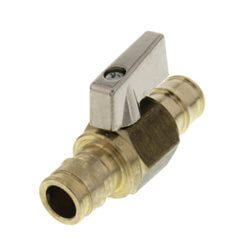
- ProPEX Ball Valves: ProPEX ball valves expand directly onto PEX tubing for a full-flow shutoff point, giving a plumber a quarter-turn handle to isolate a branch line or fixture without cutting into the tubing run. The expansion connection keeps the joint free of solder, glue, or clamps.
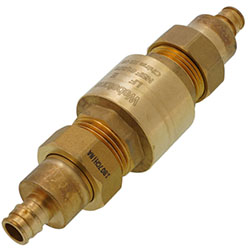
- ProPEX Expansion Check Valves: ProPEX expansion check valves stop backflow on a PEX supply line using the same expansion ring connection as the rest of the line. A spring-loaded disc inside the body seats closed against reverse flow, protecting a pump, water heater, or metered supply from contamination moving the wrong direction.
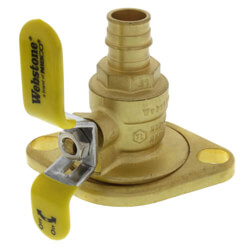
- ProPEX Expansion Isolation Valve Flanges: ProPEX expansion isolation valve flanges bolt onto a compatible valve body so it can be removed or serviced without cutting the surrounding tubing. Two flanges paired with a valve create a union-style connection that a plumber can break apart at the job site.
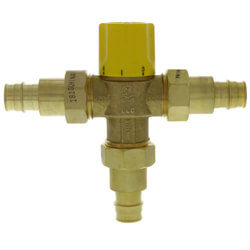
- ProPEX Mixing Valves: ProPEX mixing valves blend hot and cold water expanded onto PEX tubing to deliver a set output temperature, commonly ahead of a fixture, manifold, or radiant loop. An adjustable dial on the valve body lets a plumber dial in the target temperature during commissioning.
Buying Guide
Match the valve function to the job first: shutoff calls for a ball valve, backflow protection calls for a check valve, serviceability calls for isolation flanges, and blended output calls for a mixing valve. Picking the wrong function for the location usually means a return trip once the system is pressurized and tested.
Every valve in the line uses the same expansion process, so the tool already on the truck for PEX tubing installation works across the whole valve range. Confirming the tubing size and expansion tool match the valve's rated connection size avoids a mismatched joint at final assembly.
Isolation flanges are worth adding at any valve a plumber expects to service again, such as a mixing valve feeding a radiant zone or a check valve ahead of a water heater. The upfront cost of the flange pair is minor compared to cutting out a soldered or expanded joint later.
Pressure and temperature ratings vary slightly by valve type, so checking the rated range against the system's operating conditions during selection, not after installation, keeps the valve within its intended service life.
Stocking a small assortment of ball valves, check valves, and mixing valves alongside the expansion tool covers most radiant and domestic PEX rough-in work, while isolation flanges can be added selectively wherever future service access matters most.
Frequently Asked Questions
Do ProPEX expansion valves require a special tool?
Yes, they use the same expansion tool as other Uponor ProPEX fittings, since the valve body expands onto the tubing with the same ring and cone process rather than soldering or clamping.
Can a ProPEX check valve be installed in any orientation?
Check valves are directional and typically marked with a flow arrow on the body, so orientation during installation should follow that marking rather than the mounting position of the pipe.
What is the purpose of isolation valve flanges?
Isolation flanges bolt onto a valve body to create a union-style connection, letting a plumber remove or service the valve later without cutting into the surrounding PEX tubing.
How does a ProPEX mixing valve get set to a target temperature?
An adjustable dial on the mixing valve body sets the blend ratio between the hot and cold inlets, and a plumber typically fine-tunes the dial during system commissioning while checking output temperature at the fixture.
Are ProPEX expansion valves compatible with both PEX-a and other tubing types?
Uponor's expansion valve line is designed for its PEX-a tubing and expansion system specifically, so confirming tubing compatibility with the valve's rated connection size before installation avoids a mismatched joint.
Resources
Subcategories
- ProPEX Ball Valves: ProPEX ball valves expand directly onto PEX tubing for a full-flow shutoff point, giving a plumber a quarter-turn handle to isolate a branch line or fixture without cutting into the tubing run. The expansion connection keeps the joint free of solder, glue, or clamps.
- ProPEX Expansion Check Valves: ProPEX expansion check valves stop backflow on a PEX supply line using the same expansion ring connection as the rest of the line. A spring-loaded disc inside the body seats closed against reverse flow, protecting a pump, water heater, or metered supply from contamination moving the wrong direction.
- ProPEX Expansion Isolation Valve Flanges: ProPEX expansion isolation valve flanges bolt onto a compatible valve body so it can be removed or serviced without cutting the surrounding tubing. Two flanges paired with a valve create a union-style connection that a plumber can break apart at the job site.
- ProPEX Mixing Valves: ProPEX mixing valves blend hot and cold water expanded onto PEX tubing to deliver a set output temperature, commonly ahead of a fixture, manifold, or radiant loop. An adjustable dial on the valve body lets a plumber dial in the target temperature during commissioning.
Buying Guide
Match the valve function to the job first: shutoff calls for a ball valve, backflow protection calls for a check valve, serviceability calls for isolation flanges, and blended output calls for a mixing valve. Picking the wrong function for the location usually means a return trip once the system is pressurized and tested.
Every valve in the line uses the same expansion process, so the tool already on the truck for PEX tubing installation works across the whole valve range. Confirming the tubing size and expansion tool match the valve's rated connection size avoids a mismatched joint at final assembly.
Isolation flanges are worth adding at any valve a plumber expects to service again, such as a mixing valve feeding a radiant zone or a check valve ahead of a water heater. The upfront cost of the flange pair is minor compared to cutting out a soldered or expanded joint later.
Pressure and temperature ratings vary slightly by valve type, so checking the rated range against the system's operating conditions during selection, not after installation, keeps the valve within its intended service life.
Stocking a small assortment of ball valves, check valves, and mixing valves alongside the expansion tool covers most radiant and domestic PEX rough-in work, while isolation flanges can be added selectively wherever future service access matters most.
Frequently Asked Questions
Do ProPEX expansion valves require a special tool?
Yes, they use the same expansion tool as other Uponor ProPEX fittings, since the valve body expands onto the tubing with the same ring and cone process rather than soldering or clamping.
Can a ProPEX check valve be installed in any orientation?
Check valves are directional and typically marked with a flow arrow on the body, so orientation during installation should follow that marking rather than the mounting position of the pipe.
What is the purpose of isolation valve flanges?
Isolation flanges bolt onto a valve body to create a union-style connection, letting a plumber remove or service the valve later without cutting into the surrounding PEX tubing.
How does a ProPEX mixing valve get set to a target temperature?
An adjustable dial on the mixing valve body sets the blend ratio between the hot and cold inlets, and a plumber typically fine-tunes the dial during system commissioning while checking output temperature at the fixture.
Are ProPEX expansion valves compatible with both PEX-a and other tubing types?
Uponor's expansion valve line is designed for its PEX-a tubing and expansion system specifically, so confirming tubing compatibility with the valve's rated connection size before installation avoids a mismatched joint.