


'/%3E%3C/svg%3E)
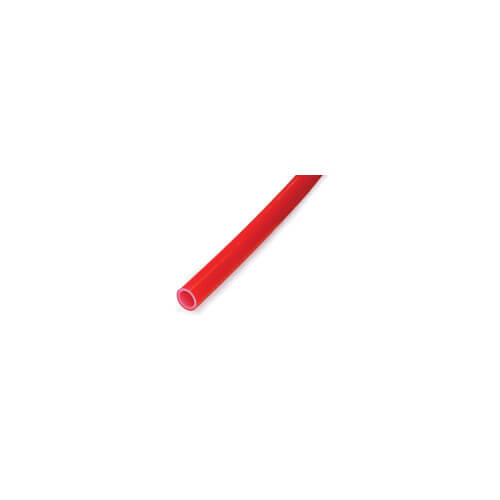
1/2" x 20 ft. Red AquaPEX Tubing, Straight Length
 --%3E %3Csvg version='1.1' id='Fill' xmlns='http://www.w3.org/2000/svg' xmlns:xlink='http://www.w3.org/1999/xlink' x='0px' y='0px' viewBox='0 0 100 100' enable-background='new 0 0 100 100' xml:space='preserve'%3E %3Cpath fill='%23F15C02' d='M79.44,0.95H20.56C9.78,0.95,0.95,9.78,0.95,20.56v58.87c0,10.79,8.82,19.61,19.61,19.61h58.87 c10.79,0,19.61-8.83,19.61-19.61V20.56C99.05,9.78,90.22,0.95,79.44,0.95z M65.38,58.24l9.38,29.58L49.69,69.78L24.5,87.82 l9.34-29.6L8.8,39.6l30.73-0.17c0,0,6.98-19.61,10-28.93c0.54,1.36,9.88,29.1,9.88,29.1H91.2L65.38,58.24z'/%3E %3C/svg%3E)
' fill='%23F15C02' d='M49 0C21.938 0 0 21.938 0 49s21.938 49 49 49 49-21.938 49-49S76.062 0 49 0m0 82.709a7.54 7.54 0 1 1 0-15.08 7.54 7.54 0 0 1 0 15.08m7.54-28.412a7.541 7.541 0 0 1-15.08 0V22.831a7.54 7.54 0 0 1 15.08 0v31.466z'/%3E%3C/svg%3E)
MANUALS (6)
Product Highlights


Description
Uponor AquaPEX white tubing is marked with the PEX 5106 designation as required by the most recent edition of ASTM F876-10, indicating it exceeds ASTM F876 chlorine-resistance requirements for continuous-recirculation systems operating up to 140ºF while also affording a 30-day UV-resistance level.
Uponor AquaPEX red and blue tubing is marked with the PEX 5206 designation as required by the most recent edition of ASTM F876-10, indicating it exceeds ASTM F876 chlorine-resistance requirements for continuous-recirculation systems operating up to 140ºF while also affording a 90-day UV-resistance level.
Specs
| Length (Feet): | 20' |
|---|---|
| Fitting System Compatibility: | PEX Press Push Fit PEX Compression Clamp Crimp Expansion PEX |
| Size: | 1/2" |
| Color: | Red |
| Tubing Type: | Non-Oxygen Barrier |
| Material: | PEX |
| Application: | Plumbing |
| Max Pressure (PSI): | 160 |
| Grade: | PEX-a |
| Warranty: | 25 Year |
| Standards Met: | ASTM F877 DIN4726 NSF |
| Max Temp (F): | 200°F |


Questions?
Product Reviews
Most Liked Positive Review
Can't Go Wrong
Most Liked Negative Review
 --%3E %3Csvg version='1.1' id='With-RB' xmlns='http://www.w3.org/2000/svg' xmlns:xlink='http://www.w3.org/1999/xlink' x='0px' y='0px' viewBox='0 0 100 100' enable-background='new 0 0 100 100' xml:space='preserve'%3E %3Cpath fill='%23FBC8B4' d='M79.44,0.95H20.56C9.78,0.95,0.95,9.78,0.95,20.56v58.87c0,10.79,8.82,19.61,19.61,19.61h58.87 c10.79,0,19.61-8.83,19.61-19.61V20.56C99.05,9.78,90.22,0.95,79.44,0.95z M65.38,58.24l9.38,29.58L49.69,69.78L24.5,87.82 l9.34-29.6L8.8,39.6l30.73-0.17c0,0,6.98-19.61,10-28.93c0.54,1.36,9.88,29.1,9.88,29.1H91.2L65.38,58.24z'/%3E %3C/svg%3E)
shipping wrap
All the products are exceptional, would buy all the products

It's pex it works
Top Shelf.
Yes
PEX-A Pipe
Pex A is easy to work with.
This seems more flexible to me. I welcome that in tight
I would buy this product again and again
Great Service
Supplyhouse.com is awesome!
Product Q&A
100 QuestionsQ: Is it true you can use a heat gun to remove the tubing from a fixture to make corrections or repairs? If so how many times can the tubing be heated and reused?
Asked by Wayne 12 years ago
Add your answer
Verified Reply- SupplyHouse StaffA heat gun can be used to remove and reuse brass ProPEX fittings (see information at the link below for more information). The portion of tubing that was used around the original fittings should not be reused. New connections should be made with fresh tubing that was part of a square cut at least two inches from the end of the existing pipe. http://blog.supplyhouse.com/propex-fitting-removal/
https://www.uponor-usa.com/~/media/Files/Technical%20Documents/Plumbing%20resources/ProPlumbingInstallGuide_10_07.aspx?sc_lang=en Here is the installation guide for aquapex on link above brass fitting can be reused with heat gun still need to cut pipe back about 2 inches of pipe before making new connections. page 22 of install guide explain's how do this correctly.
While you might technically be able to do this - I wouldn't suggest it. Heatingbthentubing beyond spec levels, which you would have to in thus case, would compromise the integrity of the tubing. In would suggest that you run the install with a little slack to account for these future needs. If you are out of slack it would be cleaner to do a clean cut, add in a connector and extension and attach there. Sent from Samsung Mobile
Q: We have an industry which is using black pipe for potoble water supply now. The piipe is rusted and we need to repalce this pipe, The temperature will be approximatley 125 deg. ambient with city supply water probably about 80 deg. can we use this pipe in the place of a galvinized pipe and expect the same life and durability of the galvinized.
Asked by allen sr 12 years ago
Add your answer
Aquapex has been trouble free. Would use again. Charlie
Yes. The pex should last longer than any iron or copper system. Thank You, Daniel F. Walker e: <mailto:****@***.***> ****@***.***
My experience with the Uponor pex is very positive. Here in the North Carolina mountains, copper tubing is rapidly degraded due to the chemical make-up of the well water. The same goes for steel pipe. The choices have been CPVC and pex. I was attracted to the Uponor system because of the nature of the compression fittings... there are no metal compression rings that will eventually leak. The formula for the pipe requires it to be continually contracting and renewing the grip on the fitting. It may be something of a pain to make the joint, but you are assured of a leak free joint if it is done property. As to the material, it is a plastic that does nothing... there is no chemical or galvanic action. The temperatures that you suggest, in my experience, are not a problem. For your peace of mind, you can contact the manufacturer for their cut sheet that will give you the parameters under which the pipe has been designed to work. Personally, I'd never go back to the old copper tubing style I used for forty years.
You didn't specify the size of your existing black steel pipe, if it is in the current Aquapex available sizes, I would recommend replacing with Aquapex, so easy to work with. Steel galvanized pipes will build-up sediments inside, thus reducing the inside diameter and therefore the flown of water, and eventually will rust. Talk to the people at Pex Supply, they will guide you through the process from A to Z. Good luck. Gilbert.
This tubing will survive longer then galvanized pipe. Clean water, no additives. Tubing installation required proper fitting and I recommend UV light protection (sunlight, metal halide bulbs,sodium bulbs, mercury bulbs). Please follow local building code, this tubing will melt in event of fire without proper protection. For 20 years I never see AquaPEX fail. On longer distance I use. Polyethylene tubing (black poly tubing) with proper pressure rating - lower price alternative. Thanks.
The Uponor main North America office is in Apple Valley, MN. I would call them on that. I know that many commercial buildings use Uponor Pex instead of copper these days. My gut says it should be fine, but I would ask the manufacturer this question. - Greg Greg Scott Infrasupport Corporation
There are several replies to that. Is the pipe going to lay in direct sunlight? If not the answer is probably yes, if it is in direct sunlight no. Direct sunlight requires black to reduce cracking. You also did not state the pressure that it would see. I hope this was helpful.
I think this is the best pipe you can buy. When you use the proper fittings and the pipe is protected from damage the pipe should last indefinitely.
Yes you can and it will out last any metal pipe including copper or brass. Just remember you will have to support it (clamp or strap it) in very short intervals (about every 12"). We have used it for the same application and any place it may rub or wear we placed insulation on it. Great product Good Luck
Q: I am going to be replacing an exsisting shower/tub 1 handle fixture. I was planning on adapting from the copper lines to pex-a to the fixture. Which fitting do you recommend for this application.
Asked by rmturner54 12 years ago
Add your answer
they have propex copper pipe adapter fittings that work great. I have also used the sharkbite fitting without any problems. http://www.pexsupply.com/ProPEX-Expander-Fittings-526000
I believe the copper sweat to pex fitting would be your easiest method. I have used them in the past with good results.
Your fixture likely has a threaded connection, in which you'll either need a male or female adapter. In almost all cases it'll be a male adapter. male: (LF4525050) http://www.pexsupply.com/Wirsbo-Uponor-LF4525050-ProPEX-LF-Brass-Male-Threaded-Adapter-1-2-PEX-x-1-2-NPT female: (LF4575050) http://www.pexsupply.com/Wirsbo-Uponor-LF4575050-ProPEX-LF-Brass-Female-Threaded-Adapter-1-2-PEX-x-1-2-NPT Now, if you have a straight piece of copper pipe you're trying to tie into, you'll need a adapter you can sweat to the pipe. Something similar to the following: (LF4515050) http://www.pexsupply.com/Wirsbo-Uponor-LF4515050-ProPEX-LF-Brass-Sweat-Adapter-1-2-PEX-x-1-2-Copper
I did this by sweating a ½ inch pipe thread into the copper and connecting what amounts to a pex compression union onto this and from there it is all pex fittings. There are other compression fittings for copper tubing that do not require soldering the and one of these could be used as an alternative.
Since it is Pex-A you can use the propex expander method, brass crush rings, or stainless steel crimp rings. Unless you are going to install a lot then I would recommend the stainless steel rings. 1 inexpensive tool will work on most common sizes and you can buy them at the Big Box stores now if you run out. I used the stainless rings and the expander method in my house. I use the stainless ones now due to ease of tool and ease of getting more rings local as needed. I could not find any places that carried the expander method parts. But I still use Pex-A as we do get colder temps from time to time.
I would use the Uponor fittings that match with the tubing. Greg Scott Infrasupport Corporation
Pex Supply has a full spectrum of PEX to NPT adaptors, straight or 90. I suggest you go to their Web side and select the one most appropriate for your project. Good luck. Gilbert.
I am not positive which way Pex would do it, I would probably sweat a copper fitting with a female npt thread to the copper and then use a male npt to Pex tube. Lowes carries an assortment of pex fittings that you can look at. I hope this was helpful.
Take a pex shower/tub rough in. Sweat a female to pex adapter on the hot and cold water supply.
I recommend the propex fittings. They need an expensive expansion tool. If you know how to solder, it'll be much cheaper to use copper pipe and fittings. If it is a short distance I would use copper . The new tub shower fixture probably has solder ports anyway.
Q: Can I use to replace my black plastic under ground well pipe. Do I need the barrier type? The present pipe started to leak ( I think it froze) Plan to replace in the spring. The black plastic is running from the detached garage storage tank to the home. The water goes from the well to the garage then to the home.
Asked by Bill 12 years ago
Add your answer
The PEX would be preferable to the poly pipe. You need to ensure that the PEX is not exposed to UV over time.
You can replace the black pipe with PEX pipe underground without any protection. I would recommend bearing it deeper so that you don't freeze in cold weather. The good thing about pecks pipe is if it does freeze it won't rupture like your black pipe did. It depends on what part of the country you're from but you might have to bury a pipe's deepest green beans and some of the northern regions. Sent from my iPhone
The standard Uponor Aquapex will do fine as a water supply line. The beauty of pex is that it can freeze and thaw without structural damage... that is the pipe, not fitting connections. Pex cannot be exposed to sunlight, so be prepared to shield all pex from the sun, and bury it deep enough to be below the frost line and where it is not subject to physical damage. Any time a plastic pipe is buried in the ground, a metallic tracer should be buried with it as a locator. Since you are not using this product for under slab heating, the barrier type pipe is not necessary... it does very fine as a water supply pipe.
Yes. you don't barrier [for heating only]
I used Aquapex for potable water and it worked fine however I would not recommend that it be placed where it can freeze - repeated freeze thaw cycles will weaken the Aquapex and it will also start to leak. I have no experience using Aquapex with a heat tape but that might be a way to prevent further damage?
According to Uponor's installation manual, AQUAPEX is rated for underground water service. See the attached manual (pages 26-27) and follow the installation instructions. If the manual isn't attached, I've included instructions from the manual below (but the pictures won't come through). You can also download from Uponor's site or the following link ( http://www.uponorpro.com/~/media/Extranet/Files/plumbing%20literature/PLU_InsG_P731_0213.aspx?sc_lang=en&version=0***.****2). You also need to follow your local building code. At a minimum, bury the line below your local frost depth or whatever is required by your building code, whichever is more stringent. Some other ideas to consider are: - Burying the tubing in a shallow layer of sand to avoid rocks puncturing the pipe. - Some people like to install may recommend installing the tubing through a larger PVC conduit, but this may conflict with Uponor's instructions to "snake" the tubing. - After layering a couple inches of sand or fine dirt over the tubing, you could put a 2x board over the top which will help avoid shovels from puncturing the line if anyone decides to dig in that area in the future. Water Service Phase Uponor AquaPEX tubing meets the requirements of the following standard: • ANSI/AWWA Standard C904-06, Crosslinked Polyethylene (PEX) 1⁄2 inch (12mm) through 3 inches (76mm) for Water Service Please refer to the ANSI/AWWA Standard for information regarding the selection, use and proper application of PEX tubing in water service. Handling and Repairs Although Uponor AquaPEX tubing is highly resistant to kinking and abrasion, it is important to handle with care while installing the tubing to prevent damage and possible failure. If damage occurs during installation, cut out and repair the area before backfilling. To reform kinked tubing, refer to Section 2: Reforming Kinked Uponor AquaPEX Tubing on page 9. If damaged beyond the thermal memory capacity of the tubing, use a ProPEX repair coupling that is suitable for direct burial. Note: Do not reuse or reclaim EP fittings. Trench Bottom Preparation For a successful installation, the supporting soil must provide a stable and continuous support for the tubing. Good Soil Conditions If the trench cut is relatively smooth, install the tubing directly on the prepared bottom. The bottom must be flat with no hollows, lumps or rocks. Bad Soil Conditions If installing in rocky, clay, muddy or other poor soil conditions, it may be necessary to prepare the trench bottom using granular material of such size and grading to provide a stable base. See your local code for additional requirements. Installation Install Uponor AquaPEX tubing underground in a manner that avoids damage caused by external loads. External loads should not cause a decrease in the vertical dimension of the tubing cross-section more than 5% of the outside diameter. To ensure proper underground installation: • Install Uponor AquaPEX tubing in a snaking pattern with sufficient slack in the line to allow for contraction of the line due to temperature change prior to backfilling. • The linear expansion rate for Uponor AquaPEX tubing is approximately 1.1" per 10°F (5.6°C) temperature change for every 100' of tubing. • Do not use blocking to support the tubing or change the tubing grade. • Do not install potable water service tubing in, under or above cesspools, septic tanks, septic tank drainage fields or pits.
I am not the best person to ask for that application. As far as I am aware the pec is susceptible to bursting under freezing conditions, but please verify. Sent from my iPhone
pex would be a good choice the barrier. type is not necessary that is for heating systems Sent from my U.S. Cellular® smartphone
I'll bet Uponor has a customer service line that could help answer that question. When I did my project, it was all for indoor plumbing and didn't look at any in-ground or in-floor stuff. I live close to Uponor's US headquarters and I drove over there and walked around the campus like I owned the place. I ended up talking to a gentleman in his office and he gave me a great demo. So I'm an Uponor fan. http://www.uponor-usa.com/ - Greg Greg Scott Infrasupport Corporation
Q: CaN pex be used under a house without freezing?, also it will be out of direct sunlight if that helps answer the question. Which product would be the best?. I don't me installing in a slab.
Asked by Budman 12 years ago
Add your answer
PEX pipe will freeze! It is however almost impossible the rupture. So after thaw your water will flow. PEX pipe does not like sun light! You must protect the pipe from sun light or it will deteriorate. Sent from my iPhone
I don't think I quite under stand " under a house" You can use oxygen barrier pex in a slab .must be in center of concrete pour. You must insulate under the slab and above the base of item 4 compacted. Also it needs to designed with some care. You can't just put one continuous loop. You need to put in sub loops with manifolds . Not exceeding '300 per sub loop. Tempered water during operation depending on design. Roughly 120°f supply with a 20° dif. This is not something to try for a DIY with out guidance. Sent from my Verizon Wireless 4G LTE DROID
Any water pipe should always be on the warm side of a house to prevent freezing. The water will freeze in PEX just like it would in copper. Most likely the pipe won't burst like a copper pipe would, but it's not worth the risk. If it's outside such as under a crawl space the pipe should be drained for winter or freezing temperatures.
It can be installed under a house where the temperature is above freezing. As you mentioned, out of direct sunlight.
I don't see how. Pex transfers heat or cold to the water. I do not have personal experience with the cold as all of my plumbing is inside, but where the cold water lines cross over and are laying on the forced air ducts, they pick up the heat from the ducts. I plan on putting some Styrofoam sheets between the Pex and the ducts, but it is not an urgent task for me.
To begin, read the manufacturer's instructions for installation. They will cover all the locations where it can be installed. From what you've described, you are intending to run lines beneath a house. If the floor is a raised floor (under floor joists), as long as you support the tubing adequately and don't have any fittings or joints in a run, the pex should work just fine. Make up you joints in a heated area. From what I've read, the Uponor pex can freeze solid and return to its original shape... I don't know about other brands or types. As mentioned above, this is providing that there are no joints in the area subject to freezing. I know that they regularly run pex in slabs for radiant heat, but I would locate the pex buried under the concrete if I were using it for water supply... use a sleeve when coming through the slab. As with the under raised floor installation, don't have any joints beneath the concrete and place the pex in clear sand (no rocks or big pebbles) buried beneath the slab. Hope this helps... I personally like the Uponor product and haven't had any problems. Also,remember you will need an expansion tool specifically designed for the product to fabricate the joints... buy one or work out a long term sharing arrangement in case you need to do repairs.
Like anything it needs to be insulated. Left bare, it will freeze. Pex can expand when frozen and goes back to its original shape without bursting. Fittings on the other hand may break. I am not sure what your statement of I don't me installing in slab means. I have radiant pex tubing in my slab and it works great. You need to use a HEPex, not aquapex for it. to make best use of it and be most efficient, you should install at a minimum of 2 inches of blue insulation, not pink, and not polyisuanurate. Blue works best and won't crush/fatigue over time. You should attache the pex to the metal mesh using metal ties. No run should be more than 300 feet max. a also recommend buying guides to ensure the tubing come up from the slab perfectly straight for tying into the system. They also make insultarps for going under it all. The biggest take away is that you want the heat to go up, not into the ground. The more you can insulate underneath, the better your heat will perform. Hope that helps.
I'd check the international residential building code. I remember seeing particular specs for burying pipe. After that, check to see if your locality has additional codes that apply. Typically, I've seen pex routed through attics. Not sure if I get your question, but if you're going to pour "hot" concrete, the pH is going to be through the rough until it cures (very alkaline). Not sure if pex is designed to withstand that kind of extreme pH. Most of the CPVC and copper I've seem come through the slab of new construction has a blue or red vinyl sheath around it, probably as a chemical and mechanical barrier between the pipe and concrete.
If you are going to pour a slab foundation, Pex is fine below the slab. It sounds as if you are in cold country and I ami in S Texas.
I imagine the factors around freezing non-pex piping is the same for pex piping. Some form of insulation would be needed to keep any pipe from freezing, including pex.
Q: Hello, When Installing 1/2" or 3/4" Aquapex white tubing for tile floor radiant heating, how far or close is the code on where can be if it is near a wall? For example of there is radiant heating pex laid down in a bathroom that is already tiled and completely finished how far is it supposed to be from the bathroom wall as per code?
Asked by Louis 13 years ago
Add your answer
need more information. are you putting this in the concrete? oxygen barrier pex is required for it to be installed in concrete. 8" from other pex and walls is fine with 1/2 . but I don't think you intending to install this correctly . need more info on your intentions .
First you can't use radiant or baseboard hot water with aqua pex. YOU MUST USE HE pex which has Oxygen barrier. U can use same fittings for both. As for spacing there is no code. 8" centers are the norm. however make sure u insulate under the slab and sides or else u will leak a lot of heat which equals MONEY in energy cost.
I don't think you want the regular PEX for heating applications. They make a specific version of pipe for that application.
Radiant heating have low temperature heating process and need some time to heat surface(room). I do not believe radiant heating damage any floor. There is many type of installation available: hi mass(3"-4" concrete slab), low mass( tubing laid down on subfloor and filled with dry pack grout 1"-1 1/2" thick, or tubing can be attached to plywood in between floor joists with insulation below tubing, rare in walls and ceiling. In new construction heat loss calculation needed to verify boiler size, zoning and have drawings for tubing/manifold installation. In average tubing lay down there is 6" for bathrooms, 9" for rooms and 12" for utility area. For example if I installing tubing in living room there is 9 inch from wall to first line and 9" in average between tubing. Size for one loop 180-220'. Four loops manifold work for 1000 sq ft floor. I never use 3/4" tubing for loops, only for supply and return. For heating equipment without iron Aquapex is fine. Hepex for cast iron boilers/pumps. You may google "in floor tubing layout" web and images for more info. Thanks ans good luck.
Q: Is Pex A compatible with CTS type fittings?
Asked by Dave 13 years ago
Add your answer
Verified Reply- PexSupply StaffPEX-A tubing is compatible with any type of standard PEX fittings. It works with any push-fit style fittings that are listed for use with CTS pipe (i.e. PEX, copper, and CPVC).
You can use any type of PEX with these fittings. I have also use them on copper and polyethylene. I use them on cold water only. I would use these in accessible areas only - check to make sure there are no scratches on the tubing - Mark the depth of the fittings on the pipe, to make sure it goes in all the way. I think these are great fittings, I have only had a few leak, they showed up right away. ,
Although I've not used the CTS fittings before, I understand that they are compatible with the Aquafex pipe. Check out this link. http://www.youtube.com/watch?v=AXbO1CrchhQ
Thats one I am not sure of. To the best of my memory CTS is used in motor homes and if it is the answer is no. Sorry i cant be of more help.
Q: Hi. I want to run a direct bury line from a well to storage tanks which are 1000 ft away. I do not need a high flow rate but prefer a low rate so as to not tax the well pump, just for filling and refilling the tanks as needed. The line will run in a trench along side a gravel driveway and our winter temp gets down to 10 degrees f I prefer not to run the line inside another pvc or conduit line as that would be duplication. Which pipe would best serve this use?
Asked by John 13 years ago
Add your answer
Check with your local code on bury depth for waterlines. I would bet two feet. I also would not use the PEX for run. Save money use PVC and when you transition into your structure switch to PEX. I would run a minimum of 1 inch line but for that distance bigger is better. Good luck. Sent from my iPhone
I think 3/4" black polyethylene tubing 75psi rating 1 1/2 - 2 ft deep. Flat ground surface and shallow well - rating on psi may be lower. If no back flow preventer valves on tubing and no water inside tubing after pumping - depth may be decreased. If You pump uphill use 1" tubing. 1/2 tubing not good for 1000' pumping, wasting energy for pump motor and large load on pump. Same on electric wire, longer distance- larger diameter. Use Aquapex for in home plumbing. Thanks
Yes and you will need to bury below your frost line and protect anything above frost line from freezing. Insulated PEX will be best but standard will
I direct buried about 100 feet of 1 inch PEX about 3 years ago and it is running fine also the flexibility made laying it much easier. With 1000 ft you will have some high line losses, so you will want to do the calculations to ensure that your pump can push any water that far, larger lines (3/4 or 1 inch) will reduce the losses a lot.
Sorry, but I don't really have an answer. My first concern would be the pressure drop over such a long distance at any reasonable flow rate. It seems like 1/2" pipe will cause too much of a drop at normal (e.g. 100 psi) pump pressures. Be sure to check the pressure drop before using small pipe. There are pressure drop calculators (fill in the pipe, desired gpm, etc.) on the web you might be able to take advantage of.
Q: I have major water pressure drop off when two appliances are used, for example, washing machine and shower. I have 3/4 copper main line (from city water) coming in and am replacing entire plumbing with PEX. Now just to chose the size PEX. I noticed PEX Inner Dimension is smaller then Copper ID. PEX 1" ID is only slightly larger then Copper 3/4" ID. Will I have any issues going to 1" PEX or even 1 1/4" PEX for my main lines and will this help or hurt my water pressure issues? Thanks! :)
Asked by Aurora 13 years ago
Add your answer
You may have a lot of build up in the lines contributing to your pressure loss. I have seen lines that had no more than a quarter inch of flow because of this.
Of course it depends on your water pressure from the source, but I have never had any problem using 3/4" Pex and then reducing to half inch at the fixture.
Dear Aurora, It is my understanding that employing a smaller dimension supply line increases the pressure. In other words, if you are having water pressure problems it may be that your current supply lines are too large and rather than using 3/4² lines you should down-size to 1/2² to solve the problem, rather than looking for a larger dimension line which would only make the problem worse than it already is. Of course, I do not know the specifics of your problem so this is no more than a guess at resolving the issue. I¹m sorry that I cannot be more helpful.
Q: I wish to run 1/2" and 3/4" pex underneath a new tile bathroom floor that will have electric radiant heating embedded in the tile mortar. Assuming a radiant reflective barrier is installed under the subfloor and the space immediately beneath the subfloor is fully insulated with fiberglass insulation, how much clearance/spacing is needed between the subfloor and the pex? Does it matter if tubing insulation is wrapped around the pex? Thx
Asked by Barney 13 years ago
Add your answer
Verified Reply- PexSupply StaffThere should normally be about an inch between the subfloor and the top of the tubing in suspended-pipe installations, with two inches between the bottom of the tubing and the reflective insulation. Suspended-pipe applications require these gaps so that convection currents can be created in the joist bay.
Just enough to prevent any rubbing or chaffing of the PEX as it will move to some degree.
You installing too much different materials. I call that overengineering and overspending. Tubing fine with 180F heat, is Your floor ever heated to this temperature? Insulation inside the building never work because low temperature difference between interior walls. I did touch myself radiant reflectors too. Tubing and liquid inside will take structure temperature over time. Run tubing like You want, protect against metal and sharp edge, screws... Allow expending and retraction. If You pump liquids in tubing with 40-80F different then structure, insulate tubing. Thanks