




Filters
SORT
Product Availability –
Connection Type –
Material –
Review Score –
 --%3E %3Csvg version='1.1' id='Fill' xmlns='http://www.w3.org/2000/svg' xmlns:xlink='http://www.w3.org/1999/xlink' x='0px' y='0px' viewBox='0 0 100 100' enable-background='new 0 0 100 100' xml:space='preserve'%3E %3Cpath fill='%23F15C02' d='M79.44,0.95H20.56C9.78,0.95,0.95,9.78,0.95,20.56v58.87c0,10.79,8.82,19.61,19.61,19.61h58.87 c10.79,0,19.61-8.83,19.61-19.61V20.56C99.05,9.78,90.22,0.95,79.44,0.95z M65.38,58.24l9.38,29.58L49.69,69.78L24.5,87.82 l9.34-29.6L8.8,39.6l30.73-0.17c0,0,6.98-19.61,10-28.93c0.54,1.36,9.88,29.1,9.88,29.1H91.2L65.38,58.24z'/%3E %3C/svg%3E)
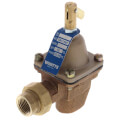
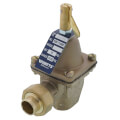
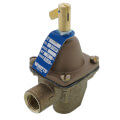
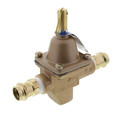
Watts 1156F Feed Water Pressure Regulators



 --%3E %3Csvg version='1.1' id='No-RB' xmlns='http://www.w3.org/2000/svg' xmlns:xlink='http://www.w3.org/1999/xlink' x='0px' y='0px' viewBox='0 0 100 100' enable-background='new 0 0 100 100' xml:space='preserve'%3E %3Cpath fill='%23CECECE' d='M79.44,0.95H20.56C9.78,0.95,0.95,9.78,0.95,20.56v58.87c0,10.79,8.82,19.61,19.61,19.61h58.87 c10.79,0,19.61-8.83,19.61-19.61V20.56C99.05,9.78,90.22,0.95,79.44,0.95z M65.38,58.24l9.38,29.58L49.69,69.78L24.5,87.82 l9.34-29.6L8.8,39.6l30.73-0.17c0,0,6.98-19.61,10-28.93c0.54,1.36,9.88,29.1,9.88,29.1H91.2L65.38,58.24z'/%3E %3C/svg%3E)
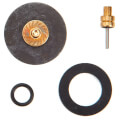

Watts 1156F feed water pressure regulators automatically reduce incoming water pressure to a preset level before it enters a hot water boiler, protecting the system from the higher street or well pressure that would otherwise stress boiler components and relief valves. Installed on the makeup water line ahead of the boiler, the regulator opens to admit fresh water whenever system pressure drops below its setting, then closes once the correct pressure is restored, so the boiler stays properly charged without an installer needing to manually refill it. This automatic feed function is especially important on residential and light commercial hot water heating systems where a slow pressure drop from a small leak or air venting can otherwise go unnoticed until the boiler runs low. Because these regulators sit directly in the makeup water path, they need periodic inspection for mineral buildup and proper valve seating just like any other boiler trim component. Replacing a failed or sticking unit keeps a hydronic system feeding correctly and helps prevent the low-water conditions that can trigger a safety shutdown.
Subcategories
- Feed Water Regulator Valves: The regulator valve itself is the core component that senses system pressure and opens or closes the makeup water path accordingly. Technicians replace this part when a boiler is losing pressure between fill cycles or, conversely, when it overfeeds and causes the relief valve to weep. Matching the replacement valve's pressure setting to the original system design keeps the boiler operating in its intended range. Most residential applications use a fixed factory setting rather than a field-adjustable one.
- Repair Kits and Internal Parts: Repair kits include the internal diaphragm, seat, and spring components that wear out well before the regulator body itself needs replacing. A sticking or leaking feed valve is often traced to a worn diaphragm or debris lodged against the seat rather than a failure of the valve body. Rebuilding with a kit is typically less expensive in labor time than a full valve swap when the body and connections are otherwise in good condition. Keeping a kit on hand speeds up a service call on an older system where the exact replacement valve may need to be sourced separately.
- Strainers and Fittings: Inline strainers installed ahead of the feed water regulator catch pipe scale and debris that would otherwise lodge in the valve seat and cause it to stick open or closed. Fittings adapt the regulator to the specific pipe size and connection type used on a given boiler's makeup water line. Cleaning or replacing a clogged strainer is often the first step in troubleshooting a feed valve that will not seat properly. Installing a strainer alongside a new regulator is common practice on older piping systems prone to scale buildup.
Buying Guide
Confirm the boiler's required fill pressure before ordering a replacement feed water regulator, since this figure depends on the height of the system above the regulator and the boiler manufacturer's specification, not a single universal setting. Installing a regulator set for the wrong pressure can leave a boiler underfed at the top of a multi-story building or overfed and prone to weeping at the relief valve.
Check the connection size and orientation against the existing makeup water piping, since Watts 1156F Feed Water Pressure Regulators and similar units come in different port configurations to match various installation layouts. Confirm whether the existing installation includes an inline strainer, and if not, consider adding one, since debris in the water supply is a common cause of a feed valve sticking open or failing to seat.
Decide between a full valve replacement and a repair kit based on the age and condition of the existing regulator body. A valve with visible corrosion, a cracked housing, or leaking connections calls for full replacement, while a unit that is otherwise sound but sticking or weeping often just needs a new diaphragm and seat. Either way, plan to isolate and drain down the makeup water line before starting the work, since these regulators sit under active system pressure.
Frequently Asked Questions
What does a feed water pressure regulator actually do on a boiler?
It automatically reduces incoming street or well water pressure to a preset level and opens to feed the boiler whenever system pressure drops below that setting. Once the correct pressure is restored, the valve closes again, keeping the boiler properly charged without manual intervention. This keeps the system from running low on water between service visits.
How do I know if my feed water regulator needs to be replaced?
Common signs include a boiler that repeatedly loses pressure between fills, a relief valve that weeps water after every fill cycle, or a regulator that no longer opens at all, leaving the boiler underfed. Visible corrosion or a cracked valve body is also a clear sign that full replacement is needed rather than a repair kit. A pressure gauge on the boiler that shows erratic readings is often the first clue something is wrong at the feed valve.
Can a feed water regulator be repaired instead of replaced?
Yes, in many cases a sticking or weeping regulator just needs a new diaphragm, seat, or spring from a repair kit rather than a full valve swap. Repair kits work well when the valve body and connections are still in good condition and the problem is limited to worn internal parts. A valve with a cracked housing or heavy corrosion should be fully replaced instead.
Why is my feed water regulator letting too much water into the boiler?
This is usually caused by debris lodged against the valve seat, preventing it from closing fully, or a worn diaphragm that no longer holds its set pressure accurately. An inline strainer installed ahead of the regulator helps prevent debris-related overfeeding. If overfeeding continues after cleaning the strainer, the internal parts likely need replacement.
Does a feed water regulator need routine maintenance?
Yes, periodic inspection for mineral buildup, proper valve seating, and strainer cleanliness helps catch a developing problem before it causes a low-water shutdown or a weeping relief valve. Systems on hard water supplies benefit from more frequent checks than those on softened water. Addressing small issues during routine boiler service usually avoids an emergency call later.
