




Filters
SORT
Product Availability –
Size –
Review Score –
 --%3E %3Csvg version='1.1' id='Fill' xmlns='http://www.w3.org/2000/svg' xmlns:xlink='http://www.w3.org/1999/xlink' x='0px' y='0px' viewBox='0 0 100 100' enable-background='new 0 0 100 100' xml:space='preserve'%3E %3Cpath fill='%23F15C02' d='M79.44,0.95H20.56C9.78,0.95,0.95,9.78,0.95,20.56v58.87c0,10.79,8.82,19.61,19.61,19.61h58.87 c10.79,0,19.61-8.83,19.61-19.61V20.56C99.05,9.78,90.22,0.95,79.44,0.95z M65.38,58.24l9.38,29.58L49.69,69.78L24.5,87.82 l9.34-29.6L8.8,39.6l30.73-0.17c0,0,6.98-19.61,10-28.93c0.54,1.36,9.88,29.1,9.88,29.1H91.2L65.38,58.24z'/%3E %3C/svg%3E)
Price Range –
Watts 909 Reduced Pressure Detector Assemblies

 --%3E %3Csvg version='1.1' id='No-RB' xmlns='http://www.w3.org/2000/svg' xmlns:xlink='http://www.w3.org/1999/xlink' x='0px' y='0px' viewBox='0 0 100 100' enable-background='new 0 0 100 100' xml:space='preserve'%3E %3Cpath fill='%23CECECE' d='M79.44,0.95H20.56C9.78,0.95,0.95,9.78,0.95,20.56v58.87c0,10.79,8.82,19.61,19.61,19.61h58.87 c10.79,0,19.61-8.83,19.61-19.61V20.56C99.05,9.78,90.22,0.95,79.44,0.95z M65.38,58.24l9.38,29.58L49.69,69.78L24.5,87.82 l9.34-29.6L8.8,39.6l30.73-0.17c0,0,6.98-19.61,10-28.93c0.54,1.36,9.88,29.1,9.88,29.1H91.2L65.38,58.24z'/%3E %3C/svg%3E)

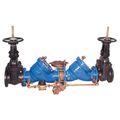
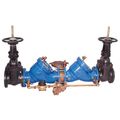

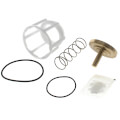
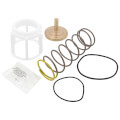

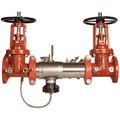
Watts 909 Reduced Pressure Detector Assemblies are backflow prevention devices built for fire protection systems where a small bypass meter needs to catch unauthorized water use without interrupting supply to the sprinkler main. The assembly combines a full-size reduced pressure zone (RPZ) backflow preventer with a parallel bypass line that houses its own smaller RPZ assembly and a meter, so any water drawn off the system for non-fire uses gets measured and flagged.
Fire marshals and water authorities specify RP-style protection on systems that connect to a potable water supply, since a reduced pressure zone assembly actively vents to atmosphere if backpressure or backsiphonage threatens to pull contaminated water backward. For contractors bidding fire protection or combined-use domestic and standpipe systems, choosing the right size and orientation of a 909 assembly up front avoids a failed inspection or a rework order once the local backflow prevention program reviews the installation.
Subcategories
- Bypass Meter Assemblies: The bypass loop routes a small, continuous portion of flow through its own meter and check assembly so the water utility can bill for or monitor incidental domestic use pulled from a fire line. Utilities that allow combined fire and domestic service on one connection typically require this bypass reading before they will approve the tap.
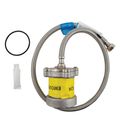
- Repair Kits and Internal Parts: Rubber kits, seat discs, and relief valve components let a contractor recertify an assembly during its annual backflow test instead of replacing the whole unit. Keeping the correct kit on the truck for the assembly's size cuts a routine inspection down from a multi-day return visit to a same-day fix.
- Test Cocks and Gauges: Certified backflow testers connect a differential pressure gauge to the assembly's test cocks to verify the check valves and relief valve are holding to code. Replacement test cocks and calibrated gauges keep that annual certification process accurate and defensible if a water authority audits the results.
- Flanged and Grooved End Connections: Larger 909 assemblies ship with flanged or grooved ends to match the fire main's piping method, letting installers bolt or groove the assembly directly into a standpipe or sprinkler riser without adapting threads. Matching the connection type to the existing main is one of the more common causes of a delayed install when it's overlooked at order time.
Buying Guide
Selecting a Watts 909 Reduced Pressure Detector Assembly starts with confirming why RP-style protection is required in the first place: local code or the water authority has classified the connection as a health hazard risk, usually because the fire system ties into a combined domestic supply or an auxiliary source like a pond or reservoir. A double check detector assembly is a lower-cost alternative where the hazard classification allows it, so verify the requirement with the authority having jurisdiction before ordering.
Sizing follows the fire system's design flow rather than the pipe diameter alone. An assembly sized too small creates unacceptable pressure loss across the device, which can undersize the available flow to the sprinkler heads during a real fire event; sizing too large adds unnecessary cost and installation footprint. Pull the hydraulic calculation from the fire protection engineer's design package before finalizing a size.
Orientation and clearance matter as much as size. Most 909 assemblies install horizontally with a minimum clearance above and to the sides for test cock access and eventual parts replacement, and the relief valve needs an air gap or drain path sized to handle a full relief discharge without flooding the mechanical room. Confirm the manufacturer's clearance table against the room layout before rough-in.
Because these assemblies sit on life-safety systems, annual testing by a certified backflow tester is standard in most jurisdictions. Specifying test cocks that match the tester's gauge kit and keeping a repair kit on hand for the exact model and size reduces how long the fire system has to stay out of service during recertification.
Finally, confirm the bypass meter's read-out format against what the water utility requires for billing. Some utilities want a specific register type or remote-read capability, and getting that wrong after installation means pulling the bypass assembly apart to swap it.
Frequently Asked Questions
When does a fire system need an RP assembly instead of a double check assembly?
Local code or the water authority makes that call based on hazard classification, typically because the fire line connects to a combined domestic supply, an auxiliary water source, or a system where chemicals could be introduced. Check with the authority having jurisdiction before specifying either type.
What does the bypass meter on a 909 assembly actually measure?
It measures any water drawn from the fire line for non-fire purposes, such as a hose bib or small domestic tap on a combined system. The reading lets the water utility bill for that incidental use separately from the main fire service.
How often does a Watts 909 assembly need to be tested?
Most jurisdictions require annual testing by a certified backflow prevention tester, though some local authorities mandate more frequent checks on higher-hazard installations. Confirm the exact interval with the local water authority since it varies by municipality.
Can a smaller assembly be used to save on installation cost?
Undersizing creates excess pressure loss across the device, which can starve the sprinkler system of the flow it needs during an actual fire event. Size strictly to the fire protection engineer's hydraulic calculation rather than the connecting pipe diameter.
What clearance does a 909 assembly need around it?
Enough space is needed on all sides for test cock access during annual certification and for pulling internal parts during a repair, plus a code-compliant air gap or drain path below the relief valve. Check the manufacturer's clearance table against the mechanical room layout before rough-in.
