




Filters
SORT
Product Availability –
Size –
Review Score –
 --%3E %3Csvg version='1.1' id='Fill' xmlns='http://www.w3.org/2000/svg' xmlns:xlink='http://www.w3.org/1999/xlink' x='0px' y='0px' viewBox='0 0 100 100' enable-background='new 0 0 100 100' xml:space='preserve'%3E %3Cpath fill='%23F15C02' d='M79.44,0.95H20.56C9.78,0.95,0.95,9.78,0.95,20.56v58.87c0,10.79,8.82,19.61,19.61,19.61h58.87 c10.79,0,19.61-8.83,19.61-19.61V20.56C99.05,9.78,90.22,0.95,79.44,0.95z M65.38,58.24l9.38,29.58L49.69,69.78L24.5,87.82 l9.34-29.6L8.8,39.6l30.73-0.17c0,0,6.98-19.61,10-28.93c0.54,1.36,9.88,29.1,9.88,29.1H91.2L65.38,58.24z'/%3E %3C/svg%3E)
Price Range –
White JG SpeedFit CTS Twist & Lock Couplers


 --%3E %3Csvg version='1.1' id='No-RB' xmlns='http://www.w3.org/2000/svg' xmlns:xlink='http://www.w3.org/1999/xlink' x='0px' y='0px' viewBox='0 0 100 100' enable-background='new 0 0 100 100' xml:space='preserve'%3E %3Cpath fill='%23CECECE' d='M79.44,0.95H20.56C9.78,0.95,0.95,9.78,0.95,20.56v58.87c0,10.79,8.82,19.61,19.61,19.61h58.87 c10.79,0,19.61-8.83,19.61-19.61V20.56C99.05,9.78,90.22,0.95,79.44,0.95z M65.38,58.24l9.38,29.58L49.69,69.78L24.5,87.82 l9.34-29.6L8.8,39.6l30.73-0.17c0,0,6.98-19.61,10-28.93c0.54,1.36,9.88,29.1,9.88,29.1H91.2L65.38,58.24z'/%3E %3C/svg%3E)


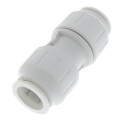
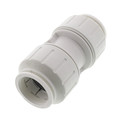


White JG SpeedFit CTS twist and lock couplers are push-to-connect style fittings sized to copper tube size, or CTS, dimensions, letting a plumber join tubing without soldering, gluing, or crimping. The twist-and-lock design adds a locking collar step beyond a standard push-fit connection, giving extra assurance the joint is fully engaged before the line is pressurized.
Contractors use these couplers on repair and retrofit jobs where a torch isn't practical, such as near existing insulation, finished walls, or occupied spaces, and where a fast, tool-free connection matters more than the lowest possible material cost. Because they're built to CTS dimensions, they mate directly with standard copper, CPVC, and PE-RT tubing without needing a separate transition fitting.
Subcategories
- Straight Couplers: Couplers that join two lengths of tubing in a straight run, the most common configuration for extending or repairing a line. They accept tubing from either side without needing the tubing to be a specific type, as long as both ends match the coupler's CTS size. These are the default choice for a simple mid-run repair.
- Reducing Couplers: Couplers that join two different tubing sizes in a single fitting, used when a line transitions from one diameter to another, such as stepping down from a main branch to a fixture supply. Using a reducing coupler avoids stacking two separate fittings to make the same size change. Confirming both tubing sizes before ordering avoids a return trip.
- Twist & Lock Repair Couplers: Couplers built specifically for repair work, with enough tolerance to slip over a slightly out-of-round or lightly scored section of tubing that a standard push-fit might not seal against reliably. The twist-and-lock collar gives a visual and tactile confirmation that the joint is fully seated. These are a common pick for emergency leak repairs where cutting out a longer section of pipe isn't practical.
Buying Guide
Confirm the tubing size and material before ordering. These couplers are built to copper tube size dimensions, so they're compatible with copper, CPVC, and PE-RT tubing of the matching diameter, but sizing needs to be exact since a push-fit connection depends on a precise outer diameter match to seal properly.
For White JG SpeedFit CTS Twist & Lock Couplers specifically, check the tubing end for damage before installation. Any deep scoring, ovaling, or old solder residue on a copper stub can prevent the internal O-ring from sealing, even though the twist-and-lock mechanism will still click into place.
Consider the application: a straight coupler works for a simple splice, but a size transition calls for a reducing coupler rather than combining two fittings, which reduces the number of joints that could eventually leak.
Always cut tubing square and deburr the end before inserting it into the coupler. A rough or angled cut is one of the most common causes of a push-fit connection failing to seal, regardless of how well the twist-and-lock collar engages.
Frequently Asked Questions
Do I need any special tools to install these couplers?
No. They're designed as a tool-free push-to-connect fitting, needing only a proper tubing cutter to square the end beforehand and a demounting tool if the connection ever needs to be taken apart.
Can I use these couplers on both copper and CPVC tubing?
Yes, as long as the tubing matches the coupler's CTS sizing. Since copper, CPVC, and PE-RT tubing all share the same copper tube size dimensions at a given nominal size, the coupler doesn't need to match the tubing material, only the diameter.
How do I know the coupler is fully connected?
The twist-and-lock collar is the tactile confirmation. After pushing the tubing in fully, twisting the locking collar into place gives both a visual cue and a mechanical lock that a standard push-fit connection alone doesn't provide.
Are these couplers reusable if I need to take the joint apart?
Most push-to-connect fittings in this style can be disassembled with a demounting tool and reused, provided the tubing end and internal O-ring aren't damaged during removal. Inspect both before reinstalling.
What's the benefit of a twist and lock coupler over a standard push-fit coupler?
The added locking collar step reduces the chance of an incompletely seated connection going unnoticed, which matters most on repair work in a space that will be closed up or insulated over once the job is finished.
