




Filters
SORT
Product Availability –
Review Score –
 --%3E %3Csvg version='1.1' id='Fill' xmlns='http://www.w3.org/2000/svg' xmlns:xlink='http://www.w3.org/1999/xlink' x='0px' y='0px' viewBox='0 0 100 100' enable-background='new 0 0 100 100' xml:space='preserve'%3E %3Cpath fill='%23F15C02' d='M79.44,0.95H20.56C9.78,0.95,0.95,9.78,0.95,20.56v58.87c0,10.79,8.82,19.61,19.61,19.61h58.87 c10.79,0,19.61-8.83,19.61-19.61V20.56C99.05,9.78,90.22,0.95,79.44,0.95z M65.38,58.24l9.38,29.58L49.69,69.78L24.5,87.82 l9.34-29.6L8.8,39.6l30.73-0.17c0,0,6.98-19.61,10-28.93c0.54,1.36,9.88,29.1,9.88,29.1H91.2L65.38,58.24z'/%3E %3C/svg%3E)
 --%3E %3Csvg version='1.1' id='With-RB' xmlns='http://www.w3.org/2000/svg' xmlns:xlink='http://www.w3.org/1999/xlink' x='0px' y='0px' viewBox='0 0 100 100' enable-background='new 0 0 100 100' xml:space='preserve'%3E %3Cpath fill='%23FBC8B4' d='M79.44,0.95H20.56C9.78,0.95,0.95,9.78,0.95,20.56v58.87c0,10.79,8.82,19.61,19.61,19.61h58.87 c10.79,0,19.61-8.83,19.61-19.61V20.56C99.05,9.78,90.22,0.95,79.44,0.95z M65.38,58.24l9.38,29.58L49.69,69.78L24.5,87.82 l9.34-29.6L8.8,39.6l30.73-0.17c0,0,6.98-19.61,10-28.93c0.54,1.36,9.88,29.1,9.88,29.1H91.2L65.38,58.24z'/%3E %3C/svg%3E)
White Rodgers Thermostat Guards & Plates


 --%3E %3Csvg version='1.1' id='No-RB' xmlns='http://www.w3.org/2000/svg' xmlns:xlink='http://www.w3.org/1999/xlink' x='0px' y='0px' viewBox='0 0 100 100' enable-background='new 0 0 100 100' xml:space='preserve'%3E %3Cpath fill='%23CECECE' d='M79.44,0.95H20.56C9.78,0.95,0.95,9.78,0.95,20.56v58.87c0,10.79,8.82,19.61,19.61,19.61h58.87 c10.79,0,19.61-8.83,19.61-19.61V20.56C99.05,9.78,90.22,0.95,79.44,0.95z M65.38,58.24l9.38,29.58L49.69,69.78L24.5,87.82 l9.34-29.6L8.8,39.6l30.73-0.17c0,0,6.98-19.61,10-28.93c0.54,1.36,9.88,29.1,9.88,29.1H91.2L65.38,58.24z'/%3E %3C/svg%3E)



 --%3E %3Csvg version='1.1' id='Half' xmlns='http://www.w3.org/2000/svg' xmlns:xlink='http://www.w3.org/1999/xlink' x='0px' y='0px' viewBox='0 0 100 100' enable-background='new 0 0 100 100' xml:space='preserve'%3E %3Cg%3E %3Cpath fill='%23F15C02' d='M30.05,70.23l3.79-12.01L8.8,39.6l30.73-0.17c0,0,6.98-19.61,10-28.93c0.54,1.36,9.88,29.1,9.88,29.1h1.58 L93.71,7.18c-3.58-3.82-8.66-6.23-14.28-6.23H20.56C9.78,0.95,0.95,9.78,0.95,20.56v58.87c0,5.41,2.22,10.32,5.79,13.88 L30.05,70.23z'/%3E %3C/g%3E %3Cpath fill='%23FBC8B4' d='M93.71,7.18L60.98,39.6H91.2L65.38,58.24l9.38,29.58L49.69,69.78L24.5,87.82l5.55-17.59L6.75,93.32 c3.55,3.54,8.44,5.73,13.82,5.73h58.87c10.79,0,19.61-8.83,19.61-19.61V20.56C99.05,15.4,97.01,10.69,93.71,7.18z'/%3E %3C/svg%3E)

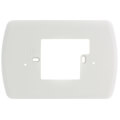
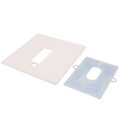
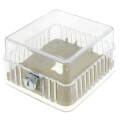
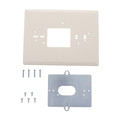
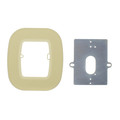
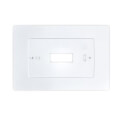

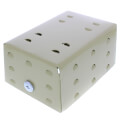
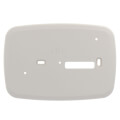
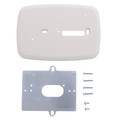
White Rodgers thermostat guards and plates are protective covers and mounting accessories designed to fit over White Rodgers thermostat models installed in commercial, institutional, and multi-tenant residential settings. A guard encloses the thermostat in a clear or vented housing that prevents unauthorized adjustment while still allowing airflow to the sensor inside, which matters in spaces like classrooms, common areas, and rental units where tenants shouldn't control the setpoint directly. Plates serve a different purpose, covering wall damage or a mismatched paint color left behind when an older thermostat is replaced with a smaller model. Guards are typically sized and shaped to match a specific thermostat body, so confirming the thermostat model before ordering a guard keeps the fit correct and the lock mechanism, when included, properly aligned. Facilities managers and HVAC contractors rely on this category to protect thermostat settings from tampering without needing a full thermostat replacement.
Subcategories
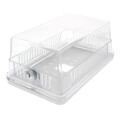
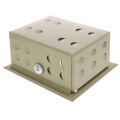
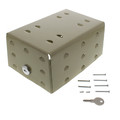
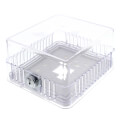
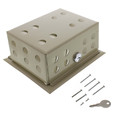
- Locking Thermostat Guards: Locking guards enclose a thermostat in a clear housing secured with a key or combination lock, preventing tenants or building occupants from changing the setpoint. Vent openings in the housing allow the thermostat's internal sensor to read room temperature accurately despite the enclosure. Facilities in schools, shared offices, and rental housing commonly specify locking guards to control energy costs.
- Tamper-Resistant Covers: Tamper-resistant covers offer a lighter degree of protection than a locking guard, typically limiting access to the thermostat's buttons or dial without a full locking mechanism. They suit spaces where accidental adjustment is the main concern rather than deliberate tampering. Installation is usually a simple screw-on fit around the existing thermostat body.
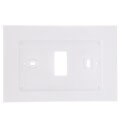
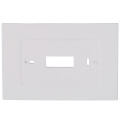
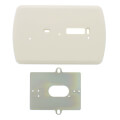
- Wall Plates & Trim Rings: Wall plates and trim rings cover the wall area exposed when a new, smaller thermostat replaces an older model, hiding paint mismatches or old mounting holes. Trim rings fit around the thermostat body itself, while larger wall plates mount flush against the wall surface beneath it. Matching the plate finish to the thermostat's color keeps the installation looking factory-finished.
Buying Guide
Fitting White Rodgers thermostat guards and plates correctly starts with identifying the exact thermostat model installed, since guards are molded to match a specific body shape and mounting pattern rather than fitting universally across product lines. A guard sized for one thermostat body won't seat flush over a different model, even within the same product family, so checking the thermostat's model number before ordering saves a return trip.
Locking mechanisms vary between guard models, from a simple key lock to a combination style, and the choice often comes down to how many people need access and how often that access changes. A property with regular staff turnover benefits from a combination lock that can be reset without replacing hardware, while a single-key lock suits a smaller, more stable maintenance team.
Ventilation design inside the guard matters for thermostat accuracy. A guard with too little airflow around the sensor can cause the thermostat to read the temperature inside the enclosure rather than the room, leading to a system that short-cycles or never reaches setpoint. Confirming the guard's vent design suits the installed thermostat model avoids introducing a comfort complaint that wasn't there before the guard went on.
Wall plates and trim rings are more straightforward, with finish and size being the main considerations for a clean, finished look after a thermostat swap.
Frequently Asked Questions
Do thermostat guards fit any White Rodgers thermostat model?
No. Guards are molded to match a specific thermostat body and mounting pattern, so a guard sized for one model won't seat flush over a different one. Confirming the exact thermostat model before ordering a guard avoids a fit problem.
Can a locking guard affect thermostat accuracy?
It can, if the guard restricts airflow around the thermostat's internal sensor. A guard with adequate ventilation lets the sensor read actual room temperature, while poor airflow inside the enclosure can cause short-cycling or a system that never reaches setpoint.
What's the difference between a locking guard and a tamper-resistant cover?
A locking guard secures with a key or combination lock and fully restricts access to the thermostat, while a tamper-resistant cover offers lighter protection, usually limiting access to buttons or a dial without a full lock. The right choice depends on whether deliberate tampering or accidental adjustment is the bigger concern.
When would a wall plate be used instead of a guard?
A wall plate or trim ring covers wall damage or a paint mismatch left behind when a new, smaller thermostat replaces an older model. Wall plates don't restrict thermostat access the way a guard does, so they suit jobs where appearance, not tampering, is the concern.
Can a combination lock guard be reset without replacing the hardware?
Many combination lock guards allow the code to be reset on-site, which suits properties with regular staff turnover. Checking the specific guard model's reset process before installation confirms whether a code change requires special tools.
