




Filters
SORT
Product Availability –
Application –
Programmability –
Mount –
Options –
Review Score –
 --%3E %3Csvg version='1.1' id='Fill' xmlns='http://www.w3.org/2000/svg' xmlns:xlink='http://www.w3.org/1999/xlink' x='0px' y='0px' viewBox='0 0 100 100' enable-background='new 0 0 100 100' xml:space='preserve'%3E %3Cpath fill='%23F15C02' d='M79.44,0.95H20.56C9.78,0.95,0.95,9.78,0.95,20.56v58.87c0,10.79,8.82,19.61,19.61,19.61h58.87 c10.79,0,19.61-8.83,19.61-19.61V20.56C99.05,9.78,90.22,0.95,79.44,0.95z M65.38,58.24l9.38,29.58L49.69,69.78L24.5,87.82 l9.34-29.6L8.8,39.6l30.73-0.17c0,0,6.98-19.61,10-28.93c0.54,1.36,9.88,29.1,9.88,29.1H91.2L65.38,58.24z'/%3E %3C/svg%3E)
 --%3E %3Csvg version='1.1' id='With-RB' xmlns='http://www.w3.org/2000/svg' xmlns:xlink='http://www.w3.org/1999/xlink' x='0px' y='0px' viewBox='0 0 100 100' enable-background='new 0 0 100 100' xml:space='preserve'%3E %3Cpath fill='%23FBC8B4' d='M79.44,0.95H20.56C9.78,0.95,0.95,9.78,0.95,20.56v58.87c0,10.79,8.82,19.61,19.61,19.61h58.87 c10.79,0,19.61-8.83,19.61-19.61V20.56C99.05,9.78,90.22,0.95,79.44,0.95z M65.38,58.24l9.38,29.58L49.69,69.78L24.5,87.82 l9.34-29.6L8.8,39.6l30.73-0.17c0,0,6.98-19.61,10-28.93c0.54,1.36,9.88,29.1,9.88,29.1H91.2L65.38,58.24z'/%3E %3C/svg%3E)
Price Range –
Uponor (Wirsbo) Radiant Thermostats

 --%3E %3Csvg version='1.1' id='Half' xmlns='http://www.w3.org/2000/svg' xmlns:xlink='http://www.w3.org/1999/xlink' x='0px' y='0px' viewBox='0 0 100 100' enable-background='new 0 0 100 100' xml:space='preserve'%3E %3Cg%3E %3Cpath fill='%23F15C02' d='M30.05,70.23l3.79-12.01L8.8,39.6l30.73-0.17c0,0,6.98-19.61,10-28.93c0.54,1.36,9.88,29.1,9.88,29.1h1.58 L93.71,7.18c-3.58-3.82-8.66-6.23-14.28-6.23H20.56C9.78,0.95,0.95,9.78,0.95,20.56v58.87c0,5.41,2.22,10.32,5.79,13.88 L30.05,70.23z'/%3E %3C/g%3E %3Cpath fill='%23FBC8B4' d='M93.71,7.18L60.98,39.6H91.2L65.38,58.24l9.38,29.58L49.69,69.78L24.5,87.82l5.55-17.59L6.75,93.32 c3.55,3.54,8.44,5.73,13.82,5.73h58.87c10.79,0,19.61-8.83,19.61-19.61V20.56C99.05,15.4,97.01,10.69,93.71,7.18z'/%3E %3C/svg%3E)

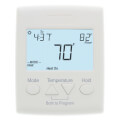


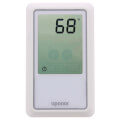
Uponor (Wirsbo) radiant thermostats are the temperature controls built for hydronic radiant floor heating systems, reading either floor or room temperature and signaling a zone valve, actuator, or manifold pump station to call for heat. Uponor originally marketed its radiant heating line under the Wirsbo name before consolidating both product lines under the Uponor brand, so replacement thermostats for older Wirsbo-labeled installations are still sold and cataloged together with current Uponor stock.
Matching the thermostat to the existing zone control setup matters more with radiant systems than with forced-air controls, since a mismatched voltage or sensor type can leave a zone unable to call for heat at all. Contractors servicing an established radiant system generally start by confirming what the original installation used before ordering a replacement or adding a zone.
Subcategories
- Line Voltage Radiant Thermostats: Line voltage models wire directly into the zone circuit without a separate low-voltage transformer, which simplifies wiring on systems where a transformer was never installed. They're common on older radiant retrofits and single-zone setups.
- Low Voltage Radiant Thermostats: Low voltage thermostats pair with a transformer and are the standard choice on multi-zone manifold systems, since they can share a common power source across several zone controls. They typically offer more programming options than line voltage models.
- Floor Sensor Thermostats: Floor sensor models place the sensing element in the slab or subfloor rather than reading room air temperature, which gives more direct control over surface temperature on systems where floor comfort or covering limits matter.
- Programmable Radiant Thermostats: Programmable thermostats allow scheduled setback and recovery periods, which suits radiant systems well given their slower response time compared to forced-air heat.
Buying Guide
The starting point for any radiant thermostat purchase is confirming line voltage versus low voltage compatibility with the existing zone valve, actuator, or pump relay, since the two aren't interchangeable without adding or removing a transformer. Checking the original system documentation or the wiring at the existing thermostat location avoids an order that won't connect to the current setup.
Sensor placement is the next major decision. A thermostat that reads room air temperature works well for general comfort control, while a floor sensor gives tighter control over slab temperature on systems where the finished floor covering has a lower maximum temperature rating, such as certain wood or laminate products.
Programmable models add scheduling flexibility but require a bit more setup time during installation, which can matter on a large multi-zone job with several thermostats to configure. Non-programmable models are simpler to wire and set, which some contractors prefer for straightforward single-zone replacements.
Replacing a failed thermostat on an existing Wirsbo-branded system generally works fine with current Uponor stock, since the underlying wiring and zone control logic carried over when the brands consolidated. Confirming the number of wires at the existing thermostat location before ordering still helps avoid a mismatch.
Frequently Asked Questions
Can a current Uponor thermostat replace an older Wirsbo-labeled thermostat?
In most cases yes, since Uponor consolidated the Wirsbo radiant heating line under its own brand rather than replacing the underlying system design. Checking the existing wiring configuration before ordering is still worth doing.
What's the difference between line voltage and low voltage radiant thermostats?
Line voltage thermostats wire directly into the zone circuit without a transformer, while low voltage models require one and are more common on multi-zone manifold systems.
Should a radiant thermostat use a floor sensor or a room air sensor?
A floor sensor gives more direct control over slab temperature, which matters most when the finished flooring has a maximum temperature limit. Room air sensors work well for general comfort control on most installations.
Are programmable radiant thermostats worth the extra setup time?
Programmable models suit radiant heat well because of its slower response time, letting a system begin a temperature recovery before it's needed. Non-programmable models remain a simpler option for straightforward single-zone replacements.
How many wires does a typical radiant zone thermostat use?
Wire count varies by whether the thermostat is line voltage or low voltage and by what it's controlling, so checking the wiring at the existing thermostat location is the most reliable way to confirm compatibility before ordering.
