




Yellow Jacket Recovery Machines

 --%3E %3Csvg version='1.1' id='No-RB' xmlns='http://www.w3.org/2000/svg' xmlns:xlink='http://www.w3.org/1999/xlink' x='0px' y='0px' viewBox='0 0 100 100' enable-background='new 0 0 100 100' xml:space='preserve'%3E %3Cpath fill='%23CECECE' d='M79.44,0.95H20.56C9.78,0.95,0.95,9.78,0.95,20.56v58.87c0,10.79,8.82,19.61,19.61,19.61h58.87 c10.79,0,19.61-8.83,19.61-19.61V20.56C99.05,9.78,90.22,0.95,79.44,0.95z M65.38,58.24l9.38,29.58L49.69,69.78L24.5,87.82 l9.34-29.6L8.8,39.6l30.73-0.17c0,0,6.98-19.61,10-28.93c0.54,1.36,9.88,29.1,9.88,29.1H91.2L65.38,58.24z'/%3E %3C/svg%3E)

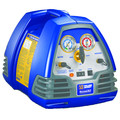
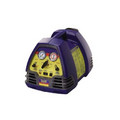

Yellow Jacket recovery machines pull refrigerant out of a system and into a recovery cylinder so a technician can service, repair, or decommission equipment without venting refrigerant to the atmosphere. Each machine uses a compressor to draw vapor or liquid refrigerant from the system, condense it, and push it into a connected recovery tank, a process required on most refrigerant types under current handling regulations. Recovery speed depends on the machine's compressor design, with twin-cylinder models generally moving refrigerant faster than single-cylinder units on larger commercial systems. Technicians choose a recovery machine based on the range of refrigerants it's rated for and whether the job involves liquid, vapor, or push-pull recovery methods. Because recovery time adds directly to a service call's labor cost, matching machine capacity to the typical system size on a technician's route keeps jobs moving without carrying oversized equipment for routine residential work.
Subcategories
- Single-Cylinder Recovery Machines: Single-cylinder recovery machines handle the residential and light commercial systems most technicians see on a daily route, offering a lighter, more portable unit for truck stock. A single compressor cylinder pulls refrigerant vapor or liquid into the recovery tank at a pace suited to smaller charge sizes typical of split systems and packaged units. Because these machines weigh less than twin-cylinder models, they're easier to carry into tight mechanical rooms or up to rooftop units.
- Twin-Cylinder Recovery Machines: Twin-cylinder recovery machines use two compressor cylinders working in parallel to pull refrigerant faster, cutting recovery time on the larger charge sizes found in commercial chillers and rooftop package units. Faster recovery matters most on service calls where billable hours are tied directly to how long the system sits offline. Technicians running a commercial-heavy route often keep one of these on the truck alongside a lighter single-cylinder unit for smaller jobs.
- Oil-Less Recovery Machines: Oil-less recovery machines are built for contaminated or burnout systems where refrigerant oil could carry acid or debris into the machine's internal components. Because there's no crankcase oil to change or contaminate, these units cut down on maintenance between jobs involving compressor burnouts. Technicians working failure diagnostics or system cleanups after a compressor burnout typically reach for an oil-less model over a standard recovery machine.
- Recovery Machine Accessories: Replacement hoses, filter driers, and manifold gauges keep a recovery machine running at its rated capacity instead of losing performance to a clogged filter or a worn hose fitting. Filter driers in particular need periodic replacement since a saturated filter slows recovery and can let moisture reach the compressor. Keeping spare hoses and fittings on hand also prevents a cross-threaded connection from ending a job early.
Buying Guide
Match the recovery machine to the refrigerant types serviced most often on a technician's route, since not every machine is rated for every refrigerant blend, particularly newer low-GWP options. Checking the machine's rated refrigerant list against the systems typically encountered avoids buying a unit that can't handle a job that shows up mid-week.
Consider recovery speed against the size of systems being serviced. A single-cylinder machine keeps up fine with residential split systems and small packaged units, but a twin-cylinder Yellow Jacket recovery machine cuts meaningful time off larger commercial jobs where billable hours are tied to how long a system sits offline for service.
For any system suspected of a compressor burnout, an oil-less recovery machine avoids introducing acid-contaminated oil into the machine's internal parts, which extends the life of the recovery unit itself. Standard oil-lubricated machines work fine for routine service work where contamination isn't a concern.
Factor in portability if the route involves rooftop units or tight mechanical rooms, since a lighter single-cylinder unit is easier to carry up a ladder than a larger twin-cylinder model. Rounding out the setup with spare hoses, filter driers, and gauge accessories keeps a machine at full recovery speed instead of losing throughput to a clogged filter mid-job.
Frequently Asked Questions
What's the difference between single-cylinder and twin-cylinder recovery machines?
A single-cylinder machine uses one compressor cylinder and suits residential and light commercial systems with smaller refrigerant charges. A twin-cylinder machine runs two cylinders in parallel, pulling refrigerant faster on the larger charge sizes typical of commercial chillers and rooftop units. The trade-off is that twin-cylinder units are heavier and less convenient to carry into tight spaces.
When should an oil-less recovery machine be used instead of a standard one?
Oil-less models are built for systems with a suspected compressor burnout, where contaminated refrigerant oil could carry acid or debris into a standard machine's internal parts. Because there's no crankcase oil to change, they also cut down on maintenance between jobs involving contaminated refrigerant. For routine service calls without contamination concerns, a standard oil-lubricated machine works fine.
Do all recovery machines handle every refrigerant type?
No. Each recovery machine has a rated list of refrigerants it can safely handle, and newer low-GWP blends aren't always covered by older machines. Checking the machine's rated refrigerant list against the systems serviced on a given route avoids showing up to a job with the wrong equipment.
What accessories keep a recovery machine running at full speed?
Filter driers need periodic replacement since a saturated filter slows recovery and risks letting moisture reach the compressor. Spare hoses and fittings prevent a worn connection from cutting a job short, and keeping a couple of each in truck stock avoids a return trip for a low-cost part.
How much does system size affect recovery time?
Larger commercial systems carry bigger refrigerant charges, which take proportionally longer to recover regardless of machine type. A twin-cylinder machine narrows that gap by pulling refrigerant faster than a single-cylinder unit, which is why technicians working commercial-heavy routes often keep one in addition to a lighter residential machine.
