




Filters
SORT
Product Availability –
Pressure Set Point –
Review Score –
 --%3E %3Csvg version='1.1' id='Fill' xmlns='http://www.w3.org/2000/svg' xmlns:xlink='http://www.w3.org/1999/xlink' x='0px' y='0px' viewBox='0 0 100 100' enable-background='new 0 0 100 100' xml:space='preserve'%3E %3Cpath fill='%23F15C02' d='M79.44,0.95H20.56C9.78,0.95,0.95,9.78,0.95,20.56v58.87c0,10.79,8.82,19.61,19.61,19.61h58.87 c10.79,0,19.61-8.83,19.61-19.61V20.56C99.05,9.78,90.22,0.95,79.44,0.95z M65.38,58.24l9.38,29.58L49.69,69.78L24.5,87.82 l9.34-29.6L8.8,39.6l30.73-0.17c0,0,6.98-19.61,10-28.93c0.54,1.36,9.88,29.1,9.88,29.1H91.2L65.38,58.24z'/%3E %3C/svg%3E)
Price Range –
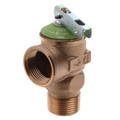
Zurn-Wilkins P1000A Relief Valve




 --%3E %3Csvg version='1.1' id='No-RB' xmlns='http://www.w3.org/2000/svg' xmlns:xlink='http://www.w3.org/1999/xlink' x='0px' y='0px' viewBox='0 0 100 100' enable-background='new 0 0 100 100' xml:space='preserve'%3E %3Cpath fill='%23CECECE' d='M79.44,0.95H20.56C9.78,0.95,0.95,9.78,0.95,20.56v58.87c0,10.79,8.82,19.61,19.61,19.61h58.87 c10.79,0,19.61-8.83,19.61-19.61V20.56C99.05,9.78,90.22,0.95,79.44,0.95z M65.38,58.24l9.38,29.58L49.69,69.78L24.5,87.82 l9.34-29.6L8.8,39.6l30.73-0.17c0,0,6.98-19.61,10-28.93c0.54,1.36,9.88,29.1,9.88,29.1H91.2L65.38,58.24z'/%3E %3C/svg%3E)


Zurn-Wilkins P1000A Relief Valve products are pressure relief valves designed to protect plumbing and backflow prevention equipment from damage caused by excess pressure buildup. When pressure in a system rises above the valve's set point, the relief valve opens to release the excess pressure, then reseats once pressure returns to a safe range, guarding downstream piping, tanks, and fixtures from strain or failure.
Relief valves in this category are commonly paired with backflow preventers and closed plumbing systems, where thermal expansion or supply pressure fluctuations can otherwise push pressure beyond what the connected piping and fixtures are rated to handle.
Subcategories
- Replacement Relief Valves: A replacement relief valve is installed when an existing unit fails to reseat properly or shows signs of continuous weeping, which typically indicates internal wear and the need for a full valve replacement rather than a component repair.
- Relief Valve Repair Kits: Repair kits contain the internal wear components of the relief valve, such as seats and springs, allowing a technician to service a valve in place instead of replacing the entire assembly when only the internal parts have worn out.
Buying Guide
Confirm the relief valve's pressure setting matches the requirements of the system it's protecting before installation, since a setting that's too high won't relieve pressure soon enough to prevent stress on downstream components, while one set too low can cause nuisance discharge during normal operating conditions.
Check that the connection size on the Zurn-Wilkins P1000A Relief Valve matches the piping or backflow assembly it will be installed on, since a mismatched connection size will require additional fittings or an entirely different valve.
Inspect an existing relief valve for continuous dripping or weeping before assuming it needs full replacement, since this symptom sometimes points to a worn internal seat that a repair kit can resolve without replacing the whole valve.
Route the discharge from the relief valve to an appropriate drain per local code requirements, since the valve is designed to release water or system fluid when it opens and that discharge needs a clear path away from the equipment.
Frequently Asked Questions
What triggers a relief valve to open?
The relief valve opens when system pressure rises above its set point, releasing the excess pressure to protect downstream piping and equipment, then it reseats once pressure drops back into a safe range.
Why is my relief valve dripping constantly?
Continuous dripping usually indicates a worn internal seat rather than an actual overpressure event, and in many cases a repair kit can resolve the issue without replacing the entire valve.
Can I repair a relief valve instead of replacing it?
If the valve body itself is in good condition and the issue is limited to internal wear components, a repair kit can often restore proper operation without a full valve replacement.
Where should the relief valve discharge be routed?
Discharge should be routed to an appropriate drain in accordance with local plumbing code, since the valve releases water or system fluid when it opens.
What happens if a relief valve's pressure setting doesn't match the system?
A setting that's too high can allow pressure to build beyond what downstream components are rated for, while a setting that's too low can cause the valve to open during normal operating conditions, so confirming the correct setting for the application is important before installation.
