




'/%3E%3C/svg%3E)
 --%3E %3Csvg version='1.1' id='Fill' xmlns='http://www.w3.org/2000/svg' xmlns:xlink='http://www.w3.org/1999/xlink' x='0px' y='0px' viewBox='0 0 100 100' enable-background='new 0 0 100 100' xml:space='preserve'%3E %3Cpath fill='%23F15C02' d='M79.44,0.95H20.56C9.78,0.95,0.95,9.78,0.95,20.56v58.87c0,10.79,8.82,19.61,19.61,19.61h58.87 c10.79,0,19.61-8.83,19.61-19.61V20.56C99.05,9.78,90.22,0.95,79.44,0.95z M65.38,58.24l9.38,29.58L49.69,69.78L24.5,87.82 l9.34-29.6L8.8,39.6l30.73-0.17c0,0,6.98-19.61,10-28.93c0.54,1.36,9.88,29.1,9.88,29.1H91.2L65.38,58.24z'/%3E %3C/svg%3E)
' fill='%23F15C02' d='M49 0C21.938 0 0 21.938 0 49s21.938 49 49 49 49-21.938 49-49S76.062 0 49 0m0 82.709a7.54 7.54 0 1 1 0-15.08 7.54 7.54 0 0 1 0 15.08m7.54-28.412a7.541 7.541 0 0 1-15.08 0V22.831a7.54 7.54 0 0 1 15.08 0v31.466z'/%3E%3C/svg%3E)
MANUALS (2)
 --%3E %3Csvg version='1.1' id='No-RB' xmlns='http://www.w3.org/2000/svg' xmlns:xlink='http://www.w3.org/1999/xlink' x='0px' y='0px' viewBox='0 0 100 100' enable-background='new 0 0 100 100' xml:space='preserve'%3E %3Cpath fill='%23CECECE' d='M79.44,0.95H20.56C9.78,0.95,0.95,9.78,0.95,20.56v58.87c0,10.79,8.82,19.61,19.61,19.61h58.87 c10.79,0,19.61-8.83,19.61-19.61V20.56C99.05,9.78,90.22,0.95,79.44,0.95z M65.38,58.24l9.38,29.58L49.69,69.78L24.5,87.82 l9.34-29.6L8.8,39.6l30.73-0.17c0,0,6.98-19.61,10-28.93c0.54,1.36,9.88,29.1,9.88,29.1H91.2L65.38,58.24z'/%3E %3C/svg%3E)

Product Highlights


Description
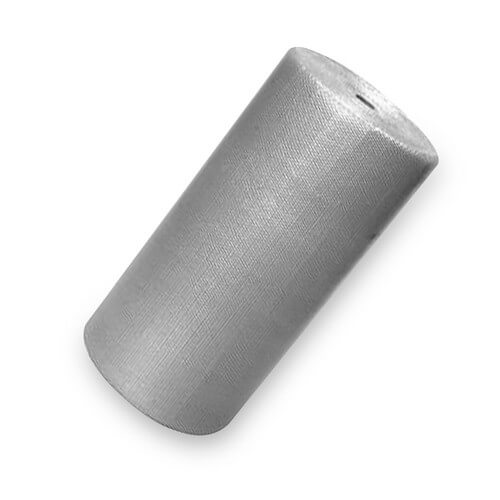
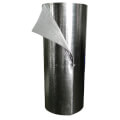
Mighty Foil Ultra Slab - a single layer of Radiant Barrier aluminum Foil sandwiched between two layers of ultra strong Polyethylene bubbles.
Under Concrete Insulation for Radiant Heating Applications Insulation for Outside Foundation Walls Under Carpet
Advantages Concrete Insulation Creates an ideal under concrete insulation Is an excellent Vapor and Radon Barrier Easy to install Reflects radiant energy in the desired direction Not affected by moisture or humidity Does not promote the growth of Fungus, Bacteria or Rodents
R-value: 3.8
Specs
| Length (Feet): | 125' |
|---|---|
| Width: | 4 ft. |
| Thickness: | 3/8" |
| Application: | Heating Radiant Heat |
| R-Value: | 3.8 |
| Material: | Polyethylene Aluminum |


Questions?
Product Reviews
Radiant heat slab insulation

Product Q&A
9 QuestionsQ: I am planning on installing hydronic radiant heat in my 1st floor and 2nd floor above the sub-floor. I would like to use the concrete barrier foil to reflect the heat to above the tubing. I plan to install the foil and on top of the foil to install the galvanized wire mesh and secure the pex tubing to the wire mesh. This will follow with 1 1/2" of mortar mix. Is this an acceptable method?
Asked by Ash 14 years ago
Add your answer
Verified Reply- PexSupply StaffThis method is fine as long as the structure can support the weight of the new slab. Thicker insulation in the below-floor joists may do a better job of limiting downward heat loss than this foil, however.
this will work, but why all the weight of motar? is it going to be all tile? If not consider using the track system, you will not need the barrier as it is built into the tracks and is only a half inch thick total.
Not sure how sturdy of a floor your looking for, or how much area your talking about, but the 1 1/2" mortar mix sounds like a lot of work, and a huge mess if it doesn't set up right. aluminum panels are available that attach to the underside of your floors that hold your tubing, and spreads the heat throughout aluminum. But of coarse the undersides of your floor would need to be exposed to apply. So I would use hydronic where floor undersides are exposed and the electric underfloor heating mesh when working above the subfloor. Sent from Samsung mobile
Q: On my concrete foundation ,what is the process My understanding is first we poor concrete 6 inches wait two or three days Then we should add concrete foil barreir,then on the top of it we should add 1/2 inch pex coil Then poor concrete again is this correct ,please help Thanks
Asked by george 15 years ago
Add your answer
Yes, you are correct. I would recommend using a metal mesh in the concrete (placed below the pex but above the insulation) and using something like Schluter Ditra to isolate your tile from the 2" heated slab. I had some travertine (a soft material) crack when I heated up the floor and caused it to expand. The Ditra should provide enough isolation to prevent that from happening. Also, I would space the pex tubing about 6-8 inches apart instead of the 12 inches that's often recommended, as I can feel a cold temperature in between the 12 inch runs. Pex Supply sells a tubing spacer that might be useful (it's a gray plastic u-channel with u-shaped openings in the sidewalls). Finally, be sure to run the pex through a 90 degree conduit where it enters the concrete so you don't get a crimp at that point (assuming a 90 degree bend there, as is common).
That will work, but you need two inches of concrete with Fibermesh or similar in the mix over the pipes to avoid cracks. That is a total of eight inches of concrete which is probably way more than you need. Another approach is to lay the foil barrier on top of compacted gravel or a thin layer of sand. Then lay down 6x6 welded wire mesh over the barrier foil. Use flat pieces as the rolls are next to impossible to get laid flat. Use plastic zip ties to attach the Pex to the mesh. One nice thing about the mesh is it gives you a grid for easy spacing of the loops. Pressurize the Pex and leave a gauge on it overnight to confirm no leaks before you pour. Leave the pressure on for the pour. If the pipe gets cut with a shovel or something it will be very obvious and easy to fix before the mud sets. Put little Dobbies or chairs under the mesh before you pour to lift the pipes up to the mid point of the slab. Depending on your loads you may only need four inches of concrete. Check with an engineer or someone with experience to confirm. A residential floor with good compacted sub grade can be four inches. If it is a garage with heavy point loads from commercial trucks, jacks or equipment like lathes or presses then six inches is a more appropriate thickness. If you are putting load bearing walls on the slab then you need an engineer to look at it. In that case a four inch slab with grade beams under the loads is more likely to be the proper approach. The main difference between you proposed topping slab and using the structural slab for heat is the thermal mass. A two inch thick topping slab with a thermal break below it will change temperature a lot faster than a four or six inch thick slab. If you want steady temp 24/7 then a thick slab is ideal. If you want faster response and have a cold room warm up quicker go with the two inch topping slab. But quick is only relative to a thick slab. It will still take a couple or three hours for a two inch slab to get up to temp from a cold start. Choose an appropriate thermostat that can handle the large thermal mass and anticipate. Otherwise you can massively overshoot and have a room that is too hot and hard to cool down. This is also the reason that controlling the circulating water temp based on outdoor air temp is a good idea with a high thermal mass radiant system. Good luck. A warm floor is a wonderful way to heat I'd you do it right. Sent from my iPhone
I don't know if 6" is code in your area but that's excessive. Lay down your foil with 16" to 24" of dirt on top of the foil. Then do a 4" concrete pad.. It should look: 4. 4" concrete 3. 16" to 24" of dirt 2. Foil 1. Mother earth. GM/iPhone
Q: I built a 14ft.x 20ft. Conservatory 15 years ago. I was originally going to heat it with a cast iron hot water radiator. I poured a 4" concrete slab on bedrock floor, which I intend to finish with hex tiles. I have 1 3/4" from the top of the concrete slab to join the floor in the rest of the house. I would like to now use pex in floor radiant. Is there a reflective foil that my be glued to the concrete floor, upon which, the pex may be installed with 1 1/2" of new concrete and then tiled? How much heat would I lose if don't put any type of insulation or reflective barrier under the pex tubing? I have concerns about this product compressing and I really want something thinner. Thank you
Asked by Grant 15 years ago
Add your answer
Verified Reply- PexSupply StaffThe fact that you have an existing slab makes insulation less of a necessity. The existing slab will hold much of the heat. We still recommend putting some kind of barrier down.
Q: In your opinion is any other form of insulation needed in a slab installation in western PA other than say 2" of perimeter insulation.
Asked by agedman 15 years ago
Add your answer
Verified Reply- PexSupply StaffIt is always a good idea to insulate below the tubing throughout the slab. Heat can be lost not only through the perimeter of the house, but also straight down.
In my opinion no other insulation is required, however you really need to check with your local building department to see what the local code requirements are.
Q: can this be used on top of #2 stone then wire mesh, then wire tie pex 1/2" and 4"concrete for a garage floor?
Asked by garageheat 15 years ago
Add your answer
Verified Reply- PexSupply StaffYes, it can.
There is no reason you couldn't use Concrete Barrier Foil as you described, however you need to check with your local building department to see if this meets local code requirements.
Q: I also would like to use this product on top of a wood subfloor then pour concrete on top. Questions: what's the minimum thickness of the concrete and how deep in the concrete should the pex tubing be?
Asked by 15 years ago
Add your answer
Verified Reply- PexSupply StaffYou would need to have a minimum of 3/4" of concrete over the PEX.
Q: Can the barrier be punctured to secure the pex tubing?
Asked by 15 years ago
Add your answer
Verified Reply- PexSupply StaffYes, but the R-value of the foil will decrease.
Q: The plumbers used bubble insulation in the basement of our house should we install fiberglass insullation also
Asked by Lary 15 years ago
Add your answer
Verified Reply- PexSupply StaffAdding more insulation would not hurt your system.
Q: I would like to use this foil product on a wood floor and place my pex tubing on top of this foil with a galvinized wire on top of the pex tube and then pour 2 inches total of concrete on these products for a finish floor. Do you recommend this procedure
Asked by 16 years ago
Add your answer
Verified Reply- PexSupply StaffThat procedure should work just fine.