




Filters
SORT
Product Availability –
Category –
Product Type –
Brand –
Reset Type –
Used With –
Review Score –
 --%3E %3Csvg version='1.1' id='Fill' xmlns='http://www.w3.org/2000/svg' xmlns:xlink='http://www.w3.org/1999/xlink' x='0px' y='0px' viewBox='0 0 100 100' enable-background='new 0 0 100 100' xml:space='preserve'%3E %3Cpath fill='%23F15C02' d='M79.44,0.95H20.56C9.78,0.95,0.95,9.78,0.95,20.56v58.87c0,10.79,8.82,19.61,19.61,19.61h58.87 c10.79,0,19.61-8.83,19.61-19.61V20.56C99.05,9.78,90.22,0.95,79.44,0.95z M65.38,58.24l9.38,29.58L49.69,69.78L24.5,87.82 l9.34-29.6L8.8,39.6l30.73-0.17c0,0,6.98-19.61,10-28.93c0.54,1.36,9.88,29.1,9.88,29.1H91.2L65.38,58.24z'/%3E %3C/svg%3E)
 --%3E %3Csvg version='1.1' id='With-RB' xmlns='http://www.w3.org/2000/svg' xmlns:xlink='http://www.w3.org/1999/xlink' x='0px' y='0px' viewBox='0 0 100 100' enable-background='new 0 0 100 100' xml:space='preserve'%3E %3Cpath fill='%23FBC8B4' d='M79.44,0.95H20.56C9.78,0.95,0.95,9.78,0.95,20.56v58.87c0,10.79,8.82,19.61,19.61,19.61h58.87 c10.79,0,19.61-8.83,19.61-19.61V20.56C99.05,9.78,90.22,0.95,79.44,0.95z M65.38,58.24l9.38,29.58L49.69,69.78L24.5,87.82 l9.34-29.6L8.8,39.6l30.73-0.17c0,0,6.98-19.61,10-28.93c0.54,1.36,9.88,29.1,9.88,29.1H91.2L65.38,58.24z'/%3E %3C/svg%3E)
Price Range –
Low Water Cutoffs

 --%3E %3Csvg version='1.1' id='Half' xmlns='http://www.w3.org/2000/svg' xmlns:xlink='http://www.w3.org/1999/xlink' x='0px' y='0px' viewBox='0 0 100 100' enable-background='new 0 0 100 100' xml:space='preserve'%3E %3Cg%3E %3Cpath fill='%23F15C02' d='M30.05,70.23l3.79-12.01L8.8,39.6l30.73-0.17c0,0,6.98-19.61,10-28.93c0.54,1.36,9.88,29.1,9.88,29.1h1.58 L93.71,7.18c-3.58-3.82-8.66-6.23-14.28-6.23H20.56C9.78,0.95,0.95,9.78,0.95,20.56v58.87c0,5.41,2.22,10.32,5.79,13.88 L30.05,70.23z'/%3E %3C/g%3E %3Cpath fill='%23FBC8B4' d='M93.71,7.18L60.98,39.6H91.2L65.38,58.24l9.38,29.58L49.69,69.78L24.5,87.82l5.55-17.59L6.75,93.32 c3.55,3.54,8.44,5.73,13.82,5.73h58.87c10.79,0,19.61-8.83,19.61-19.61V20.56C99.05,15.4,97.01,10.69,93.71,7.18z'/%3E %3C/svg%3E)



 --%3E %3Csvg version='1.1' id='No-RB' xmlns='http://www.w3.org/2000/svg' xmlns:xlink='http://www.w3.org/1999/xlink' x='0px' y='0px' viewBox='0 0 100 100' enable-background='new 0 0 100 100' xml:space='preserve'%3E %3Cpath fill='%23CECECE' d='M79.44,0.95H20.56C9.78,0.95,0.95,9.78,0.95,20.56v58.87c0,10.79,8.82,19.61,19.61,19.61h58.87 c10.79,0,19.61-8.83,19.61-19.61V20.56C99.05,9.78,90.22,0.95,79.44,0.95z M65.38,58.24l9.38,29.58L49.69,69.78L24.5,87.82 l9.34-29.6L8.8,39.6l30.73-0.17c0,0,6.98-19.61,10-28.93c0.54,1.36,9.88,29.1,9.88,29.1H91.2L65.38,58.24z'/%3E %3C/svg%3E)






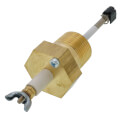


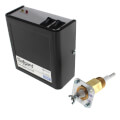


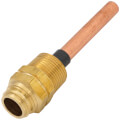
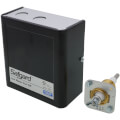

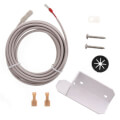
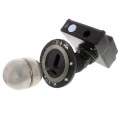
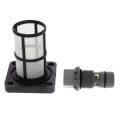


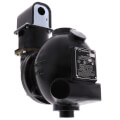


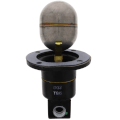
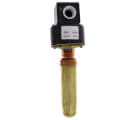
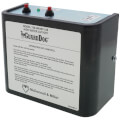
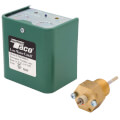

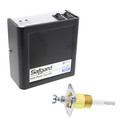
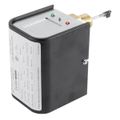
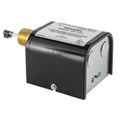
Low water cutoffs are safety controls installed on steam and hot water boilers that shut off the burner if water level in the boiler drops below a safe operating point. Running a boiler dry, even briefly, can crack a cast iron section or damage a heat exchanger, so this control is one of the most important safety devices on any boiler installation and is required by code on most steam boilers. The controls typically mount directly on the boiler and use a float or probe to sense water level, tripping a switch that interrupts power to the burner circuit when the level falls too low. Because a failed low water cutoff can mask a real water-level problem, testing it periodically is part of routine boiler maintenance rather than something checked only when it trips. Contractors working on steam heat systems in particular need to keep both float-type and probe-type cutoffs on hand, since older systems and newer commercial installations do not always use the same style.
Subcategories
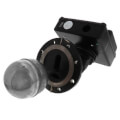
- Float-Type Low Water Cutoffs: Float-type cutoffs use a float that rises and falls with the water level inside a small chamber connected to the boiler, tripping a mechanical switch when the float drops too far. They are the traditional choice on residential and smaller commercial steam boilers and have been in service on many systems for decades. Because the float chamber can accumulate sediment over time, periodic flushing is part of keeping this style working reliably. Technicians servicing older steam systems are likely to run into this type most often.
- Probe-Type Low Water Cutoffs: Probe-type cutoffs use an electrode that senses whether water is present at a set level, rather than a mechanical float, and are common on newer commercial and some residential boiler installations. Fewer moving parts than a float-type control can mean less mechanical wear over time, but the probe itself needs periodic cleaning since scale buildup can interfere with its ability to sense water accurately. Contractors installing or replacing controls on newer equipment are more likely to spec this style.
- Cutoff Replacement Parts and Float Chambers: Replacement floats, probes, and gaskets let a technician rebuild an existing cutoff rather than replacing the entire control, often the more economical repair when only one component has failed. Float chambers themselves can also be purchased separately when the chamber has corroded but the switch mechanism is still functional. Keeping common replacement parts on hand avoids having to special-order a full assembly for what might be a single worn component.
- Combination Low Water Cutoff and Feeder Units: Some units combine the low water cutoff function with an automatic water feeder that adds makeup water to the boiler when the level runs low, rather than just shutting off the burner. Combining the two functions is common on unattended commercial installations where an automatic feeder reduces the chance of a nuisance shutdown from a normal, minor water-level drop. Confirming the feeder is configured correctly still matters, since an automatic feeder that is over-relied on can mask a slow leak in the system.
Buying Guide
Confirming whether the boiler is steam or hot water comes first, since steam boilers require a low water cutoff by code in most jurisdictions while hot water systems typically do not, though many contractors install one anyway as good practice. Next, the control style should match the application: float-type cutoffs remain common on older residential and light commercial steam boilers, while probe-type controls are more common on newer commercial installations and systems where fewer moving parts is a priority. When replacing an existing control, matching the mounting configuration and electrical rating to the original is critical, since Low Water Cutoffs from different manufacturers are not always interchangeable without adapter fittings or rewiring. For unattended commercial boiler rooms, a combination cutoff and feeder unit is worth considering, which reduces nuisance shutdowns from minor water-level drops, though it should never be treated as a substitute for finding and fixing a leak. Basic rebuild parts, like floats, probes, and gaskets, are worth keeping on hand separately from full assemblies, since replacing a single worn component is often more economical than swapping the entire control. Whatever style is installed, testing it periodically as part of routine boiler maintenance matters as much as the initial installation, since a failed cutoff that is not caught during testing defeats the purpose of having the safety device at all.
Frequently Asked Questions
Is a low water cutoff required by code?
Most jurisdictions require a low water cutoff on steam boilers, and it is standard practice on many hot water boiler installations even where it is not strictly mandated. Checking local code requirements before a new installation is still worth doing, since requirements can vary by boiler size and jurisdiction.
What is the difference between float-type and probe-type cutoffs?
A float-type cutoff uses a mechanical float that rises and falls with water level, while a probe-type cutoff uses an electrode that senses whether water is present at a set point. Float-types are more common on older systems, while probe-types are more common on newer commercial installations, and each has different maintenance needs.
How often should a low water cutoff be tested?
Testing should be part of routine boiler maintenance, not something done only after a problem shows up, since a failed cutoff can go unnoticed until the boiler actually runs low on water. Most manufacturers recommend testing on a regular schedule as part of an annual or seasonal boiler service visit.
Can a low water cutoff be combined with a water feeder?
Yes, combination units that pair the cutoff function with an automatic feeder are common, especially on unattended commercial boiler rooms. An automatic feeder should not be relied on to mask a slow leak, though, so any system losing water regularly still needs diagnosis rather than just being kept topped off.
Why does the float chamber need periodic flushing?
Sediment can build up inside the float chamber over time, which can interfere with the float's ability to move freely and sense the actual water level accurately. Flushing the chamber periodically, as recommended by the manufacturer, helps keep a float-type cutoff working reliably between full inspections.
